Contents
PREFACE
Over the decades, language teachers and others concerned with language teaching have witnessed multitudes of methods of and approaches to language teaching. However, it is only in the recent years that the English language curriculum in Bangladesh has gone through notable changes.
The changes were brought about through several means. The National Curriculum and Textbook Board (NCTB) designed a communicative syllabus for the secondary level, published the guidelines to produce textbooks, and encouraged the teachers to carry out the teaching according to the syllabus. It has also produced communicative textbooks for classes 6 to 12. Furthermore, it has revised the evaluation policy and developed several assessment tools and examination formats to help measure students' ability to use English in communication.
However, students are still far away from the expected levels of proficiency.
Inconsistencies were mostly found at the classroom implementation level. The teachers of English somehow failed to adhere to an appropriate methodology to carry out teaching and learning.
Some deficiencies were noted at other levels as well. For example, curriculum did not address the students' and teachers' existing communicative competence, their proficiency levels, and the hopes and hurdles they broght with them to the class. As for the examinations, questions were still set from the set textbooks, which generally may not focus on communicative aspects of language use, etc.
My Ph.D. dissertation presented here puts the above conditions in perspective, and discusses the different components and stages of the existing English language curriculum at the secondary level of education in Bangladesh.
The early inspiration for this work came from my days in Bandura Holy Cross High School, Dhaka, where I was taught English by one of my favorite teachers Late Bro. Donald, C.S.C, who developed a methodology of his own, which proved appropriate to carry out teaching and learning English in our situation effectively. Also during my days in Savar Model Academy, Dhaka, where I taught English to the students of classes 9 and 10 in 1997, this interest further grew in me. While learning English, I found that many of my teachers treated me as an empty receptacle. While teaching English, however, I saw many teachers still failed to address students' existing communicative competence.
However, the major part of encouragement to take up this topic for research came from Professor A.R. Fatihi, Department of Linguistics, Aligarh Muslim University, India, presently Visiting Faculty at Cornell University, U.S.A. He not only gladly assumed the responsibility to supervise my research and guided me with great insight, but also helped and mentored me in every respect relating to my research and personal life. It was his painstaking, patient, and continuous guidance that enabled me to write and complete this dissertation. So, I am indeed grateful to Professor Fatihi.
In preparing this thesis, I took help from many others. At first, I should express my deep sense of gratitude to Professor Mirza Khalil Beg, Chairman, Department of Linguistics, A.M.U., who helped me in many ways and provided all possible facilities from the department.
I consider it my pleasant duty to thank all the teachers and staff of the Department of Linguistics, staff and officials of Maulana Azad Library, officials and staff of IER Library, Dhaka University, who helped me in all possible ways. My special thanks go to Mr. Gulam Hussain Bhuyan, Deputy Librarian, IER Library, Dhaka University, who placed all the necessary written materials in my disposal. My special thanks also go to Dr. Syed Ikhtiar, Lecturer, Department of Linguistics, AMU, whose suggestions were very valuable in the final stage of my work.
My thanks also go to those students and teachers of Mirpur Monikanchan High School, Bandura Holy Cross High School, Bogra Cantonment Public School and College, Talifuzul Quranil Karim Senior Madrasah, and Unail Alim Madrasah, who eagerly came forward to help me in the collection of information, through interviews, etc.
I wish to express my deep regard and profound love to my parents, parents-in-law, brothers and sisters, who always motivated me to complete the thesis.
Finally, a sense of obligation beckons me to mention the name of Hasi, my wife, who kept me away from all the family chores and remained a constant source of inspiration all the time during these years. She not only gave me opportunity to work, but also did a lot -- sometimes read parts of my work, sometimes listened attentively while I read it to her, sometimes typed it for me. All these she did in addition to her regular office duties as a scientific officer of INST, AERE, Savar, Dhaka, along with raising our daughter, Sememe, who barred me many times from the work by clinching my pen and clicking the keyboard, but always pepped me up.
Md. Kamrul Hasan
LIST OF SYMBOLS AND ABBREVIATIONS USED
| Symbols/ abbreviations | Expressions |
| CC | Communicative Competence |
| CLT | Communicative Language Teaching |
| DM | Direct Method |
| EFL | English as a Foreign Language |
| EFT | English For Today |
| EL | English Language |
| ELTIP | English Language Teaching Improvement Project |
| ELT | English Language Teaching |
| ELL/T | English Language Learning and Teaching |
| ENL | English as a Native Language |
| ESL | English as a Second Language |
| FL | Foreign Language |
| GTM | Grammar Translation Method |
| L1 | First Language |
| L2 | Second Language |
| LAD | Language Acquisition Device |
| MEB | Madrasah Education Board |
| NCTB | National Curriculum and Textbook Board |
| S | Student |
| SL | Second Language |
| SS | Students |
| T | Teacher |
LIST OF TABLES AND FIGURES
|
Table No. |
|
Page No. |
|
2.1 |
Student’s proficiency levels as viewed by students |
19 |
|
2.2 |
Student’s proficiency levels in four basic skills as viewed by students |
20 |
|
2.3 |
Students proficiency levels as viewed by teachers |
21 |
|
2.4 |
Extent of use of English in classroom discussion as view by students |
23 |
|
2.5 |
Extent of students' participation in pair/group work as viewed by students |
23 |
|
2.6 |
Extent of practising four skills as viewed by students |
24 |
|
2.7 |
Students' use of English in real life as viewed by students |
25 |
|
2.8 |
Extent of students' use of English as viewed by teacher |
26 |
|
2.9 |
Teachers' proficiency levels as viewed by teachers |
31 |
|
2.10 |
Extent of teachers' use of English as perceived by teachers |
32 |
|
3.1 |
Grammatical syllabus |
41 |
|
3.2 |
Collaborative balanced syllabus |
45 |
|
3.3 |
Extract from NCTB syllabus for class 10 |
67 |
|
3.4 |
Number of new vocabulary to be introduced in different classes |
68 |
|
5.1 |
Students' perception of EL needs |
128 |
|
5.2 |
Students' EL needs as viewed by teachers |
130 |
|
5.3 |
Students' perception of needs of language skills |
133 |
|
5.4 |
Extent of practising four skills as viewed by students |
134 |
|
5.5 |
Extent of use of English in classroom discussion as viewed by students |
135 |
|
5.6 |
Extent of students' participation in pair/group work as viewed by students |
136 |
|
5.7 |
Students' view of how they learn more |
137 |
|
5.8 |
Teachers' knowledge of different methods |
138 |
|
5.9 |
Teachers' arrangement of use of language for communication |
140 |
|
5.10 |
Students' participation in pair/group work as viewed by teachers |
141 |
|
5.11 |
Teachers' preference of different aspects of language learning/teaching |
142 |
|
6.1 |
Techniques of testing language skills |
149-150 |
LIST OF FIGURES USED
|
Fig. No. |
|
Page No. |
|
3.1 |
Product and process Syllabuses |
40 |
|
3.2 |
Components of communicative task |
47 |
|
3.3 |
Language acquisition device (LAD) |
53 |
|
3.4 |
The input/out system in language development |
54 |
|
5.1 |
Teaching language as communication |
109 |
|
5.2 |
Teaching language as discourse |
110 |
|
5.3 |
Colour chart |
111 |
|
5.4 |
Mariam's family |
112 |
|
5.5 |
Imperative symbols |
113 |
|
5.6 |
Story telling activity |
120 |
|
7.1 |
Integration of four levels of curriculum development |
170 |
CHAPTER 1
INTRODUCTION
1.1 World English
The global distributions of English are often described in terms of three contexts. These are English as a Native Language (ENL), English as a Second Language (ESL) and English as a Foreign Language (EFL). Thus the diffusion of English throughout the world is seen in territories, viz., ENL territories, ESL territories and EFL territories (Braj B. Kachru in Koul N. Omkar (eds.) 1992: 2 -3, Crystal D 1995: 107, McArthur 1996 p: 327). In ENL territories English is spoken as the first or often as the only language. Here ENL refers to the mother tongue variety of English. In countries like the UK, the USA, Canada, Australia and New Zealand, English enjoys the status of native language. In ESL territories many people use English for various purposes. English plays a vital role - official, educational, and other. Here (ESL) English is an institutional language. It has an institutional variety as well. English is used as a second language in almost all the former British colonies. Some of the major features of ESL countries are as follows:
- English is one of the linguistic codes of the country.
- It has acquired an important status in language policy.
- It is learned at schools to an adequate level for national and/or international use.
English is used as a second language for many purposes in such countries as India, Nigeria and Singapore. A person's chronological second language, however, in many cases becomes the functional first language of adulthood. Under such conditions as migration, an original second language may become the person's only language.
In EFL situations, however, English may be more or less prestigious, and more or less welcomed in particular places. Many people learn it for occupational purposes and/or for education and recreation. English is taught as a foreign language in many countries like China and Japan.
1.2 ELT in Bangladesh: A historical sketch
McArthur (1996) locates Bangladesh in the ESL territories. However, in elsewhere he says in Bangladesh English is neither a second language nor it is a foreign language. Ibid. To give a clear idea about the ELT context of Bangladesh, the following sections present a historical overview of ELT in Bangladesh.
1.2.1 Pre-colonial period
English was first introduced in the South Asian subcontinent in the18th century when the Mughal Empire was on decline. However, it paved the way towards the sub-continent following the path of Portuguese in the 15th and 16th centuries after Vasco de Gama discovered the sea-route to India in 1498.
At that period although Portuguese was used as the 'lingua franca' -- a common language among the people of both Europe and the sub-continent, after the Englishmen formed their own company, English became the language of communication of the elite people of the both sides. And as it was used only by the elite groups, English never became a Creole or Pidgin. Rather a fairly standard variety of it entrenched among the select elite people. Some later-days' varieties like 'shahib variety', 'Bulter variety' etc. are exactly what their names imply (Dil, S.Anwar 1966 in Dil, S. Anwar (ed) p-199; Krishnaswamy and Sriraman 1995).
1.2.2 Colonial period
It was Lord Mcaulay's minute of 1835 that, for the first time, addressed the necessity of teaching English in the South Asian subcontinent. (see Krishnaswamy and Sriraman 1995; also see the papers By Dutta, Selim and Mahboob, and Choudhury in Alam F. et al (eds.) 2001). However, a considerable amount of preparatory work had been going on since the consolidation of the activities of the East India Company in eighteenth century. Christian missionaries entered India as far back as 1759, and 1787 despatch welcomed the efforts of Rev. Swartz to establish schools for the teaching of English. That the socio-historical context for the dominance of English was gradually taking shape at least by the end of 18th century is supported by The Tutor, the first book written to teach English to the non-Europeans. It was published in Serampore in Bengal. The author John Miller himself printed this book in British Bengal in 1797. (Howatt 1984)
The early missionary activity also introduced processes of standardisation of unwritten and tribal languages. Although in most cases missionaries did not teach English, they translated the Bible into the native languages in the Roman orthography. Non-native English speakers thus created the norms of several local languages. The association of these languages with Roman orthography has today introduced an important dimension in the struggle to evolve writing systems of these languages.
Macaulay in his Minutes of 1835 spoke of the importance and usefulness of the education that would be given to the natives through the medium of English. He mentioned two objectives of such education. The first was to create through this education a class of natives who, despite their blood and colour, would be English in culture and be able to "interpret" between the rulers and the subjects. The second was to create a "demand" for the European institutions. Clearly both the objectives were designed to serve the interest of the Masters, not of the subjects. "When it comes," he said, "it will be the proudest day in English history." (Macaulay 1835 quoted in Chaudhury 2001)
Macaulay believed that it was necessary to introduce English in India, - Indian people 'cannot at present be educated by means of their mother tongue' (Macaulay 1835 qouted in Aggarwal 1983:5). He felt that Indian languages and literature were of little intrinsic value and Indian histories, astronomy, medicine etc., were full of errors and falsehood. The continuance of Sanskrit and Arabic in Indian education system, Macaulay was convinced, could only harm both the Indians and British government. He recommended the closure of Sanskrit and Arabic schools and a withdrawal of all financial support from these institutions. No books were to be printed in Sanskrit and Arabic. He said: We must at present do our best to form a class who may be interpreters between us and the millions whom we govern, a class of persons, Indian in blood and colour, but English in taste, in opinions, in morals, and in intellect. To that class we may leave it to refine the vernacular dialects of the country, to enrich those dialects with terms of science borrowed from western nomenclature and to render them by degree fit vehicles for conveying knowledge to the great mass of the populations (quoted from Macaulay 1835 in Aggarwal 1983: 11)
The aims and objectives of teaching English were thus very clearly defined in the middle of the nineteenth century. Das Gupta (1970: 40-45) says that to prove that English language, culture, literature, and people were superior to anything Indian was the primary purpose for introducing English as the medium of instruction and as a subject of study.
As early as 1823, Ram Mohan Roy had written to Lord Amherst that the Sanskrit system of education could only keep the Indians in darkness. In Mumbai, on the other hand, the emphasis was on the vernacular languages. Since governmental support was available only for English, the movement for the dominance of English became more rigorous.
Wood's despatch of 1854 marked a position for vernacular languages, at least in policy. Although wood recognised the role that the vernacular languages can play in mass education, the superiority of British language and culture remained unquestioned. The despatch said, 'we look, therefore, to the English language and the vernacular languages of India as the media of diffusion of European knowledge... (see Agnihotri and Khanna (eds.) 1995: 17). English thus was to be the language of the select elite, used in power and prestige; 'vernacular' languages were for the masses to be used in peripheral domains.
In 1837 English and vernacular languages had already replaced Persian in the proceedings of the law courts - English in the higher and vernacular languages in the lower courts. Thus, in both education and law courts, language became a marker of two separate levels of social operation -the upper level for English, the lower level for the vernaculars. The policy of administrators consciously promoted the association of English with the status of privilege...(quoted from Das Gupta 1970: 43-44 in Agnihotri and Khanna (eds.) 1995: 18).
In fact, a large-scale literary and linguistic engineering was done for the permanence of British imperialistic expansion in India. The consolidation of English literature as a discipline and the introduction and establishment of English as medium of instruction and as a subject of study were a part of this engineering. (cf. Rajan, S. 1993: 9-11)
The story of English in the remaining period of colonial rule can be described in terms of a few landmarks such as the establishment of universities in Kolkata, Mumbai and Channai in 1857 and in Dhaka in 1920 resulting selective education and training in administration, imparted through English, the Indian University Act (1904) and the Resolution on Educational Policy (1913).
We notice three broad developments with regard to English education during the British rule:
- Levels of attainment in English: During the early years (1600 -1800) the high variety called the shahib variety was imitative and formal. During the later years (1850 -1947) more varieties (from very high to very low) appeared.
- Interaction with vernacular languages: A number of words of vernacular origin were absorbed in English, e.g., Brahmin. Coolie, jungle, and so on.
- Methodology: Language studies in colonial period and before colonial period were based on literature and grammar and the means of studies was the grammar-translation method. The spoken component of the language was not practised. The emphasis was given on accuracy and full sentence.
1.2.3 Post colonial period
The question of language loomed large after 1947 with the creation of two nation states- India and Pakistan. India opted for Hindi and in Pakistan, a "Muslim nation state" attempts were made to make Urdu -the " Muslim language (?)" -the state language. In the face of violent protest from the East Pakistan, culminating in the tragic shooting death on February 21, 1952, both Bengali and Urdu were made the state languages of Pakistan. In these circumstances, neither Bengali nor Urdu but English became the common language for communication between East and West Pakistan. Thus in Pakistan period English enjoyed the status of second language and it was taught as a functional language at secondary schools in Pakistan (1962 report of Curriculum Committee).
After the liberation, Bangladesh made Bengali the state language and the status of English was drastically reduced. Bengali replaced English in all official communications except those in foreign missions and countries and in armies, where English is still used as official language. Also in secondary and higher secondary education Bengali became the only medium. Attempts were made to translate English books into Bengali to meet the needs of books in different subjects. However, English was still a compulsory subject through secondary and higher secondary levels. From B. A. level English was withdrawn as a compulsory subject. Moreover, the Bangla Procolon Ain (Bengali Implementation Act) of 1987 ceased English to be used as an official second language. The result was drastic. The standard of English fell to the abysmal depth in public schools and universities. But what we experienced in later days is the frustrating reality that Bengali has failed to be an adequate medium of education in the higher levels. And in recent years a large portion of the population have been going abroad for jobs, education etc. and this made the Government rethink the emotional withdrawal of English from B. A. level that was made in 1974. Now English has again come back as compulsory subject in B. A. level, even for science and commerce graduates.
1.2.4 The present state
The withdrawal of English as a medium of education from public schools led growing number of parents to send their children and wards to English medium schools, where students can prepare for English Cambridge or O' and A' level examinations. Graduates from these schools often remain very weak in Bengali but comparatively better in English. Many of them prefer to get admitted in foreign universities, sometimes in the United States.
The private university act 1992 allowed the setting up of a good number of universities, where English is used as the medium of instructions. These universities give special emphasis on English because English is in much demand and to attract students and their money. Editors of Revisioning English in Bangladesh (a book in which emerged essays from the biennial conference 1996 held in the Department of English, Dhaka University about rethinking the status of English in Bangladesh) say that students from these universities, though have the same level of proficiency as those from the public universities while get admitted, at the end of a four year stay acquire a higher level of proficiency and are often recruited by the multinational organisations who look for strong English language proficiency. (Preface to the book)
Now the growing number of private universities, English medium schools and tutorial centres that offer courses of different foreign universities and institutions and job advertisements of different local and multinational organisations and agencies mark the status of English in Bangladesh.
However, language had been and still has been a marker for separate levels of social operation. There are three education systems at secondary level in Bangladesh and existence of these three systems marks the divisive lines between three classes of people - the rich, the middle class and the poor. Bengali represents the mainstream as in the public schools and colleges it has been the medium of education. The other two streams are English medium schools and madrasahs. In madrasahs though Bengali is the medium of instruction, Arabic has a prestigious place there. While the middle class people opt for (or are compelled to opt for) Bengali (in public schools and colleges), the poor (are compelled to) and the rich choose Arabic and English respectively. Thus, education in Bangladesh, instead of bringing people together works as a divisive force (Choudhury S. I.: "The state and people" appearing in The Daily Star in the special supplement on 'Amar Ekushey', 21 February 2003).
Choudhury S. I. in his paper "Rethinking the two Englishes" rightly said, " The acquisition of English happens to be an instrument for gaining both power and prestige and to limit its knowledge to a section of society would be to deprive others of a right." (In Alam F. eds. 2001: p-16)
1.3 English in the curriculum of Bangladesh
1.3.1 ELT needs in Bangladesh
In Bangladesh a number of foreign languages like Arabic, French, Japanese, Persian, etc. are taught at universities. But for a number of reasons only one foreign language i.e., English is taught as a compulsory subject across primary, secondary, higher secondary, and even the tertiary levels. To mention some: it is used as a lingua franca for global communication. For this, to deal with different international bodies and organisations working within and outside the country people need English. Furthermore, English gives them easy access to the ever-expanding knowledge of science and technology, arts and education, innovations and discoveries as all the works - books, journals, reports, research-findings - are available in English. It is the language of information technology that has, in fact, made the whole world a global village. English is the language of the international labour market. English for occupational/ professional purposes can help find jobs in other countries. In the local labour market also English has a prestige. Knowing the language of a country, say Saudi Arabia, may help one be enable to work in that country or in a country where that language (here Arabic) is spoken. But knowing English enables to work more or less in the whole world.
So, English is a surviving language for some people, e.g., those who are seeking or doing jobs in foreign countries. Some others use it as a stairs towards good fortune. And yet some others see it as an attribute of prestige. Whatsoever might be the Bangladeshi people's attitudes towards English, it is uncontroversial that they need it. But just to state that English will be taught as a foreign language in Bangladesh does not adequately express the ELT needs of the country.
1.4 ELT policy in Bangladesh
It is the need of a national English language teaching policy that will address the practical needs for English in Bangladesh and determine what and how much English should be taught and for how long.
Making English study effective from primary to tertiary levels needs a lot of inputs and resources like trained teachers, communicative teaching materials and financial, infra-structural and management facilities. These resources are not equally available or favourable for learning English in all the educational institutions of the country. In some urban elite schools these inputs are mostly available and the school leavers can use English, more or less, in their further study or in jobs that they choose. But most of the rural schools lack in some or almost all these resources. As a result, teaching-learning English in these schools cannot be done in the way it should be done. In most cases, learning English means rote learning of grammar rules and textbook contents even without understanding.
Also students in these disadvantaged schools are not aware of the aims and objectives of studying English, except that they have to appear the examinations in this subject. Consequently, English often seems to be a heavy unnecessary burden to them. The time, energy and money spent on teaching-learning English at these schools are often wasted. Of all the students from class 1 to 14, some students have some benefits, no doubt, but some others do not need to study it all these years.
Under National University, to which all the colleges (government and non-government) are affiliated, all the B. A., B. Sc. and B. S. S. pass and honours students have to study a compulsory English course - General English, of 100 marks. But Many students in this level do not need this General English. For example, students doing honours in history, philosophy, sociology, etc. need English - but not general, grammar-based English. They need the kind of English that will facilitate their studies. Similarly, the students studying medicine, science and technology, business, etc. will need English for specific purposes, viz., English for nurses, English for doctors, scientific English, business English and so on. This is because the general English courses cannot cater the specific needs of these specialised areas of study.
1.5 The existing curriculum in Bangladesh
There are three levels or stages of secondary education in the combine education curriculum. These are - Junior Secondary, Secondary and Higher Secondary levels. In junior secondary level there are two sub-systems of education. These are -
- General Education Sub-System
- Madrasah Education Sub-System
In Secondary and Higher Secondary Levels, there are three sub-systems -
- General Education Sub-System
- Madrasah Education Sub-System
- Vocational Education Sub-System
There are seven general education boards for the arrangement of examinations and certification of the general education sub-system. The National Curriculum And Textbook Board (NCTB) is responsible for the preparing curriculum and syllabus for the seven general education boards. The responsibility of the preparation of curriculum and syllabuses for the madrasah education sub-system and vocational education sub-system is assigned to the Madrasah Education Board and Technical Education Board respectively. They are also responsible for arranging examinations and for certification of their students.
1.5.1 The National Curriculum
In 1980s, the government of Bangladesh took initiatives to prepare and modernise the curriculum in order to meet the needs and challenges of the time. However, the existing curriculum proved inadequate for the changed world situation in 1990s. Therefore, the necessities to make the curriculum appropriate for the present situation have been felt, and some efforts have been taken to fulfil these needs.
In order to prepare a curriculum for the Secondary and Higher Secondary education and for the proper implementation of such a curriculum a Curriculum Preparation and Implementation Taskforce was formed. This taskforce proposed a framework for the national curriculum.
A curriculum committee consisting of eminent educationints and education administrators of the country was formed under the leadership of the Education Secretary. On the basis of detail discussion at a workshop on 6 and 9 November 1994 in the presence of eminent educationints and education administrators of the country the framework for the combine education system was finalised.
With the collaboration of National Curriculum and Textbook Board, the Higher Secondary Education Project, Madrasah Education Board and Technical Education Board, the Curriculum Committee prepared the new reformed curriculum.
For the circulation for teachers, students, textbook writers and those related to teaching the reformed curriculum was published in December 1995. It included syllabus checklist and guidelines for all concerned with the teaching and learning of English and other curricular subjects.
1.5.1.1 Place of English in the national curriculum
English is taught as a compulsory subject throughout all the levels of all the sub-systems. Bengali, the mother language, is also taught as a compulsory subject. In general and vocational education there are two compulsory papers of English and two papers of Bengali of 100 marks each, whereas in Madrasah education language syllabus in junior level differs from those of secondary and higher secondary levels. In junior secondary level Madrasah students read two compulsory papers of Arabic, one paper of English and one of Bengali, in secondary level one compulsory paper of English, Arabic and Bengali each and in higher secondary level one compulsory paper of English and Bengali each.
As mentioned above, the Madrasah students study two compulsory papers of Arabic in junior secondary level and one compulsory paper of Arabic in secondary level, which the other sub-systems lack. Of coarse, there are options to some optional subjects for all the students. Students of humanities group of both madrasah and general education sub-systems can take English as an additional subject of two papers of 100 marks each. However, the syllabuses of the two subsystems vary considerably.
1.6 The scope of study
The present study aims to look at different components of the English Language Curriculum at secondary level (from class 6 to 10) in Bangladesh from Communicative Language Teaching (CLT) point of view. It will study the English curricula of two major sub-systems -- general education sub-system and madrasah education sub-system. As very few students are affiliated under technical education sub-system and there are only a handful of vocational institutes, this study will not focus on technical education. However, curriculum development is viewed as a continuous process, e.g., teacher development as a component of curriculum development continues throughout the entire career of some teachers and for years in some other instances.
As curriculum is a large and complex concept and though the term curriculum can be used in a number of different ways (see Nunan 1989a: P-14), the work will view curriculum development from a broader perspective to refer to all aspects of planning, implementation, evaluating and managing a language education programme. A rational curriculum is, however, developed by first identifying goals and objectives, then by listing, organising and grading the learning experiences, and finally by determining whether the goals and objectives have been achieved or not (Nunan 1989a from Tyler 1949).
Chapter 2 of this work will look at the issues related to learners' needs -actual and desired, in terms of the social strata they belong to. Their attitudes towards English and proficiency levels will also be addressed. The proficiency levels of the teachers from different backgrounds and their attitudes to English will also be discussed. These issues are, in many ways, the determinants of what is intended in the planning level.
In chapter 3, the existing English language curriculum of Bangladesh will be looked at in some details to see what happens in the planning level. Curriculum guidelines of the Bangladesh National Curriculum and Textbook Board including the syllabus checklist provided in it will be discussed. It will also look in the curriculum and syllabus of Bangladesh Madrasah Education Board. But prior to all these a theoretical framework will be proposed incorporating the findings of Chapter 2 and modern development in the field of linguistics, applied linguistics and language teaching. Insight from other related and interrelated disciplines like sociolinguitics, psycholinguistics and discourse analysis will also be taken into account. These are rather the abstract levels of curriculum process. Turning more specifically to the concrete levels of curriculum process, chapters 4 and 5 will look in the works of textbook writers and teachers. In fact, these are the people who are the consumers of other people's syllabus and are presented with curriculum guidelines and sets of syllabus specifications.
Once having been presented with the curriculum guidelines or syllabus specifications, the classroom teachers are required to develop their courses and programmes form these guidelines (Nunan 1989a, p.17). As their immediate focus is day-to-day schedule within the learners in the classrooms, they tend to see lessons and units as the basic building blocks of their programmes. Chapter 5 will look in how teachers of different institutes translate the intentions of curriculum planners into actions that is, the teaching methodologies adopted in different institutions. Prior to that, it will explore different approaches and methodologies of language teaching conceived so far as on a theoretical basis and employed throughout the history of language teaching.
In the same way, the textbook writers have to write each unit as guided by the curriculum designers. Teachers' immediate preoccupations are with learning tasks and with integrating these tasks into lessons and/or units (Nunan 1987, 1989a-17; Shavelson and Stern 1981). Chapter 4 will appraise the case of communicative textbooks for language teaching in Bangladesh situation. It will make an assessment of books used in schools and madrasahs of Bangladesh from communicative language teaching (CLT) point of view.
Teachers and textbook writers are, in fact, the consumers of other people's syllabus. Another consumer of syllabus specifications is the examiner who will set an end- course-examination. However, traditional examination system has failed to assess students' progress and attainment in terms of their ability to use English in real life. So, there is a need to develop appropriate evaluation tools and concerned parties should interpret and use them successfully. Chapter 5, will make an assessment of current testing scheme and evaluation policy of Bangladesh. Prior to that, it will theorise an appropriate evaluation system, which will address both students' progress and their attainment in examinations.
For the successful operating of any programme, it should be installed rightly before. For a thorough study of the infrastructure, resources available, teacher community and the students, who are the ultimate beneficiaries of the programme, chapter 2 will look in the social strata and proficiency levels of learners and teachers in an ethnographic manner. Chapter 2 of this work is furnished with the information about the proficiency levels of the two parties in relation to social stratification.
A syllabus checklist is something that illumines others' way to proceed. In recent years, however, curriculum development has been viewed as a collaborative effort between learners and teachers. This gave rise to the learner-centred approaches to language teaching. In this approach, information by and from learners is used in planning, implementing, and evaluating language programmes (Nunan 1989a P-17). However, no curriculum can be totally learner centred or subject centred. This study stays somewhere in the continuum.
CHAPTER 2
SOCIAL STRATIFICATION AND PROFICIENCY IN ENGLISH IN BANGLADESH
2.1 Social variables in Bangladesh
Proficiency in English varies according to area, location, and city, in which the schools and madrasahs are based. Classroom conditions and teaching methods vary considerably. Therefore, although it is possible to assume that an average student after certain years of study, acquire knowledge of basic structures of English, however, it would be a misconception to assume that an average student across different villages, towns, and cities equally knows the structures of the language.
Social stratification shows that people acquire varying status in the society; they belong to many social groups; and they perform a large variety of social roles. People's social identity can be defined in terms of various factors such as social class, caste, colour, and family lineage, rank, occupation, genders, age groups, material possession, education etc. Linguistic correlates of all these factors can be found at all levels.
One of the chief forms of sociolinguitic identity derives from the way in which people are organised into higherarchically ordered social groups or classes. Classes are aggregates of people with similar social or economic characteristics. In Bangladesh the main variables in social stratification can be described in terms of urban versus rural; rich versus poor (economically advantaged versus disadvantaged groups); male versus female etc. Proficiency levels in English vary across these variables. Besides, different types of schools (for accommodating different classes of people), different types of teaching materials, teachers proficiency levels have impact upon the students' proficiency in English. This chapter attempts a discussion on how social differences relate to the proficiency levels of the students across schools and madrasahs in Bangladesh.
2.2 Social strata and students' proficiency levels
2.2.1 Urban versus rural
Students from urban areas show better proficiency in comparison with the students from the rural areas. Most of the urban students watch cable televisions; have easy access to cyber café; a good number of them read English newspapers. Some urban parents subscribe for English dailies. That is, the urban students have the opportunity to use English outside their classroom. In some urban schools computer education has been made compulsory from very early years of schooling. This makes the students learn and use English words and vocabulary items related to information communication technology (ICT). Their proficiency level is, therefore, much higher than that of the rural students. This is worth noting in different competitive examinations like admission tests in different universities and institutions, job interviews etc. In all cases the urban competitors especially, those from the metropolis do better than others.
2.2.2 Rich versus poor
Usually economically advantaged students do better than economically disadvantaged students across the towns and villages. However, a few exceptions may be noticed in all areas. But observation shows that upper class people are more proficient in English than the middle and lower class people, and the middle class people are more proficient than the lower class.
Another important aspect of family lineage is education. Especially the ones, whose parents are educated, have opportunity to use English in their family environment. This helps them to develop their proficiency in English and they do better than those whose parents are not educated.
With the introduction of compulsory primary education for all, many children from economically disadvantaged family have now got their names enrolled in primary schools and madrasahs, but this gives them just a nominal studentship. They acquire hardly any proficiency in English. And many of them do not continue their studies up to the secondary level.
The above discussion, by no means, means that all poor students will do worse than the rich students. The top-bottom polarisation of students' merits and their English proficiency does not parallel the top-bottom polarisation of people in terms of their socio-economic status.
However, economically advantaged parents tend to send their children to prestigious schools- as mentioned earlier, to English medium schools in some cases. This gives them a chance to use English to a greater extent and achieve a better proficiency in English. Furthermore, families whose children have the opportunity to operate cable television, use Internet and read English newspapers are likely to be more proficient than others.
2.2.3 Male versus female
In general, male students show better proficiency than their female classmates do. But it can be said that the girls from the urban areas in most cases do better than the boys from the rural areas with some exceptions being noticed. However, in higher-class families the proficiency level difference between male and female students becomes minimal. With the introduction of free education and stipend for female students of government and non-government schools and madrasahs up to class 12, a large number of female students have enrolled their name in schools. However, many of them cannot take studies seriously; their proficiency in English like in any other subjects is not up to the level of other students.
Despite the above cases, there are many girl students who are more proficient in English than the boy students. These girls do better than some boys in other subjects as well. That is sex as social variable has very little influence on English language proficiency of the school going students (secondary level students). However, many families do not take care of educating their girl children to the same extent as they do of educating their boy children. There are various reasons behind this; lack of social security, earlier marriage of girls and men being the only earning members of most families are some of these. In most families, women are hardly seen to be engaged in money incoming jobs. This is why they do not think of being proficient in English, which could ensure them getting good jobs. For the same reason very few girl students endeavour for higher education. These definitely have impact upon women education and upon their English language education.
2.3 Different types of school and different levels of proficiency
All schools and madrasahs do not have equal opportunity. Some urban schools, for example, include computer education as a compulsory subject, appoint well to do teaching staff for educating their students in a proper way. In a few urban schools only there are modern facilities available for language teaching. Most of the village schools do not have an English subject teacher. Teachers of other subjects in many schools teach English.
Moreover, different types of textbooks are adopted in different schools. Although all schools across the country under five general education boards have to teach their students the book English For Today published by the National Curriculum and Textbook Board (NCTB) as the main textbook, the teaching methods differ from school to school considerably. It can be mentioned here that for the classes six through twelve the national curriculum and textbook board published two sets of books for all curricular subjects except English and Bengali English and Bengali versions. In a few urban schools students have the two options to choose either set. In general, those who take English version show better proficiency than those who take Bengali version do. Besides, there are some English medium schools, which do not follow the curriculum of the NCTB. The majority of these schools claim to follow British curricula and their students prepare to sit for GEC O' and A' levels examinations. Some other schools, however, follow American curricula while some others follow others. Students of these English medium schools though are better in English their condition in Bengali is equally worse.
Bengali is the language of everyday communication throughout the country. But people who have the opportunity to use cable televisions and Internet are seen to switch over to English very frequently while speaking in Bengali. This is more common in urban areas than rural areas, in higher class than middle and lower classes. The opposite happens while the madrasah students especially the 'qawmi' madrasah students speak in Bengali. These students tend to switch over to Arabic and Urdu instead. They are, therefore, more proficient in Arabic and Urdu than English.
In above paragraphs, it has been shown that there are three categories of schools/educational institutions in Bangladesh for three classes of people. These are English medium schools, Bengali medium schools and madrasahs. The English schools are mostly very expensive and the madrasahs are cheapest. There is yet another category of schools where most of the middle class parents send their children especially for the early years of schooling. These are generally known as kindergarten schools (KG schools). The economically advantaged (rich) people send their children to English medium schools while the economically disadvantaged (poor) people send their children to madrasahs. The upper middle class people try to send children to English medium schools. However, there are a few Bengali medium schools, which are regarded as prestigious. The middle and upper middle class people in some instances try to get their children admitted in these schools.
2.3.1 Information by and from learners and teachers
In this investigation 300 students 100 from urban schools, 100 from rural schools, 50 students from urban madrasahs and 50 from rural madrasahs have been interviewed. In each area, students were selected randomly from junior secondary (JS) and secondary (S) levels disregarding their merit and place in classes. 100 teachers - 35 from urban schools, 35 from rural schools, 15 from urban madrasahs and 15 from rural madrasahs were also interviewed. Teacher samples were selected from those who teach English in any class from classes 6 to 10 in their institutions. While investigating, this researcher talked with them formally and informally. The formal investigation comprised questionnaires and the student and teacher samples. Informal investigation was carried out through observation and discussion with teachers and head teachers of different institutions. The researcher also talked with other groups of people concerned e.g., guardians and job givers. Discussion with all concerned reveals same kind of impression about English language proficiency across the country.
2.3.1.1 Students' proficiency levels as viewed by students
Students' responses to items 16 and 17 of the students' questionnaire reflect students' proficiency levels as viewed by the students themselves. In response to item 16/a (Do you think that you can cope with your teacher if he/she teaches in English?) most urban students (73 school students out of 100 and 33 madrasah students out of 50) answered in affirmative. From the rural areas also more than half of the students (57 school students out of 100 and 28 madrasah students out of 50) said that they could cope with their teachers if they teaches in English. Here the number of respondents form madrasahs is equally satisfactory as from schools. However, in students' evaluation of their proficiency, urban students marked higher than the rural students marked. The following table shows how students from different backgrounds responded to the question "How do you evaluate your proficiency?" (Item 16/b)
|
Options |
Student samples(300) |
|||
|
Urban school (100) |
Urban madrasah (50) |
Rural school (100) |
Rural madrasah (50) |
|
|
Very good |
None |
none |
None |
None |
|
Good |
34 |
11 |
23 |
8 |
|
Average |
27 |
11 |
20 |
14 |
|
Weak |
12 |
11 |
14 |
6 |
|
Did not respond |
27 |
17 |
43 |
22 |
Table 2.1: Students' proficiency level as viewed by students
Students' responses to item 17 (Evaluate your different skills in English. Tick appropriate boxes) reveal that they are mostly weak in speaking and listening. They are better in writing and reading than in speaking and listening. This is perhaps the result of our long-standing tradition of teaching literary English that excluded any oral interaction in the class. However, their proficiency is not up to the mark in reading and writing as well and the condition is worse in rural areas than urban areas and madrasah students are weaker than school students. The following tables shows how students evaluated their proficiency in different skills:
|
|
Students from urban schools (100) |
Students from urban madrasahs (50) |
Students from rural schools (100) |
Students from rural madrasahs (50) |
||||||||||||
|
|
L |
S |
R |
W |
L |
S |
R |
W |
L |
S |
R |
W |
L |
S |
R |
W |
|
Very good |
12 |
7 |
12 |
8 |
2 |
— |
5 |
5 |
10 |
— |
17 |
5 |
— |
— |
— |
— |
|
Good |
35 |
37 |
40 |
40 |
15 |
17 |
30 |
27 |
35 |
38 |
38 |
31 |
13 |
13 |
19 |
17 |
|
Average |
28 |
31 |
40 |
42 |
23 |
20 |
13 |
14 |
31 |
37 |
41 |
39 |
16 |
9 |
16 |
17 |
|
Weak |
25 |
25 |
8 |
10 |
10 |
13 |
2 |
4 |
24 |
25 |
4 |
25 |
31 |
28 |
15 |
16 |
Table 2.2: Students proficiency in four basic skills as viewed by students
Information furnished in the above tables is not unaffected by such things as the locality where the school/madrasah is situated, learners' age, sex and what type institute it is. Learners have been seen to evaluate their own proficiency in comparison with the other students of their own class, institute and locality. The rural students, for example, are unlikely to compare their performance with urban students and the vice versa. In the same way, the madrasah students are not likely to compare themselves with school students and the vice versa. The researcher's informal observation as well as students' performance in different competitive examinations and admission tests in different institutes reveal that urban students do better than rural ones and school students do better than madrasah students.
2.3.1.2 Students' proficiency levels as viewed by teachers
Teachers' response to items 16, 17, 18 and 19 of the teachers' questionnaire shows how teachers of different institutions across villages, towns and cities view their students' proficiency levels in English. In response to the question "Are they (your students) able to follow your class if conducted in English?" (Item 16), very few teachers of the rural areas answered in affirmative. Teachers from very well reputed schools of the urban areas answered in affirmative. Other urban teachers mostly ticked 'yes'. However, some of their urban colleagues confused and so, did not answered the question. Their confusion was obvious in the informal discussion with these teachers. So far as rural teachers are concerned the responses are mostly negative. Only a few teachers from very well reputed schools answered in positive. In this regard madrasah teachers were found responding mostly in negative. However, many madrasah teachers said they did a part time job in the madrasahs. These teachers are mostly full time teachers of different schools and colleges. The following table projects their answers:
|
|
Teacher samples |
Number of teachers who answered ‘yes’ |
|
Urban schools |
35 |
28 |
|
Rural schools |
35 |
11 |
|
Urban madrasahs |
15 |
5 |
|
Rural madrasahs |
15 |
Nil |
Table 2.3: Students proficiency levels as viewed by teachers
Teachers' answers to item 17 (Do they raise questions in English?) and item 18 of the teachers' questionnaire, projects the same type of information as furnished in above table. However, in response to item 19 (Do your students write creatively?), very few teachers answered in affirmative - only 15 urban school teachers and 2 urban madrasah teachers. No teachers from the rural areas answered in affirmative to this question.
2.3.2 Extent of students' use of English
2.3.2.1 Extent of students' use of English as viewed by the students
The choice of a methodology in the language classroom is to a greater extent determined by to what extent the language is used in everyday life or outside classroom. In a monolingual language situation like Bangladesh, students have very little scope to use English in everyday life. However, in the present age of globalisation, different milieus of information communication technology have purveyed some students with access to internet, satellite television, mobile phone etc. This class of people have an opportunity to use English in occasions. This opportunity is not plainly distributed to all population of the country across villages and towns. Rather there is always differences between the urban and rural areas and in the same way between rich and poor people. Students from urban areas are seen to go to cyber cafes, watch cable television while rural students lack these facilities. Watching television still has been strictly prohibited for some madrasahs students. Even reading newspapers and magazines is discouraged in some madrasahs.
It has been observed that most urban school students (especially, those from the metropolis) read English newspapers or magazines, watch cable televisions, go to cyber cafes. These give them some chances to use English. Rural students are hardly seen to do these. The first category of the students frequently switch over to English while speaking with others though in Bengali. This type of code switching is also noticeable in the language of rural school students to a lesser extent. Madrasahs students, on the other hand, frequently switch over to Arabic or Urdu.
Items 5, 6, 7, 8 and 9 of the students' questionnaire reflect to what extent students use English inside classroom and item 10 reflects to what extent they use English outside the classroom that is, for real communication.
In response to item 5 (Which language(s) do you mostly use in English classes?) and item 6 (Which language(s) does your teacher mostly use in English classes?), almost all the students ticked the option English and Bengali. However, their rating in response to item 7 (How often classroom discussion is conducted in English in English classes?) and item 9 (How often do you participate in group or pair work/discussion?), differs across towns and villages. Although most of the students of all the institutes ticked the option sometimes, a good number of urban students ticked always in item 7 and always and very often in item 9. Their responses to items 7 and 9 are illustrated in table 2.4 and 2.5 respectively.
Table 2.4: Extent of use of English in classroom discussion as viewed by students
|
Options |
Student samples(300) |
|||
|
Urban |
Rural |
|||
|
School (100) |
Madrasah (50) |
School (100) |
Madrasah (50) |
|
|
Always |
13 |
— |
— |
— |
|
Sometimes |
81 |
40 |
86 |
37 |
|
Rarely |
6 |
8 |
10 |
13 |
|
Never |
— |
— |
4 |
— |
|
Did not answer |
— |
2 |
— |
— |
In response to item 8 (Do you practise the four skills in your English class?), all the students answered in affirmative for the reading and writing skills. In respect to two auditory vocal skills, i.e., listening and speaking, most urban students and a few rural students answered in affirmative. The following table projects their answers.
Table 2.5: Extent of students' participation is pair/group work/discussion as viewed by students
|
Options |
Student samples(300) |
|||
|
Urban |
Rural |
|||
|
School (100) |
Madrasah (50) |
School (100) |
Madrasah (50) |
|
|
Always |
11 |
— |
— |
— |
|
Very often |
11 |
|
8 |
7 |
|
Sometimes |
72 |
40 |
78 |
30 |
|
Rarely |
6 |
8 |
8 |
10 |
|
Never |
— |
— |
4 |
3 |
|
Did not answer |
— |
2 |
— |
— |
Table 2.6: Extent of practising four skills as viewed by students
As projected in the above table, emphasis is given on reading and writing skills in the English classroom. Listening and speaking skills are not practised to same extent as the other two skills are.
Responses to item 18 project students' real life use of English language. The following table shows how different groups of students responded to item 18 (Which of the following things do you do?) of the students' questionnaire: (Number mentioned against each item indicates how many students ticked the item.)
|
Use of English |
Student samples |
|||
|
School |
Madrasah |
|||
|
Urban (100) |
Rural (100) |
Urban (50) |
Rural (50) |
|
|
Use English in family environment |
22 |
13 |
10 |
6 |
|
Listen to TV news in English and see English TV programmes |
53 |
34 |
14 |
6 |
|
Speak in English with teachers and other students in the English class (sometimes) |
59 |
41 |
19 |
14 |
|
Read English newspapers |
37 |
7 |
5 |
Nil |
|
Read English books |
37 |
10 |
5 |
5 |
|
Write letters in English |
3 |
Nil |
Nil |
Nil |
Table 2.7: Students' use of English in real life as viewed by students
Information provided in the above table reveals the extent of use of English by students from different backgrounds. The table projects that the urban students use English to a greater extent than the rural ones and school students use English to a greater extent than madrasah students.
2.3.2.2 Extent of students' use of English as viewed by teachers
In teachers' evaluation, students use English in their practical life to a lesser extent than the extent viewed by the students themselves. Teachers' responses to item 20 of the teachers' questionnaire (How many of your students do the following things?) reflect their evaluation. Most of the teachers ticked the option 'a few' for most of the activities. The following table projects their responses:
|
How many students |
Teacher samples(100) |
|||||||||
|
Urban (50) |
Rural (50) |
|||||||||
|
All |
many |
Some |
a few |
none |
all |
many |
some |
a few |
None |
|
|
Use English in family environment |
Nil |
nil |
Nil |
36 |
14 |
nil |
nil |
|
30 |
20 |
|
Listen to TV news, see English TV programmes |
Nil |
nil |
26 |
23 |
1 |
nil |
nil |
5 |
45 |
nil |
|
Speak in English with teachers and other students in the English class (sometimes) |
Nil |
nil |
25 |
25 |
nil |
nil |
nil |
6 |
44 |
nil |
|
Read English newspapers |
Nil |
nil |
22 |
25 |
3 |
nil |
nil |
nil |
23 |
27 |
|
Read English books |
Nil |
nil |
12 |
32 |
6 |
nil |
nil |
|
24 |
26 |
|
Write letters in English |
Nil |
nil |
Nil |
16 |
34 |
nil |
nil |
10 |
9 |
31 |
Table 2.8: Extent of students' use of English as viewed by teachers
In the above table number of respondent teachers is mentioned in cardinal numbers and number of students who the teachers think perform the activities is written in the first column in scale amount words.
The table projects that most of urban (36) and rural (30) teachers say that a few of their students use English in family environment and some teachers (14 urban and 20 rural teachers) say that none of their students use English in family environment.
26 urban teachers and only 5 rural teachers say that some of their students listen to TV English news and see English programmes on televisions. 23 urban and 45 rural teachers say that a few students do these activities. However, 1 urban teachers says none of his students do these.
Half of the urban teacher samples (25) find their students sometimes speaking in English in the class and the other half find a few of their students doing that. On the other hand, only 6 rural teachers say that some of their students speak in English in the class and 44 teachers say "a few".
Most teachers say that a few students read English newspapers or English books. Most teachers think that none of their students write letters in English. 25 teachers (16 urban and 9 rural) think that a few students do this. However, 10 teachers from rural areas find some students writing letters in English.
In the above projection, teachers' responses are, of coarse, subjective. However, despite its subjectivity, it gives an overall picture of the students' extent of use of English in the daily life.
Observation amid different schools and institutions reveals that according to most teachers' evaluation, a very few urban students of junior secondary level can write a sentence of their own let alone a letter or paragraph.
So far as madrasah teachers responded, only a few madrasah students of the urban areas take the English subject seriously and can write a sentence of their own. The condition goes worse in higher classes. As a cause of this ill condition, the teachers mentioned the infrastructure of their institutions as unsuitable for carrying out effective teaching. Again a good number of students, who are very serious about their career leave madrasah and join schools and colleges in different stages of their study. The students who still remain with madrasah education, in most cases, take study as part time. Some do jobs as imams or muajjins in local mosques and some teach the children how to recite the Quran in village maqtabs.
2.4 Different types of teaching materials
In all the schools i.e., institutes of general education subsystem, the book English for Today is compulsory and in examinations, a seen comprehension passage is set from these textbooks. And there is an unseen comprehension; for this, students follow any of the books published by different publishers and approved by the NCTB (National Curriculum and Textbook Board). Again, these publishers also publish notebooks and guidebooks. However, all these books aim to help the students to do better in the examinations rather than to help them understand the textbooks. The nomenclature of some notebooks, e.g., Kamyab English, Touch and Pass, Sure Success etc. reflects how the publishers and writers of these books try to attract the student customers.
The Madrasah Education Board does not publish any English book for any classes. It approves books of different publishers and includes their names in its Curriculum and Syllabus report. As the madrasah board follow a traditional syllabus, these books are also written in a traditional manner. In fact, Madrasah Education Board does not give any syllabus specification for any class in terms of learning outcomes. Rather a list of prose and poetry and some explicit grammatical items are prescribed as syllabus for class 9 and 10. From classes 6 to 8, the condition is bad to worse. Here, in the name of syllabus, only the tittles of some books are listed as options, from which madrasahs can choose any.
Again, many madrasah students do not care about buying textbooks, rather they run for buying only guidebooks just weeks or days before the final examinations. As many madrasah students take their studies as part time, their irregular attendance help them a little with original textbooks.
In the national curriculum report, supplementary grammar books and English rapid readers have been suggestive for different classes. However, only a few urban schools include rapid readers in their syllabuses. And supplementary grammar books mean in most cases a book of traditional grammar, which include in it traditional definitions of grammar items, sample translation and so called model composition on stereotyped topics like a village doctor, a postman, golden fibre of Bangladesh and so on. There are a few urban schools, however, that include in their syllabuses books like Oxford Practice Grammar (by John Eastwood) or English Grammar in Use (by Raymond Murphy).
2.5 Teachers' proficiency levels
Teachers' proficiency levels vary from urban to rural areas considerably. The urban schools usually recruit qualified teachers, while the rural schools lack sufficient number of English teachers. In many rural schools, teachers of other subjects teach English. In many urban schools English teachers are graduates of English from Universities. Although these teachers are, in most cases, English literature graduates, they do better than those who are graduated from other subjects. Again, most of the teachers of reputed urban schools have pre-service or in-service training in English Language Teaching (ELT). Of coarse, a good number of English teachers across villages, towns and cities have a B.Ed. degree with English as a main subject. But in most cases their proficiency in English in not satisfactory. Most of the teachers are not familiar with communicative approach to language teaching. They dot not know what process oriented and product oriented syllabuses are.
Most of them (especially, those from rural areas) cannot write a piece of text (a letter or paragraph) of their own. They hardly listen to any English TV programme. They rarely use English to communicate with their students in English classes. They rarely read any English newspaper or any book written in English. While teaching, these teachers strive more on how far they can ensure that their students can cut good marks in their examinations. How to make teaching and learning more effective is hardly a matter of concern of these teachers. In most of the rural schools and many urban schools, the common picture is that their teachers are not fluent in listening, speaking, reading and writing. They just know the grammar of English and how to teach this grammar. The condition in madrasahs is bad to worse. As most of the madrasahs run with subscriptions or donations from the people and always lack sufficient fund, they cannot appoint full time English teachers. Teachers of schools and colleges teach in many madrasahs part time - two or three days a week.
In the institutions where there are English subject teachers, these teachers are not always graduates of English language. Most teachers have a B.A. degree with English as a compulsory subject. Some teachers, however, took elective English subject of three hundred marks (in three papers) in their B.A level. Of these three papers, only one paper is of English language (English grammar, translation and composition writing) and the rest two are of literature.
There are few teachers graduated in English Language, or Applied Linguistics and English Language Teaching (ELT) or Linguistics. However, it is a matter of concern that literary experts select our English teachers. These experts are not always familiar with the modern development in applied linguistics and language teaching. As a result, many of them choose English literature graduates to teach English whereas those graduated from the department of Linguistics and English language should be given preference. As most of the teachers have little knowledge of linguistics and language teaching, they cannot cope with the new development in this field. As a result, their methodology of teaching differs from what is intended in the new curriculum. As Abdus Selim and Tasneem S. Mahboob (2001) said, while the very aim behind introducing new syllabus of English was to teach English as a language, giving special attention to idiomatic and phonetic aspects of the language the whole idea gets lost in the wilderness as the teachers have poor knowledge of phonetics. They also ignore the comprehension aspect, which is closely connected with the functional side of the language, as they bank heavily on grammar-translation method.
2.5.1 Teachers' proficiency level as viewed by teachers
Teachers' responses to item 3 reflect how they evaluate their proficiency in English. As projected in the following table, most of the teachers (62 out of 100) across villages and towns ticked the option 'good'. The second option (ticked by 33 teachers) is the option 'medium'. Teachers' responses to this question do not show any difference in their proficiency levels between rural and urban areas or between schoolteachers and madrasah teachers. However, a few urban schoolteachers preferred the option 'very good', which no rural teachers and no madrasah teachers ticked.
Table 2.9: Teachers' proficiency levels as perceived by teachers
(Note: *One
urban teacher ticked two options.)
|
Skills |
Teacher samples (100) |
|||||||||||||||||||
|
Urban school (35) |
Rural school (35) |
Urban madrasah (15) |
Rural madrasah (15) |
|||||||||||||||||
|
Very good |
Good
|
Medium |
Weak |
Very weak |
Very good |
Good
|
Medium |
Weak |
Very weak |
Very good |
Good
|
Medium |
Weak |
Very weak |
Very good |
Good
|
Medium |
Weak |
Very weak |
|
|
Listening |
9 |
5* |
18* |
4 |
|
|
8 |
27 |
|
|
|
|
15 |
|
|
|
5 |
10 |
|
|
|
Speaking |
9 |
5 |
14 |
7 |
|
|
5 |
23 |
7 |
|
|
|
11 |
4 |
|
|
4 |
10 |
|
1 |
|
Reading |
31 |
4 |
|
|
|
32 |
|
3 |
|
|
|
11 |
4 |
|
|
2 |
10 |
3 |
|
|
Writing |
31 |
4 |
|
|
|
30 |
2 |
2 |
1 |
|
|
11 |
3 |
1 |
|
2 |
10 |
3 |
|
|
Although it is the case that many urban English teachers are university graduates of English and many rural English teachers are actually teachers of others subjects like mathematics or science and many madrasah English teachers teach part time, the above table does not project any significant difference between proficiency levels of the teachers from different backgrounds. This does not mean that the urban and the rural teachers are more or less equally proficient in English. Rather our teacher samples from different backgrounds compared their skills and proficiency with those of their colleagues in the same institutes or same environments. They, in most cases, failed to address and question their own state in comparison with that of others in different environments.
So far as teaching skill is concerned almost half of the teachers evaluated their state (in response to item 4 of the teachers' questionnaire) as average and the other half as good. There is significant difference between urban and rural teachers' evaluations. The same reason is found behind this gross; that is, not many teachers compared their own skills with those of others in a different environment. However, their responses to item 5 reflect how far they are acquainted with the present trends in language teaching. Only a few teachers (15 from urban schools and 7 from rural schools) were found familiar with product and process oriented syllabuses, although almost all the teachers from both areas (48 urban and 49 rural) ticked 'yes' for the options communicative language teaching (CLT) and grammar translation method (GTM) (in response to item 5). 20 urban teachers (18 from schools and 2 from madrasahs) and only 7 rural teachers (all of them are schoolteachers) said that they were familiar with 'direct method'.
2.5.2 Extent of use of English
Not many teachers use English in their English classes. Only a few urban teachers occasionally use English outside the classroom. They subscribe, or at least read English newspapers. However, no one was found among the teacher samples who read English books for pleasure. Teachers' responses to item 6 and 12 of the teachers' questionnaire reflect the extent of use of English of the teacher community. Responses to item 6 reveal how often the teachers use English. The following table shows how they responded:
|
|
Number of teachers who answered ‘yes’ |
|||
|
School |
Madrasah |
|||
|
Urban (35) |
Rural (35) |
Urban (15) |
Rural (15) |
|
|
Listen to radio and TV news and see English TV programs |
25 |
22 |
5 |
5 |
|
Speak in English with colleagues and others |
27 |
22 |
9 |
5 |
|
Read English books for pleasure |
5 |
Nil |
Nil |
Nil |
|
Read English newspapers |
24 |
14 |
5 |
Nil |
Table 2.10: Extent of teachers' use of English as perceived by teachers
The information furnished in above table projects the extent of use of English of the teachers of schools and madrasahs across villages and towns.
Item 12 of the teachers' questionnaire projects how often teachers use English in English classes. In response to the question "Which language(s) do you use for classroom instructions?" all the teachers ticked the option 'English and Bengali'. However, while giving a rating for English and Bengali, none of the rural teachers gave more than 50% rating for English, while most of them (37 out of 50) gave a rating for English that was below 40 percent. On the other hand, only 10% (5 out of 50) urban teachers' rating for English was below 50%. 20% (10 out of 50) urban teachers gave a rating for English that was 65% or above 65%. Two urban teachers wrote that they used 90% English in English classes.
2.5.3 Teacher training
So far as teacher training is concerned, there is arrangement for training teachers of all levels. Primary teachers are trained in Primary Training Institutes (PTIs). There are 49 PTIs in the country. They produce about 100 teachers each year. Although primary teachers are expected to teach English as a compulsory subject from class one, there is no ELT provision in PTIs.
For training the junior secondary and secondary level teachers, there are 10 Teachers Training Colleges (TTCs) in Bangladesh. Huq et al (1997) says that more than 50% of secondary level subject teachers have received pre-service training (however, among the 100 teacher samples of this investigation, only 31 teachers received pre-service training and have a B. Ed. degree. Only 27 of them had English as one of the subjects of specialisation. (Teachers' response to item 2)) and a substantial programme of in-service training is conducted in this level under the auspices of Secondary Science and Education Project. The National Curriculum and Textbook Board (NCTB) also holds some in-service workshop at this level in support of its new textbooks. Besides Bangladesh Open University and National University also offer B Ed and M Ed programmes. In B Ed programmes a trainee can take two subjects for specialisation. Among the subjects of specialisation, English is one of the options. Moreover, Bangladesh Open University has BELT (Bachelor of English Language Teaching) Programme. This programme has specially been designed to make some efficient English teachers. Despite all these efforts, there is still significant gap between the expected levels of proficiency of the teachers and what they actually posses. In most cases, the teachers have failed to comprehend the new communicative syllabus and the textbooks written according the guidelines provided in the syllabus.
2.5 Conclusion
As Bengali is the language of all types of communication in Bangladesh, the people of Bangladesh do not need English or any other language for their internal communication - official or ordinary everyday communication. They need English only to deal with different international agencies and other countries. It is in much demand in international job markets and some local organisations also recruit personnel who are proficient in English. Now English is a commodity for them; they need it. For some people, it is a survival language, say for example, those who are doing or seeking jobs in a foreign country. But the emotional withdrawn of it as a second language after the liberation in 1071 kept Bangladeshis too far away from a satisfactory state.
Any curriculum that aims to meet these ELT needs of the country must address the above social conditions, and take insights from time to time in coarse of development from all concerned parties - teachers, students, guardians, employers and others. And above all, those who work in the implementation levels, i.e., the teachers, and the textbook writers, and even the students should go through training so that they can cope with changes in the profession.
CHAPTER 3
LANGUAGE TEACHING THEORIES AND THEIR IMPLICATION: A REVIEW OF ENGLISH CURRICULUM IN BANGLADESH
3.1 Curriculum and its definition
The terms curriculum and syllabus are often used synonymously as in The school's English curriculum/syllabus. However, in its normal use curriculum has a wider reach, e.g., the widely used term curriculum development refers to the research work in developing many courses of study. The term syllabus development is not so commonly used, if used is more likely to refer to the work within one subject only. (McArthur1996: 251) The term curriculum development, if used for a single subject, refers to the subject in question to the all classes of an institute. For example, The school's English curriculum refers to parts of the school's curriculum that deal with English language education in all classes of the school.
The curriculum of a given institution can be looked at from a number of different perspectives (Nunan 1988). The first perspective is that of curriculum planning, that is, decision making, in relation to learners' needs and purposes; establishing goals and objectives; selecting and grading contents; organising appropriate learning arrangements and learner groupings; selecting, adapting, and developing appropriate leaning materials, learning tasks, assessment and evaluation tools.
Alternatively, curriculum can be studied 'in action' as it were. This perspective takes researchers into the classroom itself. Here they can observe the teaching/learning process and study the ways in which the intention of the curriculum planners, which were developed during the planning phase, is translated into action.
Yet another perspective relates to the assessment and evaluation. That is to see what the students had learned and what they failed to learn in relation to what had been planned.
Finally, it is the management of the teaching institution that is looked at. This includes looking at the resources available and how these recourses are utilised, how the institution relates to and responds to the wider community, how constraints imposed by the limited resources and decisions of the administrators affect what happens in the classroom, and so on.
All of these perspectives taken together represent the field of curriculum study, which is a large and complex one. In planning, implementation, and evaluation of a given curriculum all elements should be integrated, so that decisions made at one level are not in conflict with those made at another. For instance, in courses based on principles of communicative language teaching, it is important that these are reflected not only in curriculum documents or syllabus plan, but also in classroom activities, patterns of classroom interaction, and tests of communicative performance. (Nunan 1984, Johnson 1989)
3.2 Relations of Curriculum, syllabus and methodology
Different voices have been heard about the nature of 'the syllabus' and 'the curriculum' and also about 'the methodology'. Language teachers and specialists on the subjects posses conflicting views on what it is that distinguishes one from the others. Nunan (1988) and Nunan (1989a) distinguished a broad approach and a narrow approach to the subject. The narrow approach draws a clear distinction amid the area of these three subjects. Those who adopt a broader view argue that with the advent of communicative language teaching (CLT) this distinction is difficult to sustain.
The diversity of opinions regarding curriculum development, syllabus design and teaching methodology can be found in Brumfit (1984), where he quotes from Stern (1984), Widdowson (1984), Candlin (1984), Breen (1984) and Allen (1984). A thorough survey on different opinions reveals that some language specialists believe that the syllabus (the selection and grading of content) and methodology should be kept separate (e.g., Stern 1984); others think otherwise. But selection and grading of contents are not the only tasks in language teaching. One of the crucial tasks in a language programme is to specify, design and grade learning tasks and activities; and when (as we shall see in a later point) we talk of procedural syllabuses, we include these aspects within the reach of syllabus design. Then it becomes difficult for us to sustain the difference between syllabus and methodology, which is concerned with learning tasks and activities. van Ek's Threshold Level English (1975) gives a detailed account of various syllabus components which need to be considered in developing a language course. He mentions the following as necessary components of a language syllabus:
- The situations in which the foreign language will be used, including the topics which will be dealt with;
- The language activities in which the learner will engage;
- The language functions which the learner will fulfil;
- What the learner will be able to do with respect to each topic;
- The general notions which the learner will be able to handle;
- The specific (topic-related) notions which the learner will be able handle;
- The language forms which the learner will be able to use;
- The degree of skill which the learner will be able to perform. (van Ek 1975:8 - 9 qouted in Nunan 1988)
van Ek's view can be said to be the broader view of syllabus design, and these are the basic components of curriculum development. Bell (1983) relates syllabus design i.e., the selection and grading of contents with the other components of curriculum development and says that teachers are in main the consumers of other people's syllabuses. Their role is to implement the plans of applied linguists, government agencies, and so on. Of coarse, there are some teachers who have a relatively free hand in designing the syllabuses, on which their teaching programmes are based. Nunan (1988) says that curriculum has at least three phases: a planning phase, an implementation phase, and an evaluation phase. Johnson in Johnson 1989 (ed.) defined four stages of language curriculum development viz., curriculum planning, ends (learning outcomes) and means (methodology) specification, programme implementation and implementation in the classroom. Evaluation in Johnson's framework is not a stage in itself rather an integral and necessary part of each and all of the stages.
3.3 Stages in curriculum development
Having different perspectives in mind, the following framework can be proposed for curriculum development:
- A planning phase, which includes a thorough needs analysis, policy making, setting goals and objectives and syllabus content specification.
- An implementation phase, which includes among others materials production, development of the infrastructure and appropriate teaching arrangement, teacher development programme and everyday happenings in the classroom.
- Evaluation phase -developing appropriate assessment and evaluation tools to measure students' progress and attainment.
However, evaluation should be an integral part of each and every level. For example, in planning phase it should look back whether what is intended in this phase matches language policy and the learners' need or whether the goals set out are realistic and attainable. In implementation phase it should address learning outcomes as set out in the syllabus specification and measure how far teaching and learning are taking place and whether the concerned parties could translate the intention of the planners into action. In evaluation phase it should evaluate the evaluation tools and policy itself. Finally, the planners should take insights from evaluation of each stage of development and make necessary changes.
3.3.1 Needs analysis
In recent years, much emphasis has been given on information from and about learners. Assumption about the learner's purpose in undertaking a language course, as well as the syllabus designer's beliefs about the nature of language and learning can have a marked influence on the shape of the syllabus on which the course is based. Learners' purposes will vary according to how specific these are, and how immediately they wish to employ their developing language skills. Techniques and procedures for collecting information, which is to be used in syllabus design, are referred to, as needs analysis. (Nunan 1988:13)
In needs analysis, the analysts not only collect information about why learners want to learn the language, but also information about such things as social expectation, and teaching/learning constraints, and the resources available for implementing the programme.
3.3.2 Policy making
Policy makers respond to the needs of learners, and the needs of an entire society as well. They determine the overall aims of curriculum and while doing this, are influenced in varying degrees by special interest groups who are able to bring pressure to bear.
The term 'policy' refers to any broad statement of aims; it may be at the level of the national curriculum (e.g., English is to be taught in Bangladesh as foreign language in secondary schools) or an idea that a teacher or a learner puts forward for the classroom (e.g., let's have a debate on Friday).
In different educational contexts, different people play the role of policy makers and the policy is stated more or less formally. Even a language learner who hires a tutor is a policy maker. However, the teacher may influence the student to modify that policy. A commercial language school makes its own policy and sets it out in its prospectus. Students decide whether the aims stated in it coincides with their own aims. Market forces in this case determine policy.
National language policies are determined primarily by socio-political pressures, which vary from one culture and socio-political system to others, the primary concern of most governments being to maintain, and if possible extend their power, influence and acceptability. A policy statement in most cases, however, tends to be utopian, as there is no limits on what is desirable. And it is the government who determines the national language policy and the business of curriculum specialists is to state what is attainable and what is not, and the cost of implementation. In fact, there are a large number of constraints on what can be achieved, for example, limited or little opportunity to use the target language outside the classroom, or insufficient number of trained teachers etc. (Johnson in Johnson 1989 (ed.))
3.3.3 Setting objectives
Setting of objectives starts with the policy documents as its directives and should provide an exact characterisation of target proficiency. With the growing concern of communicative competence generated by Dell Hymes, setting objectives reflects inter alia a feeling about what it is that should be taught or learnt if a non-native is to be communicatively competent in a language. Usually objectives are spelt out in terms of leaning outcomes that are to be attained.
3.3.4 Syllabus specification
In developing syllabus for any language programme, the designer starts with an analysis of or beliefs about the nature of language and learning process, information about and from the learners, about the infrastructure of the institutions and resources available. The key questions that come forward for his acknowledgement are:
- from a language perspective, 'what linguistic elements will be learned/ taught?'
- from a learner perspective, 'what will the learner do with the language while learning?'
- from a learning/teaching perspective, 'what activities will stimulate or promote language acquisition?'
A syllabus designer incorporates insights from all these perspectives. But there still remains possibility of shifting focus from one perspective to another. This suggests a conceptual distinction between product oriented and process oriented models. However, there is no one syllabus that can be a sheer product syllabus or a sheer process one. We rather see the two views in a continuum - the more a syllabus is product oriented the less it is process oriented.
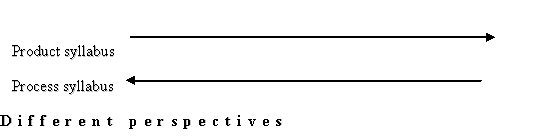
Figure 3.1: Product and process syllabuses
3.3.4.1 Product oriented syllabus
In a product approach to syllabus design, the focus is on language skills or knowledge and sometimes functions. Here grammar rules or structures and sometimes language functions or notions are listed in an order in which to teach them.
3.4.4.1.1 Structural/grammatical syllabus
The grammatical syllabus is the oldest of form of product syllabus. In this model grammar rules or structures are listed in syllabus, often out of context and it is believed that learning grammar rules will enable students write correct sentences. Speaking and listening skills are not considered important; syllabus does not mention any of this.
Grammatical syllabus lists grammatical forms and no or little attention is paid to their use. One form is related to one meaning. For example, the structure -Be + NP or Be + Adjective: 'the window is open', may be used to give information about the window - that is, it is open, not closed. Now if we consider the linguistic context of this sentence as in -'it's going to rain and the window is open', we see that the sentence -'the window is open' may mean a request - the speaker requests someone to close the window. Even 'a cloudy sky' or 'the moment when it has started raining, may supply a physical context for the sentence -'the window is open' to mean a request.
In grammatical syllabuses, structures are ordered in terms of grammatical complexities. Most rigid grammatical syllabuses take one item at a time for one meaning and require mastering of that item before moving onto the next (Nunan 1988: p-28). The extract in table 3.1 illustrates this point:
| Lesson (l) has drilled copula and adjective combinations: She is happy |
| Lesson (m) introduces the -ing form: She is driving a car |
| Lesson (n) introduces existential there: There is a man standing near the car |
| Lesson (o) distinguishes between mass and count nouns: There are some oranges and cheese on the table |
| Lesson (p) introduces verbs like and want: I like oranges but not cheese |
| Lesson (q) introduces don't previously known in negative imperatives: I don't like cheese |
| Lesson (r) introduces verbs with stative meaning: I don't come from Newcastle |
| Lesson (s) introduces adverbs of habit and thus the present simple tense; or rather the present tense in simple aspect: I usually come at six o'clock |
Table 3.1: Grammatical syllabus (from McDonough 1981: 21 quoted in Nunan 1988)
During 1970s the use of grammatical syllabuses came under criticism. Here are some problems associated with ordering grammatical items in terms of difficulty:
- Learners' ability to understand particular grammar point is not equal. What is difficult to one learner may not be equally difficult for another.
- In our real life communication we need more than just one structure to express one meaning. Therefore, introduction and teaching of one structure at a time slows learning process down.
- It is neither possible nor necessary to learn all the structure of a language. ( Huq et al: 1987: p-161)
3.3.4.1.2 Notional-functional syllabuses
As the grammatical syllabuses had been criticised as being inadequate, the notional-functional model of syllabus design became popular in 1970s. In developing notional-functional syllabuses inventories of notion like, object, entity, time, quantity, one and many, part and whole, probability, possibility etc. and functions like, requesting, complaining, apologising, asking and giving information etc. are listed as contents. In situational syllabuses different social settings or real life situations constitute the syllabus inventory.
Notional-functional syllabuses have been criticised in the same way as grammatical syllabuses have been, since the inventories of notions and functions do not necessarily present the way languages are learned any more than inventories of grammatical points or lexical items.
In fact, dividing language into discrete units of whatever types misrepresents the nature of language learning (Nunan 1988: p-37). Any content-based syllabuses frustrate learners developing creativity and language knowledge that will enable him to use it to communicate.
3.3.4.2 Process oriented syllabus
Process syllabuses focus on the process of learning itself rather than the end product of this process. Such non-linguistic approaches as procedural, task-based and content-based approaches are adopted in process syllabuses. As a result of this adoption, the distinction between syllabus and methodology becomes blurred.
In a process syllabus, the activities of the students are listed in the course content. There have been attempts, however, to distinguish between procedural and task-based syllabuses. But some like Richards, Platt and Weber (1985) have seen them as synonymous. They described them as follows:
... a syllabus which is organised around tasks, rather than in terms of grammar and vocabulary. For example, the syllabus may suggest a variety of different kinds of tasks which the learners are expected to carry out in the language, such as using the telephone to obtain information; drawing maps according to oral instructions; performing actions according to commands given in the target language; giving orders and interactions to others, etc. It has been argued that this is a more effective way of learning a language since it provides a purpose for the use and learning of a language rather than simply learning language items for their own sake. (Richards, Platt and Weber 1985)
In fact, procedural and task-based syllabuses share a concern with classroom processes, which promote learning. Nunan suggests that despite some differences in practice, principles underlying the two models are very similar. Both models focus on the role of the learner in the learning process.
Tasks are so designed as to 'creating conditions for coping with meanings in the classroom to the exclusion of any deliberate regulation of the development of grammatical competence or a mere simulation of linguistic behaviour.' (Prabhu: 1987:1-2) While carrying out any types of tasks, the conscious mind works out some of the meaning-content, a subconscious part of the mind perceives or acquires or recreate as a cognitive structure some of the linguistic structuring embodied in those entities, as a step in the development of an internal system of grammatical rules.
It has been argued that process-oriented syllabuses seem to be inadequate or ineffective in situations where there is no or little opportunity to use English. Not only that, students may have problems in identifying their needs and selecting right materials. (Ibid. 166)
3.3.4.3 Communicative syllabus
The principles of communicative syllabus design lie on the fact that learners learn a language by using it for a purpose. These purposes may be real purposes in everyday life or purposes created in the classroom. In communicative syllabuses needs of the learners in different situations are considered. And appropriate language for these purposes or situations are learned or taught. For example, one needs to buy some postal stamps. He/she goes to the post office and asks the postmaster for some stamps. For this, he/she needs the language at the setting i.e., at the post office; in other words, he needs the language to perform a communicative function i.e., requesting. In a communicative syllabus thus language functions e.g., requesting etc. or social setting e.g., at a post office etc. can be listed as syllabus inventory. Here one or more grammar items or structures, which can be used for requesting or in this situation, can be listed. Sometimes concepts or notions like place, time, amount or space etc. are also listed in this type of syllabuses. Thus a communicative syllabus may be of any of the following types:
- Notional or conceptual syllabus, in which notions like time, place, space or part and whole etc, are listed
- Functional syllabus, in which functions like greeting, requesting, commanding, offering help etc, are listed.
- Situational or setting based syllabus, in which situations like at the post office, at a dentist's, at a restaurant etc. are listed.
- Topic based syllabus, in which language points are put under different topics or areas like family, health, environment, hobby etc. which are relevant, appealing and interesting.
3.3.4.4 An eclectic approach: A collaborative balanced syllabus
We have seen that a communicative syllabus can be based on notions, functions, topics or settings. However, it is also possible to combine different focuses in a single syllabus. For example, the notion of time can be taught with the function of asking and giving time, the topic being travel, in a setting of a railway station. It is further possible to make a shift from one syllabus type to anther for the same group of students over a period of time. For instance, it may be that the learners who are following a thematic or topic-based syllabus may require some grammatical knowledge. In such cases, they can use a structural syllabus until they have improved their grammatical knowledge. Now they can use a functional syllabus, leading, finally to a task-based or process oriented syllabus. While making shift from one syllabus type to another, it is always important to address students' need and their reaction. Thus, information by and from the learners is very important. We call this approach an eclectic and collaborative approach. A communicative syllabus is flexible enough to cope with this collaboration.
Topics and themes, language functions and skills, activities, situations or settings, grammar items or structures and vocabulary items can be presented in an electic communicative syllabus in the following manner:
|
Theme |
Topic |
Language functions |
Skills |
Activities |
Settings/ situations |
Grammar items |
Vocabulary |
|
Life style |
How others live |
Asking and giving information |
Listening and speaking |
Talking to a tourist, describing places using a map |
At a mote, a tourist spot |
Present simple tense, question forms |
Verbs and nouns that go together |
Table 3.2: A collaborative balanced syllabus
However, all the focuses may not always be listed in the inventory. But a syllabus designed for secondary level students must have the eclecticism so that the teacher can shift the focus from time to time as per students' needs and requirement.
3.3.5 Syllabus layout
A syllabus can take any of the following shapes or formats:
- The linear format: In this format one language item is presented only once. A structural syllabus often takes this format.
- The cyclical format: In this format each item reappears once or more with a more difficulty level at each time.
- Story-line format: In this format a story is divided into units. A thematic unity is maintained within each unit. Language points are taught through continuous story telling technique.
Recurrence of language items is a characteristic of a communicative syllabus whereas thematic unity is also maintained within each unit so that the non-linguistic content of the text does not become meaningless.
3.3.5.1 Selection and grading in communicative syllabus
Selection and grading of syllabus contents vary from one type of syllabus to another. For example, in a subject-centred syllabus the selection and grading is based on the internal structure of the language. In a student-centred syllabus, on the other hand, selection and grading are done in terms of students' needs.
3.3.5.1.1 Selection and grading of language structures
In a structural syllabus language structures are graded in terms of difficulty. For instance, one grading may be as follows:
- S + V : NP +VP
- S + V + O/C: NP + VP + NP
- S + V + Adverbial: NP + VP + NP/PP
In a communicative model, while grading language structures, besides the structural complexity, frequency of the use of the structures (i.e., how often a structure is used) and the usefulness of the structures are also considered. And no structure is to be taught here for its own bias. Rather they are used as to convey meaning and function.
3.3.5.1.2 Selecting and grading of language functions
Language functions can be listed in any order. However, esp. in ESP (English for Specific Purpose) courses language functions are ordered in terms of learners' needs (i.e., whether or not the learners immediately need the function for communication), coverage (i.e., whether the function covers all predictable situations or not) and interest (i.e., whether or not the learners feel that they will immediately be beneficial from the function).
3.3.5.1.3 Ordering structures within functions
Different structures can be used for a single function. So, these structures should be ordered in a sequence that would be easier for the learners to acquire. Usually those which the learners can handle comparatively easily are introduced first. The frequency of use is also considered. For example, to teach the elementary and intermediate level students how to apologise the following order can be followed:
- Excuse me.
- (I'm) sorry
- (I beg your) pardon sir
- I'm afraid (and so on.)
3.3.5.1.4 Selection and grading of topics
Grading in topic-based or setting based syllabuses is similar to that of function-based syllabuses. That is, they can be listed in any order. Usually, different topics are listed, the ultimate aim being the use of language thematically related to these topics. Here, students' needs, interest and whether they are relevant for them are considered. Thus, topics like 'Hello, people of the world' or 'Leaving home' (a father talks with a daughter) can be listed under the thematic area 'People' (see for example, the contents of John and Liz Soars' Headway student's book (pre-intermediate).
3.3.5.1.5 Designing and grading tasks
In communicative language teaching the difference between syllabus and methodology has become unimportant. It is now how rather than what it is that is more important. That is, what activities constitute teaching is the prime concern. So, the syllabus designer's task is to design or select relevant and suitable tasks of different types and grade them in a useful and helpful order. However, all tasks are not communicative. Some sorts of translation and grammatical exercise may result in meaningless manipulation of students' effort. A good grammar exercise is always expected to be both meaningful and communicative. Penny Ur's Grammar Practice Activities (1988) contains a collection of interesting and meaningful communicative tasks. David Nunan (1989a) described communicative task as a piece of classroom work which involve learners in comprehending, manipulating, producing or interacting in the target language while attention is principally focused on meaning rather than form. Nunan further says that a task should have the sense of completeness, being able to stand alone as a communicative act in its own right. He proposes the following components of a communicative task:
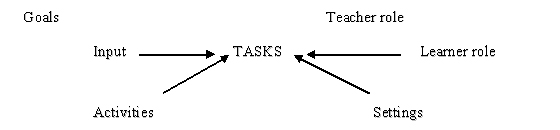
Figure 3.2: Components of communicative tasks (after David Nunan 1989a)
That is, a communicative task will contain some form of input data, which might be verbal (for example, a dialogue or a reading passage) or non-verbal (for example, a picture sequence). An activity, which sets out what the learner will do in relation to the input, is derived from the input. The task will also have a goal and roles for learners and teachers. It can be characterised as follows:
Goal: Exchanging personal information
Input: Questionnaire on sleeping habits
Activity: i) Reading questionnaire
ii) Asking and answering questions about sleeping habits
Teacher role: Monitor and facilitator
Learner role: Conversational partner
Setting: Classroom/pair work
(From Nunan ibid. p-11)
Different types of tasks are adopted in communicative language classes, the choice depending broadly upon students' needs or purposes for learning the language. An account of task types can be found in Prabhu (1987), Long (1985) and Candlin (1987).
3.4 Different approaches
Over the decades, language teachers and those concerned with language teaching have witnessed the emergence and elaboration of multitudes of methods of language teaching, based on different approaches of selection and gradation of language items, aspects or skills. These approaches were, in turn, based on different theories of learning and language learning. The beliefs of the nature of language and the nature of learning or language learning reflect certain theories of language or linguistics and theories of language behaviour or psycholinguistics. Insights from the psycholinguists helped to look in how much unique and alike are the processes of acquisition and learning of the first and second languages. Again, language is used in a society and the beliefs and knowledge about the nature of language and the nature of language learning are influenced by the findings of sociolinguistics. So, approaches to language learning/teaching reflect not only the theories of language or linguistics but also sociolinguistics and psycholinguistics.
With the study of First Language (L1) Acquisition, several theories of Foreign Language Learning (FLL) process have been pronounced, with similar issues being addressed. In fact, comparisons are frequently made with the way children learn their first language, as a means of providing hypotheses to guide foreign language (L2) learning research.
Different theories of language and learning give emphases on different aspects of language and learning respectively. As a result, different approaches come forward. For example, behaviouristic and mentalistic ideas about language learning, which have been evolved respectively from behaviourist and mentalist psychology, gave rise to two extremely opposite approaches to language learning/ teaching. The behaviouristic theories based exclusively on observable behaviour in the description and explanation of learning behaviour, while mentalistic theories based on the structure and mechanisms of the mind for such descriptions and explanations. Behaviouristic ideas about language learning are based mainly on a theory of learning, in which the focus is mainly on the role of behaviour, both verbal and non-verbal. Mentalistic ideas about language learning are based mainly on theoretical linguistic assumptions, in which the focus is on the 'innate capacity' of any child to learn any language.
Behaviouristic and mentalistic ideas about language learning have led researchers to take extreme positions. A recent reaction to these extreme positions is procedural approach to language learning. The procedural approach, while maintaining a mentalistic outlook, exhibits a renewed interest in the structure and function of children's linguistic input. It caused a shift in the discussion of language learning, away from 'innate' versus 'learned' linguistic ability towards the children's 'cognitive capacity' to discover structure in the language used around them and put these discoveries into use. This section will discuss these three approaches to language learning/ teaching and finally look forward for a communicative approach to language learning and teaching.
3.4.1 Behaviourist approach
In behaviourist or connectionist theory of psychology, behaviour is described in terms of 'stimulus (S) response (R)' model. A connection is established between stimulus or stimulus situation and the organism's response to this stimulus or stimulus situation. Behaviourist psychologists give emphasis on behaviour, which can be learned by humans and animals both. Skinner (1957) can be cited as a representative of this approach to learning behaviour. Skinner put rats in a cage with two levers in it. If the rat pressed the first lever, it would get a morsel of bread. Then if it pressed the second lever, it would get its powder thrown over it. After a number of trials the rats systematically pressed the first lever.
Skinner defined the notion of reinforcement. He says if a certain action repeatedly leads to a positive or negative result, the bits of recurrence or non-recurrence will be increased. Skinner speaks of positive reinforcement, if the action recurs more frequently, and of negative reinforcement, if the action does not recur. In literature of psychology, the term reinforcement is often exclusively used for positive reinforcement. From the observation, systematisation and prediction of animal behaviour, Skinner wants to draw conclusion about human behaviour. To him a theory of language should be derived from a general behaviourist learning theory.
Skinner (1957) is a well-known attempt at analysing language behaviour by tracing the factors influencing this behaviour. The factors are described in terms of stimulus and response. Each utterance follows on some sort of verbal or non-verbal stimulus; in the later case, there is a stimulus situation causing somebody to respond with an utterance. Language behaviour can, according to Skinner, only be studied through observation of the world around the language user; that is, through observation of external factors. One important external factor in the language learning process is the frequency with which a certain utterance is used in the child's environment. In the behaviourist view, children imitate the language of their environment to a considerable degree, and imitation is a strong contributing factor in the language learning process. A consequence of this is that a frequency, with which words and structures occur in the language of the environment, will influence the language development of the child. In addition, reinforcement is needed to arrive at a higher level of language proficiency. Parental approval is an important type of reinforcement in the language learning process: when a child produces a grammatically correct utterance, which is understood by its environment, approval from the parents may serve as reinforcement for such an utterance. In this way, the environment encourages the child to produce grammatical utterances. (Crystal 1987: 234, Khan 1998: 38 -40)
The above discussion reveals behaviourist view of first language acquisition. Insights derived from this influenced, to a great extent, second/foreign language leaning and teaching in 1950s and 1960s. Thus, second/foreign language leaning/teaching was seen as a process of 'imitation' and 'reinforcement': learners attempt to copy what they hear, and by regular practice, they establish a set of acceptable habits in the new language. Properties of the L1 are thought to have an influence on the course of L2 learning: learners 'transfer' sounds, structures and usage from one language to the other. Two kinds of 'transfer' have been distinguished. Similarities between the L1 and L2 cause 'positive transfer' while differences between the two cause 'negative transfer', generally known as interference. Positive transfer makes it acceptable to use the L1 habits in the L2 settings. (see Crystal 1987: 372). For example, the assumption that the subject goes before all other units in a positive sentence satisfactorily transfers from Bengali to English. On the other hand, in negative transfer L1 habits cause errors in the L2. For example, 'subject-object-verb' order does not satisfactorily transfer from Bengali to English. An example of typical interference that results from the influence of Bengali reduplication in English is I want some big big mangoes. Problems of interference provide a major source of FLL difficulties. The main aim of behaviourist teaching is thus to form new correct linguistic habits through intensive practice, eliminating interference and errors in the process.
For years behaviourist language learning spelt out that error analyses and contrastive analyses can serve a good deal in the understanding of language learning process.
There are several problems presented in this account of foreign language learning. Imitation does not account for everything that happens in the learning process. Learners always go on creating new sentences, which may not have any similarities with the model sentences they have come across with. Nor does all the errors occur from mother tongue interference. There are certain errors which have no relations with first language of the learners.
H.C. Dulay & M.K Burt (1973) observed 145 Spanish-speaking children aged from 5 to 8 while they were leaning English. Six structures were selected and the error patterns were analysed. The researchers found that only 3% of the errors were due to the mother tongue interference while the majority of the errors (85%, with a further 12% unclear) thought to have resemblance with the errors that appeared in the course of L1 acquisition. So, contrastive analyses, which is a procedure of systematic comparison of the L1 and L2 properties to predict learning difficulties, can explain only a small part of what goes on in foreign language learning process.
3.4.2 Mentalistic approach
Mentalistic theory of language acquisition stems from the generative account of language, where it was intended to discover the mental realities underlying the way people use language. Major distinctions were made between a person's knowledge of rules of language and the actual use of that language in real situations. The first was referred to as 'competence' and the second as 'performance'. Competence was seen as an aspect of general psychological capacity.
This theory also, like other ones, takes into account the beliefs of a psychological theory. Chomsky (1957), in his discussion of Skinner's verbal behaviour, derives the first serious attack on the behaviourist view of language learning and said that human behaviour is considerably more complex than animal behaviour, and a description of language behaviour cannot be just a description of stimuli and responses to these stimuli, rather it primarily has to be the description of the 'innate' ability of the human beings to learn a language. Chomsky discusses Skinner's theoretical concept point by point and argues that language behaviour is specific to human and all humans can acquire it. It could never be explained through animal behaviour. The laboratory experiments cannot lead to a conclusion about any kind of human behaviour, let alone language behaviour.
It was argued that children must have been born with an innate 'capacity' of language development: the human brain is ready to learn language in the sense that when the children are exposed to speech, certain principles of discovering and structuring language automatically begin to operate. A newly born child listens continually the language around it over a period of time, and develops its own grammar. The knowledge of this grammar and the principles of discovering and structuring language together constitute the child's Language Acquisition Device (LAD). The child's LAD is thought of acting like a 'black magic box', illustrated in the diagram below. The child uses its LAD to make sense of the utterances heard around it, deriving from it 'primary linguistic data' hypothesises about the grammar of the language what the sentences are, and how they are constructed. This knowledge is often used to produce sentences, which after a process of 'trial and error', corresponds to those in adult speech: the child has learned a set of generalisations, or rules that govern the way in which sentences are formed. The process of development can be summarised in the following way:
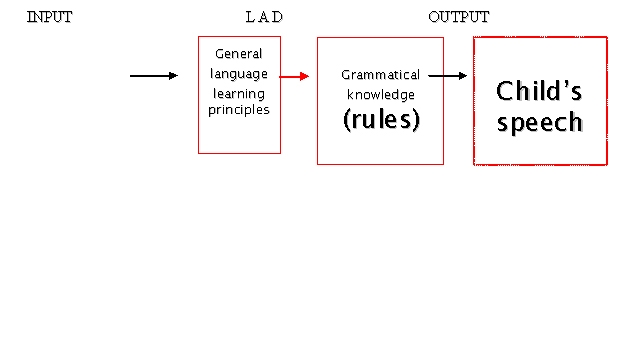
Figure 3.3: Language Acquisition Device (LAD)
There have been different opinions over how best to characterise LAD. Some have argued that LAD provides children with linguistic universals, such as existence of word classes and word order while others posses the view that it provides only general procedures for discovering how language is to be learned. All of its supporters, however, agree that some such notion is needed in order to explain the remarkable speed with which children learn to speak, and the considerable similarity in the way grammatical patterns are acquired across different children and languages.
In the mentalistic approach to foreign language learning, it is believed that learners are credited with 'innate capacity' to learn a foreign language in a creative way, to work out hypotheses about the structure of the foreign language. They construct rule, try them out, and alter them if they prove to be inadequate. Language learning in this account proceeds in series of transitional stages, as learners acquire more knowledge of L2. At each stage they are in control of a system of language, which is equivalent to neither L1 nor L2; Selinker (1972) calls this language an interlanguage. Errors, in this account, provide positive evidence about the nature of language learning process, as learners gradually work out what the foreign language system is. For example, errors like I goed may result from faulty generalisation about past tense morpheme, which will disappear gradually as the learner goes on discovering more facts about L2.
3.4.3 Cognitive approach
The debate between the mentalists and the behaviourists about whether language is 'innate' or 'learned' comes to an end with the advent of cognitive approach to language acquisition. In fact, cognitive approach, which stems from cognitive psychology, bridges the gap between the earlier two approaches. Cognitive psychologist Jean Pigate (1896 -1980) gave a model of cognitive development of children, where he proposed that there are certain stages in their cognitive development. According to this approach, language acquisition must be viewed within the context of children's intellectual development. Linguistic structures will emerge only if there is an already established cognitive foundation for example, before the children can use structures of comparison e.g., this car is bigger than that car, they need first to develop the ability to make relative judgement about size.
Though it still remains problematic to relate a child's specific cognitive development to specific linguistic features, the interaction between the internal and external factors in the process of language development became central in this approach. Some researchers (e.g., van Els et al 1987), however, argue that the starting point in this approach is still a mentalistic one. It is argued that children use their cognitive capacity to discover structure of the language used around them. Both children's comprehension and production skills are seen as a continuously expanding and changing system of discovery procedures. Such a procedural approach can be represented as follows:
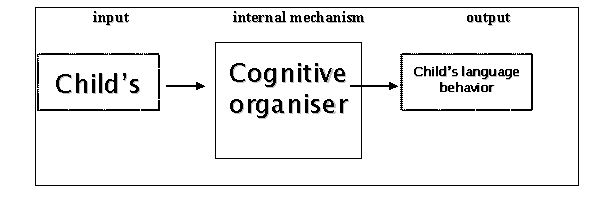
Figure 3.4: The input/output system in language development
3.4.4 Communicative approach
Communicative approach to language learning and teaching stems from Dell Hymes' use of the term communicative competence. Since the first coinage of the term competence in Chomsky (1957) there has been debate over how to define the term. So, before going to the detail discussion of communicative methodology, it will be better to recall how the view of communicative competence developed.
Throughout the history of language teaching, the central question of concern was how to define proficiency in a second or foreign language. In traditional approaches to language teaching, the degree of proficiency that a learner achieves is described in terms of his mastery of 'structures' - that is of phonology, morphology, syntax and lexicon of the target language - a certain amount of grammar, and a certain number of words.
Although all the sounds and structures are attempted, a number of sounds and grammatical items etc. are usually specified in advance of a course of study. The specification can vary widely from course to course. Learners may also vary widely in the degree of mastery of structures they attain. But this kind of knowledge is not adequate for those students who want to learn a language in order to make use of it rather than to know about it. It is a common place of cognisance now that languages are learned so that people can communicate and communication involves more than the structures.
3.4.4.1 Proficiency in a second or foreign language
To describe what constitutes the proficiency in a second or foreign language, this section starts from Chomsky's early work especially his distinction between linguistic competence and linguistic performance. On the coarse, it will discuss the reactions towards it that came from anthropologists, philosophers and other linguists.
Chomsky made a distinction between linguistic competence (i.e., what the speaker knows) and linguistic performance (i.e., what the speaker does i.e., says or writes, at any time). For him, concept of competence and performance is concerned primarily with an ideal speaker-listener, in a completely homogeneous speech community. His ideal speaker-listener knows its language perfectly and is unaffected by such grammatically irrelevant conditions as memory limitations, distractions, shift of attention and interest, and errors in applying this knowledge of the language in actual performance (Chomsky 1965: 3).
Chomsky's use of the terms 'ideal speaker-listener', 'homogeneous speech community', limits the field of investigation of linguists. Chomsky described as performance a number of factors that should be handled in terms of competence (see Munby 1978, 11th print 1997: 9). Hymes, Habermas, Jacobovits, Campbell and Wales, Cooper and others, all reject Chomsky's restricted view of competence.
Habermas says that in order to participate in normal discourse, the speaker must have in addition to his linguistic competence basic qualification of speech and of symbolic interaction at his disposal, which we may call 'communicative competence' (Habermas 1970, see in Munby 1978, 11th print 1997: 11).
Dell Hymes claims that Chomsky's category of competence does not provide any place for competency for language use neither does his category of performance, despite his equation of language use with performance. Hymes defined competence in a different way. It included interactional or communicative Competence. His theory of language is a theory of language users and theory of language use. It recognises that language users make four kind of judgements as they use it. While Chomsky's theory includes judgements of grammaticality and acceptability to the native speaker, Hymes' theory includes judgements of possibility, feasibility, appropriateness and actual performance. For him, a sentence may, thus, be grammatical, awkward, tactful and rare or grammatical, easily understood, insulting and frequent and so on. Grammaticality in Hymes' model is only one of the four sectors of communicative competence, in Chomsky's model grammaticality was competence (Hymes 1972: 278; see also Yalden 1991: 17 and Munby 1997: 15).
Like Hymes, Halliday also criticised Chomsky's view of organisation of language as only grammatical rules linking with referential meaning. While Hymes is concerned with Language in use, Halliday is interested in language in its social context, and in the way language functions are realised in speech. For Hymes, 'there are certain rules of use, without which rules of grammar would be useless' (Hymes 1971). For Halliday, 'the study of language in relation to society in which it is used to situation types, i.e., the study of language as 'text' is a theoretical pursuit, no less important and central to linguistics than psycholinguistic investigations relating the structure of language to the structure of human brain.' (Halliday 1970: 175).
Hymes and Halliday both deal differently with Chomsky's competence -performance distinction but affect the concept of proficiency in language by adding to it the dimension of social appropriateness or social context. Although there are other influences on language use and proficiency in language use, Hymes' concept of communicative competence have been particularly useful in applied linguistics and language teaching. It affects deeply the notion of what should be or can be taught and what sort of preparation and responsibility the teacher should have.
Cooper reinforces Hymes' point that effective communication requires more than linguistic competence. For effective communication, speakers need to know not only how to produce any and all grammatical utterances of a language but also how to use them appropriately, i.e., what to say with whom, when and where. Cooper (1968) suggests two grammars or sets of rules the speaker's linguistic and communicative or contextual competencies as comprising two components of communicative competence. With reference to proficiency testing in a second language, Cooper says that one cannot assume that information gained from testing one will necessarily tell us anything about the other (see in Munby: ibid. 17). Deriving from Gumperz (1964), Cooper further points out that the social situation in which the speaker use the second language may require more than one variety of the language, i.e., he will need to have verbal repertoire from which he can select appropriately.
Widdowson distinguishes communicative competence i.e., the rules of use in particular social situations from speaker's grammatical competence, i.e., the rules of grammar and says that both are components of speaker's competence (Widdowson 1971 and 1975). Widdowson takes into account the cultural diversity and says that to the learners outside the European cultural tradition rules of use need to be carefully taught, which means, among other things, giving sufficient attention to communicative competence as it is given to grammatical competence. Canale and Swain (1980) says that there are four components of communicative competence; these are grammatical competence or the mastery of language code, scolinguistic competence or the appropriateness of utterance with respect both to form and meaning, discourse competence or the mastery of how to combine form and meaning to achieve text, and strategic competence or the mastery of verbal and non-verbal communication strategies. In Bachman and Palmer's theorisation, communicative competence comprises of grammatical competence, pragmatic competence and sociolinguistic competence. (Quoted in Yalden 1991: 23 from L.F. Bachman and A.S. Palmer, "The construct of validation of some components of communicative proficiency," TESOL Quarterly 16/4, p-451).
The above discussion reveals that in developing the concept of communicative competence contributed scholars from various disciplines including linguistics, sociolinguistics, psycholinguistics, and sociophilosphy, sociosemantics and discourse analysis. Although linguistics has been the starting venue of the concept of communicative competence, all the linguists have not shown equal alliance to it. Some linguists work more closely with problems of language development than others. They are traditionally called applied linguists.
Despite the attempts to define different components of communicative competence, there still have been problems of categorisation of some factors and of how different components interact with one another. Yalden (1991:23) in this regard states that in some definitions of communicative competence there is confusion - or at least - among the categories of factors being considered for inclusion. For some, communicative equals to functional while for others it is oral and for yet some others it entails the actual use of language. Some may interpret it as a radical departure from grammar and translation teaching while some others write books on communicative translation (Allan Duff/Translation) or Communicative Grammar (Leech et al/A Communicative Grammar of English).
3.5 The NCTB curriculum for English (secondary level)
Aims stated:
The new curriculum has been so developed as to provide communicative syllabus for the teaching and learning of English at the Secondary and Higher Secondary levels. The document aims to provide clear and comprehensive guidelines for the textbook writers, teachers, students and those who are concerned with the teaching and learning of English from classes 6 to 12.
It has been felt that a change is to be brought about in English teaching, particularly in the methodology of English language teaching.
Syllabus content:
For decades or more English has been taught as a content-based subject like mathematics or science and so on. But it is not a content-based subject; it is a skill-based subject. English is not about any particular subject but it is rather about practising something - listening, speaking, reading and writing. Of coarse, while practising these, students do not do these in a vacuum. Rather they speak, read or write about something. Topics, therefore, have been included in the curriculum, but they are not important in themselves. They have been so treated as to work as necessary vehicles for the practice of four language skills.
Methodology:
The document states that English is about practising language skills. So the English language classroom should be an interactive one, where students will practise English with teachers and other students. The document emphasises on making such an environment that will help the learners acquire English through constant and regular practice.
Textbooks and teaching materials:
The new curriculum also necessitates many new things. Some of these are suitable communicative language materials, which will enable teachers to reactivate their classes.
Examination system:
The necessity of developing appropriate examination system has also been spelt out. Such examinations test learners' language skills rather than their power of memorisation of the textbooks (or even worse the notebooks or guidebooks) without understanding.
To sum up, the present curriculum aims to
- provide communicative syllabus
- provide clear and comprehensive guidelines for textbook writers, teachers, students and those who are concerned with the teaching and learning of English at secondary level in Bangladesh
- bring about changes in syllabus content, textbooks and teaching materials, and teaching methodology
- create appropriate classroom environment, which will help learners acquire English
- devise appropriate examination system in order to test students' language skills.
3.5.1 Syllabus checklist
3.5.1.1 Objectives set out
The English language syllabus focuses on four language skills of listening, speaking, reading and writing. These are to be carried out through learner-centred activities within communicative contexts. Such contexts should reflect the real life situations outside classroom. Moreover, these should be relevant, interesting and enjoyable.
The document addresses and recognises the students' existing communicative competence - that is what they have learnt in the primary level. It recommends the revision of the previous work and extension of the four skills.
At Junior Secondary level, it aims to ensure that students enjoy while acquiring English and are able to use it effectively in real situations outside the classroom. Students will obtain an elementary to intermediate communicative competence at this stage.
At Secondary level, the present curriculum aims that the students will acquire an intermediate command of the four skills.
The National Curriculum recognises English as essential work-oriented skill that is needed if the employment, development and educational needs of the country are to be met.
It has been observed that some students leave school as early as they complete Junior Secondary or Secondary education, while some others proceed through the Junior Secondary up to Secondary and Higher Secondary levels. Whether they leave school to take up a vocation or continue studies, they need to use English. So, English should be taught as something to be used rather something to be talked about.
Especially those students who progress through Higher Secondary to Tertiary levels need an advanced level proficiency of reading and writing skills.
The document suggests that at Higher Secondary level students should be given more intensive and extensive reading tasks and various types of appropriate writing tasks.
Comprehension skills should be continued focusing on finding, processing and re-expressing information with emphasis on language rather than literature.
3.5.1.2 Class-wise competencies in terms of four skills
At each stage of Secondary education a level of proficiency is expected to be obtained. Objectives are set out for a more advanced level of proficiency at each higher stage. Specific objectives of English language teaching and learning have been spelt out in terms of four skills of listening, speaking, reading and writing. However, the syllabus suggests that the four skills should be so integrated as it happens in real life communication. The syllabus aims to facilitate the teaching and learning of English with a methodology that will encourage the learners to acquire communicative competence in English through regular practice of these skills in the classroom. Such a methodology is student-centred rather than teacher-centred and is characterised by lively student participation, esp., in pairs and groups. (National Curriculum Document, Report 2nd volume 1995 English Syllabuses for Junior Secondary (3.1, 4.1, 5.1), Secondary (3.1) and Higher Secondary (3.1) Levels). The following paragraphs projects the gradual development of class-wise competencies in terms of four skills as it is intended in the national curricula.
3.5.1.2.1 Speaking skill
In speaking, class 6 students are intended to be able to
- give instructions and commands
- participate in short and simple conversations
- recount a series of events
- describe people, objects etc.
- recite simple poetry with understanding
- speak intelligibly in clear, correct English appropriate to the situation.
The statement of intent about speaking sub-skills for class 7 students remains same as that for class 6 students.
Class 8 students, however, are expected to obtain a advanced level of proficiency. They should be able to tell simple narrative and descriptive stories and talk about themselves. They have to acquire these speaking sub-skills in addition to those they should have acquired in classes 6 and 7.
In class 9 and 10, students are expected to attain a yet advanced proficiency. Here students are intended to be able to:
- give a series of instructions and commands
- initiate and participate in conversations at an advanced level on variety of topics
- express opinions clearly and logically
- participate actively in debates
- tell narrative and descriptive stories and talk interestingly about themselves
- recite poetry with understanding
These are in addition to those obtained in the previous stage i.e., in Junior Secondary level.
3.5.1.2.2 Listening skill
In listening, class 6 students are expected to be able to
- comprehend instructions and commands
- participate in short and simple conversations
- understand text of appropriate length and varied types: (i) narrative, (ii) descriptive, (ii) simple poetry
- listen to simple passage (i) for gist, (ii) for specific information (ii) in order to take simple dictation
- distinguish between the sounds of English and recognise intonation patterns of statement and questions within appropriate contexts.
The statement of intent about listening sub-skills for class 7 and 8- students remains same as that for class 6 students. However, objectives set out for class 9 and 10 include listening sub-skills at an advanced level. Here the students will
- comprehend a series of instructions and commands
- participate in conversations discussions at an appropriately advanced level on variety of topics
- understand argumentative and authentic texts; these may include radio and television announcements, suitable literary texts etc.
- recognise stress and intonation patterns.
These are in addition to those obtained at the Junior Secondary classes. Listening sub-skills spelt out for class 10 are same as those spelt out for class 9.
3.5.1.2.3 Reading
Silent reading is recommended for all classes from 6 to 10. Reading skill objectives set out for class 6 and 7 are same, though they are mentioned in separate sub-sections. Students at these levels are intended to be able to
- comprehend written instructions, narrative and descriptive texts and simple poems
- look up words in simple dictionaries
- infer meaning or words from their contexts
- begin (in class 6) and continue (in class 7) extensive reading using their 'Supplementary Readers'
- recognise the functions of different punctuation marks.
Reading skill objectives set out for class for class 8 include sub-skills at an advanced level. Here in addition to the reading mentioned above students are intended to be able to
- read and understand, in addition those mentioned for class 6 and 7, informal letters and newspaper texts.
- use such simple written reference sources as indexes, table of contents and dictionaries
- read extensively with appropriate speed
- skim, scan, recognise topic sentences, recognise cohesive devices
- recognise graphological devices
In class 9 and 10, students are intended to acquire reading sub-skills at a yet advanced level. These include among others the following:
- understand argumentative texts, formal and informal letters and suitable literary texts
- use general reference works related to subjects of study at this level
- distinguish fact from opinion, detect appropriate inferential meaning and draw appropriate conclusion
3.5.1.2.4 Writing skill
The following objectives will be realised in class 6 in clear, legible handwriting. In this class students should be able to:
- write simple (i) instructions (ii) narrative, (iii) descriptions and (iv) informal letter
- plan and organise the above task adequately
- take simple notes and dictations
- use different punctuation and graphological devices appropriately.
In class 7 and 8, students will acquire a writing proficiency at an advanced level. In addition to the above writing sub-skills they will use linking words and reference words appropriately.
In class 9 and 10, students are intended to acquire a writing skill at a yet advanced level. In addition to the above sub-skills, they are expected to be able to:
- write formal and informal letters, including job applications, reports, clear argument, summaries and dialogues.
- demonstrate imagination and creativity in appropriate written forms.
- fill in forms and write curriculum vitae.
- plan and organise the above tasks appropriately so as to communicate ideas and facts clearly, accurately and with relevance to the topic.
- use such cohesive devices as linking words and reference words appropriately.
3.5.1.2.5 Integration of the four skills
Although all four skills are mentioned separately, the integration of these skills lie on the following observations:
- (Giving and understanding of) instructions are included in all skills.
- In both comprehension skills (i.e., listening and reading skills) the following are included:
- comprehension of instructions ( written or spoken)
- narrative and descriptive texts/discourses
- simple poems
- recognition of intonation patterns (in listening)/ punctuation marks (in reading)
- in both productive skills (i.e., speaking and writing) students should be able to give instructions and express intelligibly.
- in both motor skills (reading and writing) students recognise and use different punctuation marks; recognise the significant of (reading) and use (writing) such cohesive devices as linking words and reference words appropriately, understand (reading) and write (writing) narrative, descriptive and argumentative texts, formal and informal letters and reports.
In fact, while practising speaking, students involve listening and the vice versa. Listening and speaking, thus, go hand in hand in conversation practice, in giving and understanding instructions and commands, in recitation of poems etc.
A good array of different sub-skills has been mentioned in this syllabus in order that learners can develop all four skills. Extensive reading (e.g., using supplementary readers), intelligible speaking and planning and organising suitable speaking and writing tasks have been recommended for every class.
However, as the four skills are of different modes - two (listening and speaking) skills are auditory-vocal and the two others (reading and writing) are visual, the activities used for carrying out teaching and learning of these skills vary considerably in some instances. Despite, all activities are so designed as to facilitate learning language skills.
3.5.1.3 Syllabus contents
The syllabus contents include structures, topics/themes, vocabulary, numbers, handwriting, poems and dialogue and Drama.
3.5.1.3.1 Structures and functions
The document states that the structures are so ordered as to facilitate learning. Structures covered in the previous level are revised and new structures are suggested to be recycled as appropriate. However, explicit grammatical analysis is discouraged as it can easily demotivate students, causing loss of both interest and confidence. Structures should be taught implicitly through regular use within realistic contexts. So, it is situations and functions which are to be graded and are intended to place structures within communicative contexts.
In ordering structures and function, a structural-functional approach has been adopted. Structures have been sequenced in terms of complexities and frequency of appearance and language functions have been placed within structures. That is, function or use of each structure is to be taught. The following extract from the syllabus of class 10 will make this point clear (Extract from NCTB syllabus for class 10):
- Further uses of may/ might/ should & ought to. With the function of expressing possibility and obligation. Example: 1. You might like to lean French. 2. If you do you ought to buy a good dictionary.
- Use of though/although + clause. With the function of talking about contrasting but related circumstances. Example: 1. Although the sea is calm, it might become rough. 2. Even though the sea was calm, no body wanted to swim in it.
- Use of question tags: can/can't they? do/don't they? With the function of checking or confirming. Example: 1. Tareq can't fly a plane, can he? 2. You do want to eat spaghetti, do you?
- Use of be + adj. + phrase. With the function of describing capabilities and characteristics. Example: 1. Shanti is good at swimming. 2. Abul is afraid of spider.
- Use of be + adj. + to + verb. With the function of describing feelings in relation to circumstances. Example: 1. Tareq was happy to see his friend in New York. 2. He was surprised to see such high buildings there.
At each stage, language items taught in the previous stage, it is suggested, should be repeated and every new item should be recycled.
This approach is unlike the ones where structures are ordered within language function. We call this functional-structural approach. In a functional-structural syllabus language functions are selected in any order as learners' needs. For each function possible language structures are selected in terms of frequency of appearance in real communication and ordered in terms of complexity.
3.5.1.3.2 Topics/ themes
The curriculum documents suggests a wide range of topics and themes for each class and states that these topics are suggestive rather than exhaustive. The principle underlying the selection of these topics is that students should start from their familiar environment and culture, and gradually expands towards other people's cultures and societies. It is suggested that these topics should be used as mere vehicles for practising language skills rather than being taught for their own sake. The curriculum emphasises on the appropriateness of the topics. That the topics should be appropriate in relation to students' age, interest and needs. Further these should be of educational value and suit both urban and rural students.
3.5.1.3.3 Vocabulary
A number of new words should be introduced in each class. So far as the document suggests nearly three hundred new words will be introduced in class 6 and another three/four hundred in class 7 and a further three/four hundred in class 8. Further introduction of new vocabulary items as mentioned the National Curriculum is as follows:
| Class | Number of new vocabulary to be introduced (approximately) |
| Class 9 | 300 - 400 |
| Class 10 | 600 - 800 |
Table 3.4: Number of new vocabulary to be introduced in different classes
However, the words should not be presented in isolation. Rather, they will be introduced through suitable texts and meanings of the words should be defined in relation to use within specific contexts. That is the focus should be on contextual meaning rather than the conceptual meaning. Students will discover the meaning from the text itself. Sometimes they may need help from the teacher or need to consult a dictionary. In each case, the meaning should be presented in English. Translation should be discouraged. It can be used only as a checking device, ensuring that the meaning has been correctly understood.
The document suggests that a list of vocabulary should be provided at the back of the teacher's book in alphabetical order together with lesson and page reference. It should not be included in any of the student' textbooks as this may encourage the learners to look up words before having tried to infer meaning from the context.
The document suggests a logical ordering of vocabulary. While introducing new vocabulary items, its suitability and relevance should be carefully thought about. It suggests the inclusion of cardinal and ordinal number as per students' needs and capability to cognise them.
In certain stage some new vocabulary may show up inevitable. The curriculum has suggestions regarding which items should be introduced at which stage. For example, current linking verbs like 'look', 'feel' 'seem' etc. and resulting linking verbs like 'grow', 'fall', 'turn' etc. and relative pronouns 'which' 'what' 'that' and 'what' should be included in class 9 but relative pronouns 'whose', 'who(m)' and 'which + to' should included in class 10.
3.5.1.3.4 Handwriting
Students should write in legible handwriting. The curriculum suggests that the cursive handwriting should be introduced and practised in the primary level and these should be revised and further practised in classes 6 and 7, and there should be no revision in class 8.
3.5.1.3.5 Poetry
Limited use of poems and songs is useful at all levels. The document suggests that this should be mainly for enjoyment and understanding and practice of rhythm and stress. While practising rhythm and stress, memorising can be useful and valid.
3.5.1.3.6 Dialogues and drama
Dialogues and drama activities are considered as one of the most natural and effective ways of practising spoken language within meaningful contexts. The document suggests that the dialogues should be provided in a natural informal speech as far as possible for pair practice. Certain amount of memorisation is suggested for acting out dialogues. Dialogues can also be excerpts of actual plays, but these should be to a limited extent, as memorised dialogues are not communicative in the sense that language is fossilised within situation in such dialogues.
3.5.1.3.7 Values
The present curriculum like any pertinent curriculum seeks to realise the larger goals that are envisaged in the national educational system and reinforce the social, cultural and moral values of the country as a whole. It aims to do this in two ways.
Firstly, language is presented within contexts which are appropriate to the society and culture of Bangladesh and which embody its moral and spiritual values. For this purpose, suitable themes and topics are selected which include traditional stories and fables, which put across the curriculum the moral massage. English language is presented to the students within the contexts which are familiar to the students. They learn the language for their own self-expression, rather than as a foreign language associated with other people and cultures.
Secondly it aims to ensure that essential social values will be learned in most effective way. That is students practise them within real communicative contexts. They will develop a sense of working together in pairs and groups, co-operation, responsibility and independence.
3.5.1.4 Textbooks and teaching aids
The curriculum discourages the use of books like Grammar, Translation and composition or the ones like Functional Grammar, as these are inappropriate for teaching purpose and testing purpose. The curriculum suggests a vivid guidelines and format for textbook writers to write books appropriate for communicative language teaching and learning. It also recommends the use of supplementary workbooks and simplified readers to be supplemented with the main textbooks.
Supplementary books include alongside the simplified readers, a communicative grammar book like English Grammar in Use by Raymond Murphy (published by Cambridge University Press) or Oxford Practice Grammar by John Eastwood (Published by OUP) for the students and a teacher's book or a teacher's edition of the students textbook with the student's materials and the teacher's guide on the facing pages.
A stimulating atmosphere for language teaching, the curriculum suggests, can be created by displaying posters, charts, maps, advertisements, timetables and signs together with works produced by the students themselves, in the classroom. In fact teaching aids that can be used in language class are enormous and the present curriculum recommends their use, provided that their use will be suitable and appropriate to the students needs.
3.5.1.5 Teaching methodology
In designing the new curriculum, a communicative approach to language teaching has been adopted. However, for developing a communicative curriculum, a syllabus that aims to teach language as a medium of communication is a must. Not only that, teaching a communicative syllabus clings to adopting a communicative methodology. This also involves the use of communicative textbooks and teaching materials.
3.5.1.6 Other components of the curriculum
The present curriculum gives vivid guidelines for textbook writers. These include specification, format, and characteristics of communicative textbooks, examples and characteristics of communicative activities, exercise types and some yardsticks for evaluating communicative textbooks.
In addition to the course book, the present curriculum suggests student's workbooks, communicative reference grammar books, simplified readers, and suitable dictionary to be available for the students.
The curriculum also suggests that a teacher's guide should accompany the student's textbook. A separate guide may be produced based on the textbook. A separate teacher's edition of the textbook may be produced with the teacher's materials and the student's materials on facing pages. However, the curriculum does not recommend that the students will be given a textbook that incorporates teacher's guide, especially as guides will, amongst other things, provide answers to questions.
The curriculum also recommends that audiocassettes should be produced to accompany textbooks in order to help teachers and students with their practice of listening and speaking skills in the classroom.
3.5.2 Syllabus of Madrasah Education Board
For class 6 - 8 Madrasah Education Board does not give any syllabus, in fact. What it does is just give a list of book approved by the board itself. These books are of two categories. On the first category fall English Readers, which are collection of prose and poetry. In the prose section some of the stories are retold from famous native speaker English authors. But most are the main texts of the local writers. Amongst the local writers, however, almost none are the first-rate creative writers of Bangladesh:
On the second category fall traditional grammar books - mainly books of English grammar, translation and compositions, which include essays, paragraphs, personal, letters and letters of application. Sometimes there are options for the teachers to choose appropriate textbooks for their students. These books, of coarse, vary considerably in their nomenclature - for example, there are four grammar book options for class 6. For class 7, there are three options. Some writes name their books 'communicative', while some others 'functional'. However, the internal arrangements of these books are almost same as the traditional grammar, translation and composition books. There are options for English Readers also.
Syllabus for class 9 and 10
This syllabus is based on the format for Dakhil examination question paper. Marks distribution is given in detail. The checklist includes prose, poetry, grammar, letters translation and essay. For prose and poetry, the Madrasah Board has its own publication - Dakhil English Selection. The selection consists of original texts of the native speakers of English language and texts retold from local writers.
In grammar section, the syllabus includes the following:
- appropriate preposition
- pairs of words
- use of right form of verbs
- correction
- change of voice
- change of narration, and
- articles
In Dakhil examination, students have to attempt 3 grammatical questions out of 6, each consisting of 5 marks; write a personal letter or application, which carries 5 marks, and an essay, which carries 10 marks and translate a passage from Bengali into English, which carries 8 marks. Students have to write answers, in a word or in a sentence, of 10 (4 from prose, 4 from poetry and 2 from grammar) objective type questions each carrying 1 mark out of 16 (given 6 from prose, 6 from poetry and 4 from grammar). The rest of the questions are set from prose and poetry.
In the prose section of the textbook, there is a chapter 'Giving direction', which involves some communicative activities. However, as few/no questions are set from this section, in the examination to test students' communicative competence, neither students nor teachers take this section seriously. The above discussion projects that the madrasah students have little scope to practise language skills, as the syllabus itself is not a communicative one.
3.6 Conclusion
This chapter has discussed different components and stages of curriculum development and different approaches to curriculum development. And finally, looked in the existing English language curriculum of Bangladesh. The part on syllabus specification has been discussed in some details. Although some inconsistencies have been found in the levels of planning and syllabus specifications, if it is implemented in a proper way, that is, if communicative textbooks are adopted and teachers adopt a communicative methodology while teaching in the classroom, the ELT scenario of Bangladesh can reach a satisfactory state. However, most of the inconsistencies of the present curriculum lie on the fact that the curriculum guidelines and syllabus checklist produced by the Bangladesh National Curriculum and Textbook Board (NCTB) do not reach the teachers and the textbook writers. Even many teachers do not opt to get those guidelines. Many teachers interpret the question patterns and marks distribution provided at the end of set textbooks as syllabus. In most cases, it is the question patterns that determine the syllabus. This leads them to adopt a faulty method of teaching.
CHAPTER 4
LANGUAGE TEACHING THEORIES AND THEIR IMPLICATION: A REVIEW OF ENGLISH TEACHING MATERIALS IN BANGLADESH
4.1 Introduction:
In different types of institutions, different types of teaching materials and textbooks are used. Textbooks used in schools and colleges vary considerably from those used in madrasahs. Books used in English medium schools include foreign tittles, and Technical Education Board has its own publications. This chapter studies the English textbooks of general education and madrasah education subsystems.
4.2 The case of textbooks in ELT/L in Bangladesh:
The aims and objectives of teaching and learning English at different levels of education in Bangladesh, as stated in the national curriculum report, are expected to be achieved through various curricular activities. These activities include the following:
1. Making the infrastructure or the physical facilities such as classroom and teaching aids etc, favourable for English language teaching and learning
2. Developing or adapting suitable materials such as textbooks and teacher’s guides etc.
3. Developing appropriate teaching methodology
4. Developing appropriate evaluation tools and evaluate the success of the programme at its different stages
5. Having always an open window to bring about necessary changes to make it becoming-appropriate for the times to come on the basis of the feedback received from evaluation results at different stages of the programme, language policy, teachers’ and learners’ needs and development made in other developing and developed countries.
If all these activities are carried out properly, the ELT/L situation in Bangladesh will become a more favourable one. However, of all of these tools and activities, to improve ELT/L textbooks are regarded as the most important one for facilitating teaching and learning of English in Bangladesh. (Haque et al 1997: 73)
In Bangladesh textbooks are produced centrally by the National Curriculum and Textbook Board (NCTB). From primary through secondary and higher secondary levels all the schools have to use the same sets of books. There are no options at any stage to choose an alternative course book.
On the other hand, in many advanced countries, textbooks are not developed centrally by the government or any semi-government organisations. There are different writers and publishers who write and publish books with different tittles. So, students and teachers in those countries have ample opportunities to choose a tittle from different options available in the market. Teachers in Bangladesh, in fact, have no choice in selecting textbooks for their classes. Also quality support materials are neither commercially produced nor available for use in schools. To make this situation worse, most teachers are not adequately trained in ELT. As a result, they have to solely depend on textbooks for teaching English.
The students also have hardly any opportunity to use English in their real life. They have hardly any supplementary reading materials to reinforce their knowledge and skills they learn from their textbooks. Textbooks are, therefore, the only means for teaching and learning English.
So, the English language teaching and learning situation in Bangladesh is an unfavourable one. In such an unfavourable situation, where textbooks are the only materials easily available, they (textbooks) should be so developed as to help both teachers and students with sufficient examples and a variety of materials for practice in communicative use of language. To fulfil this function in Bangladesh situation, a communicative textbook should have the following characteristics:
1. A clear lesson format should be followed throughout the book. Each lesson should have materials for a class of about 40 to 45 minutes. And clear indication should be given on how the teacher will organise each lesson for a period. In the case of longer lessons or weak or mixed-ability students, the teachers should have freedom to divide or reorganise materials of a lesson for the use of two classes.
2. Objectives of each lesson should be clearly mentioned either in the textbook or in the teacher’s guide.
3. Students will learn English as a vehicle to communicate with others. So, the lessons will be so developed as to provide ample opportunities to practise language skills.
4. The themes/topics of the lessons should be familiar to the students. They should be interesting and enjoyable too. In each lesson students should have realistic context for language use.
5. There should be adequate scope of practice in language skills. All four skills should be so integrated as it naturally happens in everyday life. Different types of text and discourse should be included.
6. Traditional grammar teaching should be avoided. Grammar /structural elements should be presented within contexts/situations provided by the topics/themes. Illustrations of different types like pictures, diagrams, and charts etc. should be used as integral parts of a lesson. They should provide sufficient contexts for language practice — they should not be used just for decorative purposes.
7. Language used in the textbooks should be natural. That is, the language of the book, whether written or spoken, should resemble the language used in real life.
8. The language activities should not be merely textbook activities, rather they should be relevant to the real life activities.
9. The activities should be student-centred rather than teacher-centred with greater emphasis on fluency rather than accuracy.
10. Each new item, whether it is linguistic or of other type, should be introduced in an appropriate context and they should be repeated in the successive chapters so that the students get sufficient scope to practise them. (cf. Evaluating a communicative textbook in Hoque 1997: 79–80 and see Nunan 1989a: 102)
4.3 ELT/L materials of Bangladesh:
4.3.1 Materials used in general education sub-system:
The English For Today series published by Bangladesh National Curriculum and Textbook Board (NCTB) is compulsory for classes from 6 to 12 of general education sub-system, and schools enjoy some freedom in choosing additional or supplementary books for their students. But as the students enter the syllabuses of S.S.C. and H.S.C. Examinations with the English For Today books for classes 9 —10 and 11—12 respectively, at these stages teachings remain mostly textbook i.e., English For Today books oriented. However, throughout all the levels and classes, a supplementary grammar book is used with due importance.
Books used from class 6 to 8 include the following:
1. English For Today published by NCTB as the textbooks
2. Supplementary Readers (only a few schools especially, the urban ones include them in the syllabus)
3. Supplementary grammar book.
Books used in class 9 and 10 include the following:
1. English For Today published by NCTB as the textbook
2. Supplementary Grammar book.
Besides the above, some schools include a dictionary in their syllabus checklists.
4.3.2 Materials used in madrasah education subsystem:
Books used in madrasah education sub-system include the following:
For class 6—8, books are of two categories. On the first category fall English Readers, which are collections of prose and poetry. On the second category fall traditional grammar books — mainly books of English grammar, translation and compositions, which include grammar, essays, paragraphs, personal letters and letters of application. The both types of books are published by different private publishers and approved by the Madrasah Education Board.
Sometimes there are options for the teachers to choose textbooks for their students. These books, of coarse, vary considerably in their nomenclature but organisations of different books remain more or less same. For example, there are four grammar book options for class six. For class seven there are three options. Some writers use the nomenclature ‘communicative’ for their books while some others use ‘functional’ etc.. However, the internal arrangements of these books are almost same as the traditional books of grammar, translation and composition.
4.4 Setting yardsticks to evaluate a communicative textbook
Having the above points in mind, the following yardsticks are proposed to evaluate the textbooks used in the two subsystems —general and madrasah education subsystems.
Yardstick 1: The layout of the book— whether the layout of the book is student-comfortable.
Yardstick 2: Objectives of lessons— whether the objectives set out for each lesson are vivid.
Yardstick 3: Opportunities to practise language skills
Yardstick 4: Whether presentations are not stereotyped and activity boring.
Yardstick 5: Whether themes/topics are enjoyable and contexts of language realistic.
Yardstick 6: Whether traditional grammar teaching is avoided and grammar items and functions are integrated with different types of text or discourse.
Yardstick 7: Whether language used in each lesson is natural and resembles the language used in real life.
Yardstick 8: Whether the activities are student-centred rather than teacher-centred with greater emphasis on fluency rather than accuracy.
4.4.1 Review of English For Today series:
All students of the general education i.e., most secondary level students use this book as their textbook. This section will look in the English For Today books for classes 6 to 10 and attempt to review them in terms of the yardsticks proposed above.
The new English for today series has been developed by English Language Teaching Improvement Project (ELTIP) jointly funded by the government of Bangladesh and DFID of the UK Government. The book for class ix was written by three writers, who were trained in the UK and under guidance of a national and an expatriate foreign consultant. The trialling and evaluation of the manuscript have been carried out by the National Curriculum and Textbook Board (NCTB).
As stated in the prefaces to them, the books follow the communicative approach to the teaching and learning of English in Bangladeshi context. They provide learners with a variety of materials such as reading texts, dialogues, pictures, diagrams, tasks and activities. Learners can practise language skills using these materials. They can actively participate in pair or group or individual work. The book includes a wide range of topics from both national and global contexts. Topics are appropriate and interesting to the learners thematically, culturally and linguistically. Also adequate grammar elements are integrated with language skills so that learners can transfer the elements learned to the real life situations. This opposes the memorisation of discrete grammar items.
Yardstick 1: The layout of the book:
The book consists of units, each unit consisting of lessons. Just after the publisher’s page, it gives chronological list of the topics and themes. After this content page, a book map, which includes thematic area of each unit, topic of each lesson, language skills focused with functions, grammar elements or structures and new vocabulary that appeared in each topic has been given in the book for classes 9 and 10.
So, language skills, functions, grammar/structures and new vocabulary are presented in an integrated manner. Each lesson of the book has a presentation-practice-production format, which follows a statement of objectives.
Objectives: clear objectives of each lesson are mentioned at the beginning.
Example:
Objectives: By the end of this lesson you will have —
· learnt about Becky’s family
· made a list of activities Becky liked and disliked
· interviewed a partner about his/her activities and his/her like and dislikes
· described past habits of a friend
(EFT for classes 9 and 10: Unit one: Lesson three)
Presentation: Language items with functions have been presented through meaningful text (written and spoken). Different language skills have been integrated. For this, linguistic as well as paralinguistic means of communication have been used. In Lesson 1 of Unit One of the book for classes 9 and 10, for example, present simple tense with the functions of greetings and introducing are presented through dialogues in bulbs written in a jumbled order and following a series of pictures that will go with the dialogues. Students are asked to match the dialogues with the pictures. Before all these, a picture of Becky along with some other people getting down from an aircraft is presented and students are asked to guess some information about them from the picture. The pictures along with the written texts, which provide a pre-reading task, make the lesson meaningful and natural.
Practice: Each lesson focuses on one or more skills. Skills are always integrated. Before the practice of language skill(s) learners do some pre-skill (i.e., pre-reading or pre-listening) tasks. In the above-mentioned lesson, for example, Becky’s picture with others at the airport and the question ‘what do you see?’ or ‘guess the following information’ give the students a pre-reading task, which will engage them in the learning process.
For language practice, students have to do a variety of activities. These include pair work, group work, working as whole class and solo work. Examples are given below–
Pair work:
A. Read the questions given below. Work in pairs and share your personal information.
· Have you ever been in a foreign country?
· Do you have any relatives or friends living overseas?
· Would you like to visit another country? If so, which one and why?
· What would you do if you visited another country?
(EFT for classes 9 and 10: Unit Four: Lesson 5: Section A)
Group work:
D. Work in groups. Write list of rules like the ones above for either school discipline or home security. Write at least five rules for each. One is done for you.
Students should come to school in uniform.
(Lesson 4: Unit Four: EFT for classes 9 and 10)
Solo work:
B. Replace the underlined word(s) with a word from the brochure with the same meaning. (Notes: Students have already been introduced the brochure in the previous section of the lesson.)
Neela went to both tours. She enjoyed herself very much. The fascinating animals of the Night Safari took her breath away. She saw how the night animals become active after a rest. To know about her surroundings, Neela walked leisurely and could see the tigers and hyenas rejoicing in a kill. The faint lighting had the effect of real jungle at… … … (Lesson 5: Unit Four: EFT for classes 9 and 10)
Controlled and free practice of language:
Some activities involve practice of language skills controlled at varied degrees by the teacher. Some activities, on the other hand, involve more free practice of language skills. Students involve free production of language in some activities. In Sections A, B, C and D of Lesson 1 of Unit Seven of the book English For Today for classes 9 and 10 the students’ activities are teacher-controlled, but the degree of control lessens in each succeeding section. In Section E, thus, students involve in free production of language. The following extracts are from Lesson 1 of Unit Seven:
Extract 1:
A. Match the pictures of the playing field with their names.
Extract 2:
B. Ask the following to your partner.
· Have you ever seen a hockey match?
· When was the last time you saw a football match?
etc.
Extract 3:
C. Look at the following schedule of a TV sports channel and fill in the gap in the passage.
 TV GUIDE
4th July 2000
Tuesday
|
07:30 Fighting Time: World Boxing Championship 08:30 Need for Speed: Motor Cycle Race |
09:00 Football focus: Replay of the yesterday’s match 10:30 World Snooker 12:00 Australia vs. Zimbabwe cricket test |
1. Football focus will be telecast at _______.
2. The cricket match between Australia vs. Zimbabwe will be shown at _______.
etc.
Extract 4
D.

The following diagram is about how a goal was made in a
match. Describe the process of scoring the goal. You can start like the
following.
In some activities like the one in Section E of Lesson 3 of the same unit learners are involved in more free production of language.
Extract 5:
Write a short essay of about 200 words on the importance of radio in our lives. Use the clues in the box.
As a means of entertainment
As a means of communication
Different types of programmes
News
Weather Forecast
Educational Programmes
Sports Commentary
Impact on Rural Bangladesh
Your favorite programme
(Section E, Lesson 3, Unit Seven/ EFT for classes 9 and 10)
Yardstick 2: Objectives of lessons and teacher’s guide:
Objectives of each lesson have been stated at the beginning. But guidelines for teachers on how to teach the lessons are not given. Neither any guidebook for the teachers has been published. Although the curriculum document admits the necessity of such guidelines and says that such teacher guides will be prepared and published, they are yet to come in light.
Yardstick 3: Opportunities to practise language skills:
The prefaces to the books state that the books provide learners with a variety of materials such as reading texts, dialogues, pictures, diagrams, tasks and activities. These materials have been designed and developed for learners’ practice in four basic skills — listening, speaking, reading and writing. The classes are expected to be interactive with students’ participation in pair work, group work and solo work. Tasks are so designed as to provide students with opportunities so that they can participate in discussion, information gap activity and role-play etc.
Reading texts and dialogues are on a variety of themes and topics. Pictures and diagrams are not used just for decorative purposes. Rather they are accompanied by a wide range of tasks and activities, which give learners opportunities to practise language skills.
The four skills: The four skills are integrated in different lessons. Listening comprehension passages are provided at the end of the textbooks for classes 6, 7 and 8 and the exercise and activities are given in different lessons throughout the books. The textbook for classes 9 –10 does not include any listening comprehension passage in itself though listening comprehension exercises are given in many lessons. The comprehension passages are likely to be given in the teachers’ books, which is more effective than those given in the students’ textbooks.
Yardstick 4: Whether the presentations are stereotyped and activity boring:
For making a lesson interesting, new items should be presented in realistic contexts and tasks and activities should be so designed as to provide learners with as many new things as possible to do. For this to happen, it should be ensured that the presentation is not stereotyped. Stereotyped presentation makes lessons uninteresting and activities boring. A look into English For Today for class six reveals that most of the lessons of this book starts with a ‘Look at the picture’ type activity.
Examples:
Section A, Lesson 1, Unit 8: Talk about the picture … (a pre-reading task presented with two pictures)
Section A, Lesson 7, Unit 7: Talk about the picture … (a pre-reading task presented with a picture and a table)
Section A, Lesson 8, Unit 7: Talk about the picture … (a pre-reading task presented with a picture)
Section A, Lesson 9, Unit 7: Talk about the picture … (a pre-reading task presented with a picture)
Section A, Lesson 10, Unit 7: Talk about the picture … (a pre-reading task presented with a picture)
Section A, Lesson 11, Unit 7: Talk about the picture … (a pre-reading task presented with a picture)
Section A, Lesson 12, Unit 7: Talk about the picture … (a pre-reading task accompanied by a picture)
Section A, Lesson 10, Unit 7: Talk about the pictures … (a pre-reading task accompanied by two pictures)
Examples cited above show that each of the above lessons starts with a typical activity, i.e., looking at the picture(s). When most lessons start with such types of stereotypical activities, learners as well as the teachers get in difficulty to carry out them. They often feel bore.
The same type of examples of stereotypical presentation can be cited from the book for class 7 and 8.
A. Talk about the picture … (a pre-reading task accompanied by a picture) (Unit 1: Lesson 1:Section 1)
B. Talk about the picture … (a pre-reading task accompanied by a picture) (Unit 1: Lesson 2: Section 1)
C. Talk about the picture … (a pre-reading task accompanied by a picture) (Unit 1: Lesson 3: Section 1)
D. Talk about the picture … (a pre-reading task accompanied by a picture) (Unit 1: Lesson 4: Section 1)
(A –D from English for Today for class 7)
The same type of monotony is observable in the book for class 8. Lessons 1 —7, 9, 10, 11 and 13 of Unit 1 start with the same ‘talk about the picture’ type activities. Although some pictures are considerably different from others in terms of physical contexts, students are not provided with any linguistic context at the beginning. As a result, these may often produce boredom among the pupils and teachers may face difficulty to arousing interest among the learners.
However, the lessons in English For Today for classes 9 and 10 adopt a wide range of techniques in presenting new language. Activities are of different types and are so designed as to favour students’ creative participation. Each lesson in this book starts with different types of task. Students’ role in one lesson varies considerably from another so as to make it interesting for them. The following extracts show how differently each lesson starts:
B. Read the following information about a woman called Prity. Work in pairs. Ask and answer questions about the information.
Prity, 40, schoolteacher —— two children, Nina 10, Raju 6, husband -Salam 42, postal clerk.
e.g. Q: How old is Prity?
A: She is 40/40 years old.
(Section A Lesson 2 Unit 1)
C. While talking to Masum’s family, Becky told a lot about her own family. The following tree diagram is about Becky’s family Look at the picture. What do you see?
Works in pairs. Ask and answer the following questions about the family tree.
1. Who is Mr. John Mable?
2. Who is Tracy Mable?
And so on. (Unit 1: Lesson 3: Section A & B)
D. Becky was surprised to hear about a New Year celebration in the middle of the year. Later Masum explained it to her. She then read the following newspaper article. First guess and answer the following questions and then read the newspaper article below. (Questions given in bubbles and a newspaper article on ‘Pahela Baishakh today are presented) (Unit 1: Lesson 1: Section A)
The tasks of the above extracts cited from English For Today book for classes 9 and 10 seem to be more interesting and student comfortable than those cited from the textbooks of classes 6, 7 and 8. A close look into the English For Today series reveals that most of the lessons of English For Today books for classes 6, 7 and 8 starts with a ‘look-at the-picture’ type task. These are likely to arouse boredom among the students. This is especially true for the classes where teachers are not trained in communicative language teaching (CLT).
Yardstick 5: Whether the themes/topics are enjoyable and contexts of language realistic:
In communicative textbooks the topics/ themes though are not introduced for their own sake, rather they are used as vehicles for different activities to take place. For the activities to be carried out successfully and learning outcomes to be achieved, the topics should be realistic and be taken from the learners’ familiar world. Of coarse, the wider world context can be gradually introduced. A wider range of topics should be included so as to cover different spheres of life.
In the English For Today book series, the emphasis has been shifted from literature to language and it is an well-known view that what the learners need more is English language to communicate rather than the English literature. The question, however, still remains, whether it is possible and desirable to separate language from literature in an absolute manner. To try to teach language without the help of literature is doomed to be unattractive and, therefore, ineffective. Ultimately that is what is frequently observable in some of the textbooks. The following examples are cited to illustrate this point:
From English For Today for class 6:
Unit one: Introduction: This unit comprises the tittles — class six, introductions, Sabina, Salam, Guess who, what’s my name is and others. In all these lessons, the focus is on how to introduce, greet, and give personal account. In this unit there is no home for imaginative stories and essays. This can be termed as ‘feeding on a mechanical diet’ to the young learners. The same type of mechanical approach is observable in the lessons ‘My daily life’, ‘Telling time’ ‘At the shop’ and others. Of coarse, there are a few fables and imaginative articles like ‘Do not quarrel’ (unit 2: lessons 11 and 12), ‘Morning in Sherpur’ (unit 7: lesson 5) and ‘The hidden treasure’ (unit 8, lessons 1 and 2). These and some articles on science and daily life definitely bears values and interest for the learners. But most of the lessons with their mechanical presentation of language are likely to bring boredom among teachers as well as students. (cf. Choudhury S.I.: Rethinking the Two Englishes in Alam F. et al (eds.) 2001: p-17)
From English For Today for class 7:
Topics included in the textbook for class 7 are Diaries and Events, The World around Us, Pen Friends, and Working Together. Students are more or less familiar with these topics. But problems lie on the fact that they do not get any new information in these and so, loose interest in them. For example, the following reading text is taken from Lesson 1 of Unit 1. The text follows a picture of Samira and her cousin Karim:
This is Samira. She is twelve years old. She is a student. She lives in a village near Sonapur. At the moment she is sitting under a mango tree in her yard, reading a book. It is a small blue book. Her cousin Karim is also there. He is a student too. He is standing and looking at some flowers in the garden.
Karim doesn’t live in the country. ……..
This reading text is followed by a task of asking and answering to some wh-questions. This text is suitable to introduce many linguistic items like ‘subject-verb-object’ word order, place and time adverbials etc. and so, the linguistic relevance of this text is undeniable. But problem lies on the fact that most children do not have any new experience in the text. For them the lesson turns boring.
In the textbook EFT for class 7 also there is little home for any imaginative or creative stories and essays. Of coarse, the extracts of letters (unit 3) and diary events (unit 1) and a few poems and rhymes are definitely interesting and tell many things new to the students. But all the students are not equally interested in these two forms of writing. Here some other forms of literature, e.g., story and travelogue could be included.
From English For Today for class 8:
In the textbook for class 8, topics have been taken from students’ familiar as well as unfamiliar worlds. A number of lessons present stories as well. Like the other two books described above, this is also a book of tasks and activities. For giving so much emphasis on tasks and activities, the stories have got an artificial flavour. Say, for example, the story of Ant and grasshopper, which is a famous fable of Aesop and covers five lessons of unit 2; for giving much emphasis on the functions of telling stories and talking about things, the story has lost its natural appeal and has become uninteresting. Further, a story of this type would be more appropriate for learners of younger age than those of class 8. Moreover, the stories, which have non-human characters, could be presented with more visual images or pictures. Children of younger age would enjoy it much, if it were a cartoon story.
English For Today for classes 9 and 10:
The textbook for classes 9 and 10 includes a wider range topics and themes, which cover different issues and events, knowledge of different disciplines and subjects, lives and cultures of different countries and communities, tales and fable of different tribes and nations. But the artificiality of the text lies still on the fact that very often language items and their functions are so presented that they seem to be isolated from everyday happenings. For example, language for the functions of greeting and introducing in the first lesson of the first unit is presented in bubbles. It seems that the writers want to teach the students but do not want to let them enjoy.
The book included topics that do not have affinity with the lives of mass students of rural Bangladesh. Almost all the topics are associated with urban life, for example, it included tittles like the ones such as Devonport High School for Girls, My School in Okasaki, A school in town, and Sunshine KG school, but it fails to include a village school. (Lesson 1– 4 of Unit 3). From the beginning to the end of the book there has been an effort to introduce Bangladesh to a non-Bengali. Whilst a rural connection is made as in ‘Meeting Feroza’ (Unit 10: Lesson 1), it is done in such a manner that can be compared to seeing a village of Bangladesh with occidental eyes. However, a balance, has been maintained including tittles like professor Yunus and Mother Teresa along with Albert Einstein and Muhammad Ali (He flies like a butterfly but stings lie a bee) as sparkling icons of the 20th century.
To sum up, although the topics are of a wide range, they are yet to be student-comfortable so as to arouse interest among the learners while being taught. For this to happen, the presentation should be up side down. That is, the learners should see rather than being seen.
Yardstick 6: Whether traditional grammar teaching is avoided and grammar items and functions are integrated with different types of text and discourse:
Present English For Today book series do not include any topic on explicit grammar. Grammar items and their functions are included within texts and discourse of varied types in each lesson. This point has been made clear in bookmap of the book for classes 9 and 10. However, the books for 6, 7 and 8 do not have any bookmap. Nevertheless, these also have some exercises on grammatical form and functions. For example, the following task is on the use of adverb of frequency:
C. Use usually and sometimes to ask and answer questions … … … … like this.
Q What do you usually do everyday at seven o’clock?
A I usually …….….. , but sometimes I ……….. .What about you?
(Lesson 5, Unit 5, English For Today for class six)
This task also integrates the functions talking (asking and answering) about one’s daily chores. In case, the students need help on these grammatical structures and functions teacher may give additional exercises from supplementary grammar books or he may design task of his own for his class.
Yardstick 7: Whether language used in lessons is natural and resembles the language used in real communication:
The following extract from the textbook for class 6 will illustrate this point:
Salam: What do you usually eat everyday, Sabina?
Sabina: Usually I eat rice with vegetables and small fish.
Salam: Do you ever eat mutton or chicken?
Sabina: Sometimes I eat chicken, but I don’t usually eat mutton. How about you,
Salam?
Although the content of the above conversation is familiar to the students, the language used in the dialogue is not natural. Usually people do not use full sentences like “Usually I eat rice with vegetables and small fish.” to answer a question that it follows. Again, a spoken discourse especially, an informal one would be more lively with informal expressions like have, like instead of eat etc.
However, the language in the following conversation is near natural and begging an excuse at the beginning makes it more lively:
Karim: Excuse me, Samira. What’s that little book?
Samira: Oh, it’s my diary, Karim.
Karim: Did you make it?
Samira: I only made the cover.
Karim: It looks very nice.
Samira: Thank you, Karim. Have you ever written a diary?
Karim: Yes, but I don’t write it everyday.
(Lesson 2, Unit 1, English For Today for class 7)
The following two extracts are from the textbook of classes 9 and 10. The first one is of a newspaper article on the significance of Eid and the second is of a letter:
 Extract
1: Section B, Lesson 8, Unit Seven/ EFT for classes 9 and 10.
Extract
1: Section B, Lesson 8, Unit Seven/ EFT for classes 9 and 10.
 Extract
2: EFT for classes 9 and 10.
Extract
2: EFT for classes 9 and 10.
So far as the language of the above extracts is concerned, it is natural and appropriate for the text types. However, in the second extract, the convention of saying ‘salam’ at the opening of letters has been broken. In the other parts of the book e.g., in dialogues, role-play and discussions language is natural or near natural.
The book has several listening comprehension tasks, which follow some pre-listening activities. However, the text is neither given at the end of the book nor it is provided in audiocassette or compact disc and there is no indications about where the listening texts will be available. Again, the teacher books have not yet been published. The listening comprehension passages of English For Today books for classes 7 and 8 have been given at the end of books. In EFT for classes 9 and 10, in absence of any listening text the learners have to just skip the tasks. The following example illustrates the point:
D. You are going to listen to a short conversation between some people. While listening, try to guess the answers to the following questions.
 |
 |
||
Now listen to the conversation between Becky and Masum’s Family. Answer the questions given below:
1. What are they talking about?
2. What do you think ‘freshen up’ means?
3. Why do you think Masum’s mother asked Becky if she needed to freshen up?
4. Why do you think Becky paused before answering Masum’s mother?
5. Who is the youngest member of the family?
6. Do you think Masum’s family is happy to meet Becky? How do you know that?
(Lesson 2, Unit One)
Yardstick 8: Whether the activities are student-centred rather than subject-centred with greater emphasis on fluency rather than accuracy:
Throughput the lessons and units tasks are so designed as to involve students in active participation and interaction. And it is the students who have to do most of the things. Teacher’s role is to help them carry out these tasks. He is no more a dictator who controls everything in the class. Sometimes he is a co-learner, sometimes manager of the class. So, it can be said that the new revised English For today books are student-centred.
Further, in all the activities, the learners have to comprehend and/or produce language, i.e., they have to use language. Emphasis is always given on fluency rather than accuracy. However, teacher is always ready to correct errors, mistakes and lapses they commit if required. But correcting all the mistakes is discouraged. The focus is always on a specific linguistic or functional aspect. This point has been made vivid in the bookmap of English For Today for classes 9 –10. Textbooks which do not have any bookmap, the exercises might provide clues for the teacher to give students additional exercises from supplementary grammar books or from his own.
4.4.2 Case of supplementary books:
The day has long gone when ELT materials were only a grammar book and a bilingual dictionary. In this work the sections on learning theories and teaching methodologies give a clear idea about how many types of materials can be used as teaching aids in a English language class. Among these, books of grammar, workbooks or activity books, pictures, posters are worth mentioning. However, for many reasons, in countries like Bangladesh, a textbook itself supplements all others except a core grammar book. The English For Today series has been prepared to meet all these needs. The NCTB curriculum acknowledged the necessity of a supplementary grammar book.
Grammar books which are being used in most schools are not suitable for communicative language teaching. There are only a few urban schools that follow grammar books like Essential Grammar in Use (1998) by Raymond Murphy (published by Cambridge University Press) or Oxford Practice Grammar by John Eastwood (published by Oxford University Press).
Grammar books of the local publishers in most cases have got a name with communicative flavour. But their contents and arrangements still remain the same as those of books of traditional grammar. To make this point explicit, here is a comparison between the Chapter headings of the first part of Latest Communicative English Grammar for class 6 (first published in 2000) written by A. K. M. Md. Hanif et al and the chapter headings of the second part of a traditional Grammar book A Book of English Grammar Translation and Composition for class 6 (published in 1983) written by Kalimdad Khan and popularly used for decades.
Contents of Latest Communicative English Grammar for class 6 (first published in 2000) written by A. K. M. Md. Hanif et al:
Part 1: Basic Grammar
Lesson –1 Introduction: Language and Grammar 1
Lesson –2 Vocabulary 13
Lesson –3 Sentence 18
Lesson –4 Parts of Speech 23
Lesson –5 Articles 47
Lesson –6 Number 56
Lesson –7 Gender 67
Lesson –8 Possessive Forms 76
Lesson –9 Tenses 83
Lesson –10 Division of Tenses 93
Lesson –11 This, That, These & Those 115
Lesson –12 Very, Many, Much, Any, Each, Every, Some, Something etc. 199
Lesson –13 Interrogative Sentence 122
Lesson –14 Uses of Capital Letters 128
Lesson –15 Punctuation Marks 131
Contents of A Book of English Grammar Translation and Composition for class 6 (published in 1983) written by Kalimdad Khan:
Part II: Grammar
Chapter –1 Parts of Speech 1
Chapter –2 The Sentence
Chapter –3 The Parts of the Sentence
Chapter –4 Kinds of Sentences and their structures
Chapter –5 Words
Chapter –6 The Noun and its classification
Chapter –7 The Number
Chapter –8 The Gender
Chapter –9 The Case
Chapter –10 The Pronouns and their uses
Chapter –11 The Adjectives
Chapter –12 Comparison of Adjective
Chapter –13 Articles
Chapter –14 The Verb
Chapter –15 Strong Verbs and Weak Verbs
Chapter –16 Mood
Chapter –17 The Tense: The Present
And so on.
The first chapter of the book Latest Communicative English Grammar defines the terms ‘language’ ‘grammar’ ‘letter’ ‘sound’ ‘sentence’ and so on with examples. This chapter also introduces small and capital letters. Chapter 2 gives lists of useful words with their Bengali equivalents and model sentences with some of those words and asks students to make sentences with the others. Chapter 3 is on ‘sentence’, ‘subject’ and ‘predicate’. So, the arrangement of these chapters is similar to any traditional grammar book. The treatment of parts of speech, article, number, gender and tenses are very much traditional. However, a user of traditional grammar may expect separate chapters of interjections, prepositions, conjunctions, voice, narration, inversion and conjugation etc., which are lacking here. The writer may have excluded these because no questions are set in the examinations from these topics. However, all the chapters include some exercises on 'cloze' test because students have to attempt some 'cloze' tests in their examination.
The second part of the book presents some model questions. Most students consider this part as most important part. In the final part is on essay writing. Instead of giving any exercise of free or controlled practise of writing skills, the writer gives some so-called model essays in this part.
Most of the grammar books of the local publishers have the above character.
4.4.3 Review of textbooks of Madrasah Education Board:
Textbooks for 6 — 8:
Students have to read two books — one for literature and the other for grammar. Madrasah Education Board does not publish any books for classes 6 to 8. Rather it approves some books published by different private publishers. There are options for the madrasahs to choose a tittle.
Class 6:
A. For literature: The following tittles are recommended. Institutes can choose any of them:
1. My English Reader –Abu Sayeed Md. Azimuddin, Books and Staioneries, Mymensingh.
2. A Step to English – A. Gafur Shaikh, Karim Press and Publications, Dhaka.
3. Reader in English Today – A. Azizullah, Adil Brothers and Co. Dhaka.
B. For English Grammar: the following books are recommended. Madrasahs have can choose any one.
1. A Textbook of Modern English Grammar – Nurul Islam
2. First Course of English – Md. Sekandar Ali
3. Our English Teacher for Madrasah – M.A. Rahim
4. Madrasah Grammar and Translation –Abdul Mannan
Class 7:
A. For literature: The following tittles are recommended. Institutions can choose any of them:
1. Reader in English Today – A. Azizullah, Adil Brothers and Co. Dhaka.
2. Modern English Reader – Md. Shahidul Islam
B. For English Grammar: The following books are recommended. Madrasahs have can choose any one.
1. A Textbook of Modern English Grammar – Nurul Islam
2. First Course of English – Md. Sekandar Ali
3. Our English Teacher for Madrasah – M.A. Rahim
Class 8:
A. For literature: The following tittles are recommended. Institutions can choose any of them:
1. English for the Young Learners – Nurul Islam Sattar
2. A Step to English – Md. Abdul Gafur Shaikh
B. For English Grammar: the following books are recommended. Madrasahs have can choose any one.
1. New Model English Grammar – Md. Jalal Kamal
2. Madrasah English Grammar – Md. Sekandar Ali and M. A. Mannan
3. A Textbook Of Functional English – M.A. Rahim
Textbooks for classes 9 and 10:
Madrasah Education Board has its own publication – Dakhil English Selection for Classes 9 and 10. This book is a book of prose and poetry. Each story or essay or poem is followed by some textual exercises. Neither this book nor the English readers for classes 6, 7 and 8 are written according to the guidelines of the National Curriculum committee.
Madrasah Education Board does not suggest any grammar book for classes 9 and 10 in its syllabus document. Students can purchase any book. However, all the grammar books published by different publishers are very much traditional. These are books of grammar translation and composition. These books consist of chapters on parts of speech, change of voice, change of narration, translation, paragraphs and essays on familiar subjects, typical letter and application writing etc. These books are mostly written in Bengali. However, some definitions are sometimes given in English. As madrasah syllabus favour grammar translation methodology, these books have been still popular among madrasah teachers and students.
Although for Alim (equivalent to H.S.C.) students, Madrasah Education Board prescribes English For Today book for classes 11 and 12 of NCTB and gives a syllabus that addresses communicative language teaching (CLT) methodology, from class 6 to class 10, the approach is traditional and based on grammar translation method.
4.5 Conclusion:
Despite the shortcomings discussed above, the revised version of the English For Today book series can be used effectively if an appropriate teaching methodology is adopted. However, the grammar books that are used by most schools and approved by the NCTB, are not suitable for communicative language teaching (CLT). So far as the Madrasah Education Board is concerned, it is yet to adopt a communicative syllabus. So, textbooks of Madrasah Education Board are far away to attain the standard of communicative textbooks.
CHAPTER 5
LANGUAGE TEACHING THEORIES AND THEIR IMPLICATION: A REVIEW OF ELT CLASSROOM STRATEGIES IN BANGLADESH
In communicative language teaching, it is ‘how’ rather than ‘what’ should be taught in the language class that is more important. That is, what is traditionally conceived as methodology is more important than what is traditionally conceived as syllabus. It is the teachers who carry out the juggling acts in the class to implement the intention of the planners. For the successful implementation of any language programme, it needs to be done in the way it is intended to be done. That is, an appropriate methodology is to be adopted. This chapter, on the first hand, surveys different methods of language teaching and then, theorises the characteristics of a methodology appropriate in Bangladesh situation. Finally, it looks in the teaching methods adopted in schools and colleges of Bangladesh and sees how these could be appropriate for carrying out teaching and learning in communicative language classrooms.
5.2 Different methods
There was always a need to learn a language, and in the long search for the best way of teaching a foreign language, hundreds of different approaches and methods have been devised. However, it is only in the recent time that the demand of ELT has become so great that there is a need for educational facilities for large groups of students.
In the old days, however, when there were few students who need to learn a foreign or second language, the most common procedure was to hire a private tutor. Many young Romans in those days were educated bilingually in Latin and Greek from a very early age.
In the Renaissance, it was a common practice to send people who required a second language to a country where that language was used.
In the Middle Ages, in most European countries, Latin, which was still a living language then, was taught in an intensive and direct way, and was medium of instruction of all subjects from the very beginning.
Language teaching in classical times and in Middle Ages, and in Renaissance showed, of coarse, in its approaches, features which are available in the present days as well. However, it was only in the 19th century, when the demand for ELT increased so dramatically that a real sense of methodology developed. But throughout the history of ELT, changes in methodology never affected the entire field of ELT and no methods ever gained monopoly. In general, one can only say that in the 18th century and in some parts of the 19th century, the preference was for Grammar Translation Method; Direct Method became the most prevalent one round 1900 and in 1950s and 1960s.
This section gives a very brief account of the major methods, which have been influential in some time. It also discusses the merits and demerits of different methods, and for many reasons, finally adopts a communicative approach to language learning and teaching and attempts to devise an appropriate methodology, which will reflect the approach.
5.2.1 The grammar Translation Method (GTM)
The grammar translation method has no obvious theoreticians. It is the perfect reflection of the methods adopted for centuries to teach Greek and Latin in Europe and Sanskrit in India. However, the basic tenets of this method are found in grammar books and courses developed for teaching purposes. The name of Karl Plotz (1819 –1881) is mentioned in this connection, as he was very much influential through his courses in French in the nineteenth century. (See van Els et al 1977: 148).
Learning in GTM involves the mastery of grammatical rules and paradigms, memorising long lists of literary vocabularies, related to the texts which are chosen for their prestigious content rather than the learners’ interests or linguistic difficulty. Little emphasis is given on activities of listening and speaking. (See, for example, Crystal David 1987: 374; Khan Iqdidar 1998: 104-9). The most popular exercise is translation from L1 into L2 and the vice versa. In exercises, grammatical ordering of word classes are often maintained. The rules of grammar sometimes are taught for their own sake. The exercise-sentences are often extremely artificial. Knowledge and skills taught in this way primarily benefit reading and writing skills, and oral skills are clearly neglected and no or little attention is paid to listening and speaking and pronunciation.
In grammar translation method the only thing used as teaching materials in a language class is a book of grammar, which has been called traditional grammar by modern linguists. A bilingual dictionary and a book of literature in some cases accompany this book. The bilingual dictionary is used to see word meanings only. A typical lesson in GTM might have the following layout:
Layout of a GTM class
A Teacher teaches a piece of literary text
- The teacher reads the text in L2 and translate it part by part into L1. While translating, he looks for L1 equivalent to each L2 word. For example, in the sentence they have seen the man in the street, ‘have seen’ means dekhyache in Bengali. This is unlike dekhiyachilo in Bengali, which means ‘saw’.
- The teacher asks comprehension questions after the text and students answer.
- The teacher decides whether the answer is right or wrong. If it is wrong, he asks another student the same question or gives the right answer.
- Students translate new words from L1 to L2.
- Teacher translates difficult words and students memorise them.
B Teacher teaches grammar
Most often the teacher teaches grammar items without any reference to the literary text. However, in some instances structures used in the literary text may also be taught. For example, the above exemplar sentence I have seen the man in the street may require some explanation. In such cases, the teacher explains that have seen is present perfect. It means dekhiyachi. This is unlike dekhiyachilam. dekhiyachilam means saw. This is past simple. Sentences like ami take gotokal dekhiyachi needs further explanations. The teacher gives rules on how to translate these sentences.
- The teacher then gives rules on any other items s/he take from the text
- Students apply the rules to write example sentences
- Students translate in the both directions. While they are translating, the teacher gives the meaning of the difficult words.
C Teacher teaches writing composition:
- Teacher reads out a paragraph or an essay and translate it to the students
- Then the students are asked to write a similar one. These can be done in the class or as homework. But very few students write a composition of their own. Most students memorise/copy it from their books.
Students and teachers who adopt grammar translation method, use a book which includes in it the following things:
- grammar rules and definition of grammatical items
- a part on translation — of isolated sentences and passages
- a part on composition — essay, paragraph, letter and application writing.
Limitations of GTM:
The limitations of this method are marked as follows:
- It pays little or no attention to the spoken aspects of the language. Literary language is always considered superior to spoken language while the opposite is the fact. Learners look for mother-tongue equivalents of all words of the language they are learning.
- Grammatical rules and tables of conjugation and declension are taught with much importance. The actual use of language i.e., the practice of the four skills is not done. No need for participatory group or pair work is felt. There is little scope for teacher
–students and student–student interactions in the class. As a result, students learn about the language but they cannot use it in real communication.
- Translation encourages use of mother tongue, which in turn slows down speed in the target language while using it for actual communication.
- Teacher is the ultimate controller and authority of all learning and teaching activities. He does most of the talking and controls content, materials and pace of the learning process. In other words, he is the dictator. On the other hand, students have very little free will. Most of the time they listen. They speak a little. They have little active participation, despite the fact that using a language means using it as an active participant.
5.2.2 Direct method:
The direct method is not a single method, but rather a collection of approaches and techniques. For major part these methods have been originated in reaction to the limitations of the traditional grammar translation method and a number of these have their own names. The thinking was primarily inspired by the way children learn their mother tongue. The methods are based on the active involvement of the learners in speaking and listening to the foreign language (L2) in realistic everyday situations. No use of mother tongue (L1) is to be made. Rather learners are encouraged to think in the foreign language. Utterances of L2 are directly associated with denoted objects and actions or pictures of them are presented to make sense of them. No formal instruction on grammatical rules and terminology is given. Learners acquire knowledge of grammar inductively by practising with complete and meaningful utterances. Oral work (listening and speaking) is the basic. Reading and writing follow them. Greater emphasis is given on pronunciation, often with the aid of the phonetic transcription. Vocabulary is stressed over grammar. Understanding of target language life and culture is considered important as it helps learning the language. (See Rivers 1968: 18 ff.)
Although the direct method has evolved in reaction to 19th century grammar translation method, a number of its characteristic features can be found even in the 17th century language teaching. Titone (1968) in this connection quotes from Comonius (1658) where the later said about his methodology:
- The learner will acquire the rules of grammar inductively. The best method is not to make the learner learn the rules themselves, but provide practice in speaking and reading through imitation and repetition.
- The best method of teaching meaning is the one using sensory experience, generally visual perception. (see Titone 1968 quoted in van Els et al 1987: 149)
Direct method in its various form has been influential around 1900. In some countries, e.g., in France, even at one time it achieved the status of official language teaching method. After a sharp decline in the first few decades of the twentieth century, it regained a lot of attention in 1950s.
The following paragraphs portray the audio-lingual method, one of the variants of direct method:
5.2.3 The audio-lingual method:
Audio-lingual method, also known as aural-oral method, developed on the behaviourist learning principles and structural views of language. This method derives from the intensive training given to the American military personnel during the Second World War, which resulted in a high degree of listening and speaking skills being achieved in relatively very short time. The period between 1958 and 1964, Stern (1974: 63) says, was the golden age of audio-lingual method, which was eventually the result of the development and extensive availability of audio-technology.
In audio-lingualism emphasis is given on everyday conversation, with particular attention being paid to natural pronunciation and language is thought as habit formation. Structural patterns in dialogues about everyday situations are imitated and drilled –first in choral speech, and then individually until learner’s response become automatic (Crystal 1987: 374). In drill and pattern practice special focus is given on structural contrast between L1 and L2. Little time is spent on grammatical discussion. An L>S>R>W order is followed i.e., language is first heard, then practised orally and then written form of language is introduced.
The best known linguist who worked on American Army language programme was Leonard Bloomfield. Bloomfield (1942) was the guideline for the organisation, layout and execution of the intensive courses designed for American Army. In the development of audio-lingual method proper the American linguists Charles C. Fries, Nelson Brooks and Robert Lado, who were all foreign language teachers, played an important role.
The basic beliefs and principles of audio-lingual method can best be summarised as follows:
- Language learning is viewed as habit formation. So, repetition helps learning.
- Each language has a limited number of structures. By practising these structure students form a habit of using them for communication.
- Teacher facilitates and initiates learning. He controls the whole learning process — its content, pace and its direction
- Teacher approaches himself as a model user of the target language. Native speakers of the TL are preferred as teachers. In cases where a native speakers are not available, cassette players are used to supplement them.
- Errors are corrected from the very beginning.
- Speech is the basis for any language and writing come after speech
- Students can learn a foreign language in the same way they acquire their mother tongue. They do not need to study grammar rules. Rather grammar rules can better be learned inductively from the examples.
- The first language may interfere the foreign language (FL) learning. So, it is necessary to know which aspects of the mother tongue are creating problem in the acquisition of the target language.
- Language is culture. So, students need to know the target language culture i.e., the day-to-day behaviour of native speakers of the language. Audio-lingual method first recognised the importance of pattern drill and talked much about it. However, it is not only used in audio-lingual method but also in some other methods at some stages of teaching, including communicative methodology.
Layout of an audio-lingual class:
A typical audio-lingual language class may have the following format:
1. Teacher presents a model dialogue. He either reads it out or plays on a tape. Students read it in chorus and gradually memorise it.
2. Now students consult their books.
3. Teacher picks out any pronunciation difficulty and grammatical structure. He improves the students’ knowledge of grammar and pronunciation by drills of various types.
4. Students now do some vocabulary work and some writing.
5. Writing is kept to the minimum. At the beginning it is not more than the copying of sentences, expanding gradually to writing paragraphs.
6. As follow up activities more drills are done in language laboratory.
7. Discussion on suitable topic e.g., a game or any aspect of the target language takes place.
8. During all these activities teacher does the following:
- encourages correct pronunciation. - uses target language only.
- helps students with clues, smiles when a correct response is made, shows pictures and so on.
- sometimes compares some aspects of the mother with those of the target language which he thinks are making problems. (cf. Hoque et al 1998: p-193)
Limitations of audio-lingual method:
The limitations audio-lingual method are marked as follows:
- Language forms are not practised for social purposes and in situational settings. As a result, what students learn in the classroom, may not be transferred to the use in real communication outside the classroom.
- Language behaviour is not merely habit formation, rather it is created every time as new instances of language use.
- Drills and practice used in audio-lingual classes are mechanical and out of context and have little communicative value.
5.2.4 Further development:
In the line of development of the direct method, in 1960s and afterwards we find the attachment to audio-lingual method a great of use of visual aids of a vast variety in addition to regular course books, workbooks and readers. These include collections of facsimile materials, cue cards, newspapers, magazines, posters, pictures, cards, cut-outs and many more. These are supplemented by a range of materials using other media such as records, video- and audio-tapes, slides, transparencies, filmstrips, toys, games and puppets. The advent of computer introduces a further potential equipment. With all these aids in use, the audio-lingual method has sometimes been called audio-visual method.
Other names used for the variants of the direct method include structuroglobal audio-visual method, which takes into account both the structural aspects of language and the situations of use. The developed version of this method incorporated with it, as Coste (1975: 545) and Pelz (1976: 6) point out, concepts of sociolinguistic and pragmatic theories. In this respect, this approach has much in common with communicative approach to FLT.
Meanwhile, other voices have also been heard; these include among others, the suggestopedia, the silent way, the community language learning, language from within, delayed oral practice and total physical response.
5.2.5 Communicative methods:
The theory of communicative competence gave rise to various methods for which the common term ‘communicative method’ will do. The increased interest in language functions and appropriateness of language use as opposed to teaching of grammatical forms or formal language teaching inspired the development of notional-functional and situational syllabuses.
In situational syllabuses how language is used in different situations or social settings (e.g., in a bank or in a social gathering etc.) is addressed. Situational syllabuses aim to recreate these situations, and to teach various linguistic functions involved such as requesting, thanking, complaining and instructing, etc.
In notional-functional syllabuses, the content of a course is organised in terms of notions or concepts like time, duration, frequency, direction and motion, which the learners require to communicate in particular functional contexts. Major communicative functions include evaluation, persuasion, emotional expression and the making of social relations.
5.2.6 Communicative methodology:
For success in communicative language teaching, an appropriate methodology is inevitable. However, what we know about communicative methodology is from the English speaking country of the west. This methodology was developed in the west and does not always fit the needs of Bangladesh. For making English language education appropriate for the students and educators in the environment of Bangladesh, certain things are to be addressed. However, it does not require creating any new terminology for this purpose. The term 'communicative' has the potentials to incorporate with it the ideas necessary for bring about changes to make it appropriate.
A communicative methodology to be appropriate to Bangladesh situation must have the following characteristics:
1 It aims to teach communicative competence.
2 It aims to teach language as communication.
3 Language is seen as discourse or text rather than discrete sentence.
4 It is authentic.
1. Teaching communicative competence:
For teaching communicative competence, this methodology addresses —
- the existing communicative competence of the students
- what they bring to the classroom
- the social aspects of language learning.
That is, students are not considered as vacuum receptacle. They must have acquired the language to some extent. And there are certain levels of expectations from different parties of the society, viz., guardians, parents, government, job-givers and so on. An appropriate methodology must aim to fulfil their expectations.
2. Teaching language as communication:
In teaching language as communication learners’ existing communicative competence and language model are used as input and language use is seen as output. Students practise use of language in pairs, in groups and individually. Maximum opportunity is given for students’ initiation. Information gap activity is an example of students’ language practice.
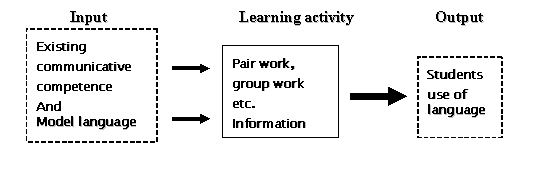
Figure 5.1: Teaching language as communication
3. Teaching/learning language as discourse:
This is rather considered as the strong version of communicative language teaching. Here students have to communicate with the text or discourse, i.e., language as it is used. Students use text or language data as input and produce new text as output. They have to unlock a text and solve different types of problem from the text.
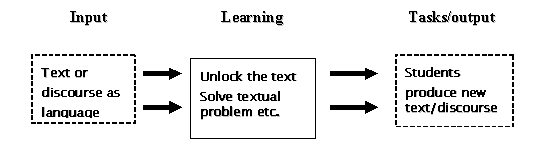
Figure 5.2: Teaching language as discourse
4. Authenticity:
Communicative methodology is authentic in the sense that it meets the needs of all concern parities and tasks practised in the classroom are not merely classroom activities, rather they reflect the use of language in the society.
5.3 Designing an appropriate methodology for Bangladesh situation:
This section suggests a good array of tasks and activities, which can be adopted in language classrooms in Bangladesh. However, all of the following activities may not be appropriate for all schools and classes. All the teachers and students may not get all the activities suitable for them all the time. Moreover, same type of activities, which are appropriate for some, may create boredom among some others. So, different activities should be chosen at different times for different levels of students. Different types of activity may suit in different situations. For any activity which has proved to be interesting for say, class 6 students may not be interesting for class x students, or an activity may be appropriate for urban students but may not be appropriate for rural ones. Though the choice of the activity depends mainly upon the teacher’s liking, a good teacher always addresses the students’ interest. And the availability of the resources also influences the teacher’s choice.
5.3.1 Presenting new language
There are different ways of presenting new language, which may mean new structures, expressions, words or functions. A good array of techniques can be cited as examples.
1) Presenting language as discourse, i.e., a grammar point, word or a function can be presented through a reading text or a spoken discourse played on tape. Even a TV manual or a bus ticket etc. can be used as text in a language classroom.
2) Highlight language form: Then a language form can be highlighted in the text.
3) Explanation: Teacher explains the form. In explaining, teacher may use the mother tongue to a limited extent only when it is necessary, and thus save a lot of time.
4) Use of picture-cue cards: Picture cue cards can be used for presenting new language. For example, to teach passive voice, teacher may use a pair of picture showing a situation or place before and after a set of changes and ask the students to say what is/has been changed/done etc.
5) Question-answers: Using questions and answers along with pictures is another way of presenting new language. For example, while teaching colour terms the teacher may use the following picture and ask questions like the ones that follow pointing to the right and/or wrong colour:

Figure 5.1: Colour Chart
Question-answers:
Teacher may ask the following questions to the students and students answer:
Teacher: Is it red?
Student(s): Yes, it is or no, it isn’t.
T: Is it black? Ss: No, it isn’t. It is pink.
T: What colour is this. … And so on.
The students may ask and answer same type of questions among themselves. Teacher now goes round the class and help the students. As an alternative to the above picture teacher can use objects of different colours. (This activity is suitable for elementary students.)
6) Story sequence:
Teacher may teach different past tenses telling a story. After the story has been read out to the class or the students read it silently, teacher asks them comprehension questions to draw out answers in the right language.
7) Using wall pictures:
Wall pictures can be used to present some grammar element effectively. For example, teacher can use the following picture to introduce the past continuous:
Figure 4.2: Mariam’s family (from Huq et al 1997: p-203)
He/she may begin by telling that yesterday Mariam went out leaving her husband and children at 6 o’clock. When she came back at 8, she found that these things were happening. At this point teacher asks the students to describe what the family was doing seeing the picture.
As an alternative to wall picture, teacher may use photocopied materials like the following one. This is a sheet of international symbols, which have imperative connotation in most cultures:
Figure 4.3 Imperative symbols (from Penny Ur 1988: 133)
Procedure:
Each student is supplied with a copy of the symbols. Teacher asks the students to say what each symbol is telling them to do or not to do. If she is using the above sheet the possible interpretation of the first two symbols will be:
Stop! or No entry.
Don’t drink the water.
While selecting symbols, teacher should be cautious enough that these symbols are well known and obvious enough to the students. However, using less immediately comprehensible symbols, teacher may invite variations in interpretation. To make it more effective she may ask students to write down their interpretation on their copies and compare them with others and finally, she can provide them the actual meaning of each symbol.
As a variation of the activity the teacher may give the students the meaning of the symbols without exemplifying any grammatical form and ask them to paraphrase them in imperative sentence. Here are the key meanings of the above symbols:
1. Stop, no entry
2. Don’t drink the water
3. Dogs allowed
4. No smoking
5. Pass either side
6. Danger
7. Camping site
8. View or camera point
9. Cold spring
10. Maximum speed
11. Parking/waiting
12. Telephone
13. Stairs, up or down
14. Pedestrian crossing
15. No dogs
16. Compulsory stop
17. Put out campfires
18. Poison
19. Directions to be followed
20.Smoking (ibid.)
Yet another alternative to wall picture that teacher can use with similar effect is mime. She may use different gestures and postures and asked the students to paraphrase them in language. For instance, she moves her fingers (except the thumb) upward (generic to western culture) or downward (generic to South Asian culture) and asks students to give the meaning in English. Students may write down meaning with slight variation viz., come here or come near. And so on.
8) Gapped story Another way of presenting new language is gapped story.
The following is an extract from John and Soars’ HEADWAY (Pre-intermediate) student’s book (p-79). Teacher may use this to teach the active and passive. Students are asked to put the correct form, to fit the meaning of the text:
5.3.2 Presenting functions: Language functions can be presented in the following ways:
1) Using dialogue:
This is one of the most usual ways of presenting language functions to the students. Students may listen to a recorded dialogue. If taped dialogues or tape recorder is not available, the teacher can give the typescript (written version of the conversation) to the students. The students can act out this dialogue with other students or simply read it silently and discover and underline the language which is used in the dialogue. There are lots of published materials on language functions which go with cassettes and books. If the teacher cannot find suitable materials, then he/she can write materials of their own. Here the teacher should be careful about what he/she writes is speech and not simply written English. If possible she can take help from a native speaker of English or an expert in this matter.
Example: Teacher can use the follow dialogue along with a city map to teach how to ask for and give directions: New comer: Excuse me, where’s the post office? Passer by: Go along this road and turn left after the PTI. Then the post office is on the right side. New comer: Is it very far? Passer by: Not that much. A five-minute walk. You can go on foot. New comer: Thank you. Passer by: Thanks.
2) Information gap activity:
NYLON
The first man-made fibre
NYLON (a) ______ (invent) in the early 1930s by an American chemist, Julian Hill. Other scientists (b) _____ (work) with him and finally on 27 October 1938 , Nylon (c) _________ (introduce) to the world. It was cheap and immediately (d) ________ (become) successful, especially in the making of ladies’ stockings.
During the Second World War, the best present for many women was a pair nylon stockings, but more importantly, it (e) _______ (use) to make parachutes and tyres.
Today, nylon (f) _______ (find) in many things: carpets, ropes, sit-belts, furniture, computers, and even spare parts of human body.
Using information gap principle of communicative methodology, teacher can introduce to the students new functions of language. Such communicative activities are good, because these give the students a purpose for the use of the language they are learning. Example: Teacher can use a simple admission form of a college or a university to be filled up by the students. Functions to be taught: Asking and giving information Procedure: Students sit in pairs. Teacher distributes to each pair a copy of the form. All the information must be given in response to a proper question. Thus, given the cue ‘age’ for example, one asks the question: How old are you? The answerer gives the answer: Fifteen or I’m fifteen. The one who asks writes it down on the form.
A variation of information gap activity may be opinion gap activity, where the communication involves transfer of ideas or opinion rather than fact. The interest generated by opinion gap activities is similar to that of information gap activities, but with the added feature of ‘personalisation’. By personalisation is meant the interaction based on students’ personal experiences, opinions, ideas and feelings. (see Penny Ur ibid. : p-21-22 and 161)
5.3.3 Controlled practice of language:
After the presentation of language through meaningful activities, the teacher needs to give the students some controlled practice on it. Through practice the learners’ knowledge of language is now changed into a kind of habit formation which is a necessary step towards free production of language before they are able to use it appropriately in changing circumstances.
Practice activities give learners some opportunities to communicate. But the teacher still controls the pace, content and even the language.
Different types of drills, information gap activities, contests and practice activities are examples of control practice of language. Here are some samples:
Communicative drills: Drills are very common in language teaching and are favoured by all methods of language teaching. However, communicative approach to language teaching, unlike audio-lingual method, which uses meaningless and mechanical drills, makes drills meaningful and useful. In communicative method students, while practising drills, need to think. They do not do anything having their minds shut. In other words, they do not do anything without knowing why they are doing so.
1. Four-phase drills:
Teacher may use four-phase drills effectively when the practice session is of very short period. For example, she is teaching “What’s he famous for?” She can ask individual students to choose five names, each one being renowned in a particular area. Now she asks the students to sit in pairs and to ask each other questions like: Student A: What is X famous for? Student B: He’s famous for painting. Student A: Where is he from? Student B: He’s from Australia. And so on. This activity is good for short practice sessions.
2) Cue-card response dills: Teacher can give her students practice in ‘wh-questions’, using these drills. First she prepares two cards with information about three persons named Mr. X, Ms Y and Mr. Z. She gives Card A to one student where the information about the three persons is partially filled. She gives Card B to another student, which has some information about these persons, but not what A has. In other words, there is an information gap between them. The cards may look like this:
Students A’s card
|
Mr. X |
Ms. Y |
Mr. Z |
|
Occupation: |
Occupation: |
Occupation: Engineer |
|
Hobbies: |
Hobbies: Reading |
Hobbies: Reading |
|
Birth: 10 Nov, 1957 |
Birth: |
Birth: 10 Dec, 1956 |
Students B’s card
|
Mr. X |
Ms. Y |
Mr. Z |
|
Occupation: Teacher |
Occupation: Teacher |
Occupation: |
|
Hobbies: Singing |
Hobbies: |
Hobbies: Bird watching |
|
Birth: |
Birth: 11 January 1976 |
Birth: |
Students will now ask questions to each other and complete their own tables. After they have finished, they will match the cards. Questions one asks and the answers the other gives may look like these:
A: What is Mr. X’s occupation?
B: He is a teacher.
A: What are his hobbies?
B: He collects stamps and sings.
This drill is more interesting and more communicative than the earlier one because it gives students a reason to talk, and use language for a purpose, or as a vehicle to do things — to ask for and give information.
4) Using flash cards:
Flash cards are cards like the ones used in card game. They have pictures drown on them. Teacher can use them to teach any language item. Say, for example, she is teaching vocabulary items relating to sports. She may use flash cards having pictures of different sports on them.
Procedures:
First, students sit in pairs. Teacher gives each student a pack of cards. Students put them face down on the desk. Each student takes turn to draw a card, while his/ her asks questions about it. Below is a sample conversation:
A: What do you have in your picture?
B: A man jumping over a bar using a pole.
A: Do you know which game he is playing?
B: Yes, it is pole vault.
This activity is less controlled and more time taking. Here the students have to think and decide what they will say. So, this activity will be suitable for those who have some proficiency in English.
5.3.4 Practising language functions
Drills are also very effective tools for teaching language functions. Say, for example, the teacher wishes to teach the students how to complain and apologise. She may ask her students to work in pairs and ask one of each pair to role-play as a hotel guest and the other as a hotel manger.
The hotel guest (student A) has the following problems:
- No light bulbs in the toilet
- No hot water
- No stationery (pen, paper, etc.)
- The telephone does not work
- He need an extra pillow
Student A complains about each of the above items and student B (hotel manager) apologises politely.
This communicative drill is very creative and has less control over students. It gives students opportunity to use different forms for same function.
1) Information gap activities:
Activities based on information gap principles give students more freedom to use language for communication than what is given by language drills. The activity mentioned in 5.3.3 under cue response drill is an information gap activity. One particular type of information gap activity is describe and draw.
Describe and draw:
In this activity one student has a picture which he/she must not show his or her partner (teachers sometimes like to use surrealistic paintings — empty doorways on beaches, trains coming out of fireplaces etc.). All the partner has to do is draw a picture without looking at the original, so the one with the picture will give information and description and the artist will ask questions. This type of activity has many features of an ideal speaking activity. It is highly motivating and there is a real purpose of communication and almost any language item can be used. The language functions that can be taught are asking and giving information, instructing etc. Teacher may further extend an information gap activity into a story-telling activity. From Jeremy Harmer’s How To Teach English, (1998 p-88 –89).
2) Story-telling activity:
Teacher puts the class into four groups calling them A, B, C and D. He gives each group one of the following pictures. Figure 4.5: From Touchdown of Mexico in Jeremy Harmer 1998: p-88-89
The groups have to memorise everything they can do about the pictures — who’s in the picture, what’s happening etc. they can talk about the pictures in their groups. The teacher now collects them back and asks one student from each group to form a new four-member group. She tells them that they have seen different pictures but the pictures taken together in some order or the other tell a story. The task for the students is to work out what the story is. The only way they can do so is by describing to each other what they have seen in the picture and how they are connected.
The final stories may be different. The group tells the whole class what their version is. The teacher can finally reshow the pictures.
The story telling activity can, of course, be used as a prelude to writing narrative work.
5.3.5 Language games as practice activities:
Teacher uses different language games that the learners can play without thinking about the language rules. They participate in the language games joyfully; there is always an element of competition. These can be more motivating and interesting than language drills.
Language games can be used to give practice in a particular language point. They can also be used for general fluency in the language that they are learning. Finding the object, waiters, word ladder or word rose, describe and draw, interruptions, matching pictures with sentences, jigsaw reading, continuous story telling and cartoon strips are some of the interesting and motivating language games. A few of them are discussed below.
1) Finding the object:
This game can be used to practise the use of prepositions of place, and it gives learners a chance of writing. Each student has a list of objects and are given limited time to find them out and write down where they have found each item, like “ The marble is on the floor, the pen is next to the brush”, etc. Here the language item that the students are practising is the location or position prepositions. The student who first completes the description of the location of different objects is the winner.
2) Interruptions:
Interruptions can be used as listening practice game with intermediate to advanced level students. Teacher can organise this easily. Here the whole class is divided into two groups or teams. Both groups prepare a story. The leader of each group comes forward and starts telling the story in turns. The class interrupts with questions on various details like “What did he say?” or “When did he come?” and so on. The other members of the team answer the questions. Teacher, however, can encourage the students to make interruptions politely, like “Excuse me…”, “Could you please…”, “Would you mind…” or “I’m sorry to interrupt you…” and the like.
3) Cartoon trips:
Cartoon trips can be used with much creativity in language class. Teacher can collect a cartoon story from a newspaper or cartoon magazine or a book of language games. First, he erases the language of the bubbles. He gives the students copies of the cartoon story. The students study the cartoons and try to write down the missing language in the bubbles. The teacher goes round the class and helps the students choosing correct words or phrases and so on.
The games described above are a few of a host of other games that can be used in English language classroom. There are a number of books of language games. Teacher can also make his/her own tasks and games to use in his/her class. However, it is worth saying here that all the games and activities should be really motivating and for the success of these activities, teacher should create a lively and stress-free class environment.
To sum up, during the practice activities, students internalise the language they are learning. After sufficient practice they are given opportunities to use it for a real purpose. Situations are created in the classroom so that the students involve using the language. While the students are practising any language form, function or any unfamiliar vocabulary, the teacher sometimes may be quite rigid to control activities, say, for correcting errors and somewhat flexible in other times, for example, in information gap activities, or language game activities.
5.3.6 Free production stage:
In presentation stage, the learners experience new language forms, functions and vocabulary items. In the controlled practice stage, they internalise both rules of use and linguistic competence. The next stage is free practice stage. Here the learners are given opportunities to use the language for some real purposes.
After sufficient practice of controlled and game like activities, there still remain some gaps between the artificial environment of the classroom and the real world outside it. This can be exemplified with a learner driver who has the knowledge of different controls of car and can drive it in safe roads under the supervision of an instructor. One can easily guess that even the driver who drives under instructor’s supervision cannot drive in a busy road in a city, unless he/she gets used to actual driving conditions.
The same thing happens to language learners. They must gradually get used to different communicative situations especially created for them in the classroom. Thus, they get used to communicate for different purposes. They do this by working with other students in the classroom in order to solve a problem or complete a task.
The main principles that underlie the practice of free production of language are transfer of information and bridging gaps of information.
Information transfer:
For information transfer one asks questions and the other gives answers. A reading activity in which students read a text and answer different questions like true/false or multiple options, or fill in forms, embodies this principle
Information gap:
In a communication activity, there are gaps for the students to fill, using the focused language items. By asking and answering questions students solve problems through negotiations. This is the information gap principle of communicative methodology.
Example of free production activity:
a) Filling a form to be a member of the College/ School’s debating club or writing an application for the membership can be a good example of free production of language. But prior to this, some controlled practice of writing applications and filling up forms should have been done. Teacher can also give the students a form filled by someone else, and ask the students to change it into a letter of application.
b) Students work in pairs. Each student of the pair is given a passage which has the personal account of Mr. X. Both sheets lack some information about Mr. X. But which Student A lacks, Student B does not lack and the vice versa. Each student has to fill in his or her own sheet asking the other.
c) Another example of free production of language is role-play. Role-play activities are those in which students are asked to imagine that they are in different situations and act accordingly. Students may be asked to role-play as guests at a party, travel agents as answering customer’s questions, or participants in a public meeting about a road-building project, for example.
In production stage, students have the opportunity to use the knowledge of language that they have learned in presentation and practice stages. In this stage, students acquire creativity and confidence needed to communicate. They do this by taking part in different problem solving and discussion activities, which bridge the gap between the teacher-dominated artificial classroom situation and the real world outside it.
What is important in all stages of learning is that students know what they are doing and why they are doing this. That is, they should be aware of the communicative purpose. Moreover, while doing any communicative activity, the students have a choice about what to say or write and how to say or write it. So, the activity should give the learners an indication about the situation, that is, the role he/she assumes for an activity. It will increase the learner’s awareness of the need for appropriate language.
In production stage, the students enjoy more freedom and the teacher just play the role of a manager or a facilitator. He/she is a friend or supervisor, not an ever-present, dominant classroom ruler. He/she talks less and moves round the class and offers the students help if they need it. He/she does not stop the flow of conversations and so, does not correct the mistakes openly. He/she even may sit with one group or pair and act just as a co-communicator/partner.
5.4 Linguistic assessment of methodology adopted in schools and madrasahs:
All the schools of Bangladesh by now have adopted a communicative syllabus and communicative textbooks. Madrasahs are still teaching their students the old fashioned books — an English reader (selection of prose and poetry) and a book of grammar, translation and composition (as these books have been known for decades). However, Alim (equivalent to H.S.C. of general education sub-system) classes (classes 11 and 12) are an exception, wherein English For Today book for classes 11 and 12 of NCTB is followed. In this section, however, the discussion will be confined to the textbooks of classes 6 to 10 of General and Madrasah Education Boards. As a few students are enrolled under Bangladesh Technical Education Board and there is a handful of vocational training institutions, the methodology adopted in vocational institutions has not been addressed here.
The following points are considered important for discussing the ELT methodology adopted in schools and madrasahs:
1. The physical facilities and the infra-structure of the institutions
2. English Language needs as released by the students
3. English Language needs as realised by the teachers
4. Teachers training and teachers development schemes
5. What happens in the classroom
6. What happens around the class
7. Role of tutors
5.4.1 The physical facilities and the infra-structure of the institutions:
The following two points are discussed under this head:
· The infrastructure of the schools and madrasahs
· Teaching materials and teaching aids used in schools and madrasahs
5.4.1.1 The infrastructure:
Throughout the country there are different types of schools and madrasahs. These can be chiefly discussed under following categories:
a) Government and semi-government schools
b) Private schools
c) Government and semi-government madrasahs
d) Private madrasahs
In government and semi-government institutions a large number of students sit in a comparatively small classroom and there is one teacher to teach them. These classes have a very noisy environment and the only teaching aids used are a course book and a blackboard. Most of the teachers said it was very difficult to teach such large classes. In response to the question “What is the main problem of teaching English in your institution?” (Item 24 in the teacher’s questionnaire), most of the teachers (53 out of 100) ticked the option – ‘large number of students in a class’. However, some (32) teachers said ‘time provided for each class is not sufficient.’
Most of the private schools and private madrasahs are established in hired houses. These houses are not spacious enough to accommodate many students. Although a limited number of students are admitted in a class, the classroom is yet congested for them. So, classroom environment is not comfortable for carrying out teaching effectively.
Some madrasah teachers (13 out of 30) blamed poor attendance of the students as the main problem of ELT in their institutions.
There are some schools and madrasahs, especially, in the rural areas, where there are no partitions between classrooms. So, noisy environment in one class disturbs teaching and learning in the others. Some madrasah teachers said that madrasah students had to study at least three languages as curricular subjects — English, Bengali and Arabic are compulsory subjects. Moreover, students can take one optional language paper. Again, they have to give more emphasis on Arabic rather than English and Bengali. Once again, madrasah students study only one full paper on English whereas school students study two full papers. So, how can they be expected to be equally proficient as the school students are?
5.4.1.2 Materials and aids used in language class:
The following are some of the items popularly used in language classrooms and language study centres:
The board:
Boards are used for many purposes— writing, drawing, sticking things on, and projecting overhead transparencies (OHT) (if they are white boards). Many teachers give importance on using the board in an organised manner with coloured pens or chalks and legible handwriting.
The computer:
A computer that is to be used in a language classroom should have all the functions that teacher requires — CD-ROM, and that it is fast enough and it has a memory big enough. The main uses of a computer are–
a. as a word processor; thus, students sit round it and put together a text
b. as a tool for material design, language games, CDs along with workbook exercises, film clips, interactive listening materials etc
c. as reference materials like dictionaries, thesauruses, encyclopaedias etc.
d. students can use Internet and be put on with other English speaking/ learning communities from anywhere in the world
Of course, computers are costly tools for schools of many parts of the world, but the price is coming down all the time.
The dictionary:
There are different types of dictionaries. A language classroom should have a stock of EFL dictionaries. Students need to be trained on how to use dictionaries for different purposes, viz., definition, pronunciation, use and so on.
The overhead projector:
Overhead projectors (OHPs) are used for showing pre-prepared overhead transparencies.
The other things teachers can use in language classrooms include pictures and cards, cassette player with tape scripts, and video playback machine etc. (cf. Harmer Jeremy 1998: Appendix A)
5.4.1.3 Materials used in schools and madrasahs of Bangladesh:
Almost all the schools and madrasahs of Bangladesh use blackboards. There are a few schools and madrasahs in Dhaka City which use whiteboard. Although some English medium schools and one or two Bengali medium schools have overhead projectors, none of the teacher samples inform that they use OHP in their class. This is the equipment occasionally used especially, in teacher training programmes. Almost all the teacher samples inform that they use pictures of the course books; however, they make hardly any pictures of their own, or take hardly any pictures from other sources. Most students and teachers use bilingual dictionaries and the most common purpose of using a dictionary is to find out word meaning. No teachers inform that they teach their students how to use dictionaries. Few teachers are familiar with phonetic symbols, and so they cannot use dictionaries to know the correct pronunciation. Some schools have cassette players, but the teachers do not use them in their language classes. Although in the set textbooks of the NCTB there are some listening practice activities where students are asked to listen to some conversations and answer the questions that follow, the NCTB is yet to publish or make available any listening text in audio cassettes or CDs. As the teaching arrangement of most of the school and madrasah teachers mark their sole dependence on set textbooks, they do not need to use any audiocassettes or CDs. Some urban schools have a few computers but the number is insufficient to provide all students this facility. So, a set course book (for schoolteachers it is English For Today of NCTB), a blackboard, chalk and a duster are the all that most of the teachers use as teaching aids.
5.4.2 Students’ perception of EL needs:
Student’s attitude towards English and their realisation of why they need English, in many respects, determines how they will learn English. In response to the question “Why do you need English?” (Item 1 in student’s questionnaire) students responded as follows: (Number mentioned against each option indicates the number of the students who ticked the option.)
|
Options |
Student samples |
|||
|
School |
Madrasah |
|||
|
Urban (100) |
Rural(100) |
Urban (50) |
Rural (50) |
|
|
Pass exam |
89 |
97 |
45 |
50 |
|
Understand teacher’s lecture |
100 |
73 |
33 |
13 |
|
Use English with others |
29 |
27 |
19 |
13 |
|
Read English books and newspapers |
37 |
00 |
5 |
00 |
|
Get good jobs |
79 |
51 |
21 |
20 |
|
Use internet |
13 |
00 |
02 |
00 |
|
Watch TV programs |
26 |
19 |
3 |
3 |
|
Write letters |
4 |
2 |
2 |
0 |
Table 5.1: Students’ perception of their EL needs
As the above information reveals, most of the students think they need English to pass examinations. A good number of students think of their practical needs of English i.e., use of English in higher education and to get good jobs. A few urban school students (only 15 out of 300 student samples) use English in Internet. Several urban students (37 schools students out of 100 and 5 out of 15 madrasah students) say that they need English to read English newspapers. A few students (only 8 students out of 300) say they need English to write personal letters. Majority of the students 171 out of 300 thinks they need English to get good jobs. However, most of the students (203 out of 300) regard the present syllabus as not fulfilling this need (item 2 in the student’s questionnaire). 219 students say that they need English to understand teacher’s lecture. This implies that teachers at least sometimes use English.
The above statistics shows that most of the students study English because it is a curricular subject, and they have to read it to pass the examinations. However, the number of students who realise the actual needs of English in practical life is not small. In response to the question “How important, do you think, is English in practical life?” (item 3 of the students’ questionnaire), almost all the students ticked the option ‘highly’, a negligible number of students (only 5 out of 300) chose the option fairly. Some teachers said that with the introduction of communicative syllabus, our students started thinking of need of English as a means of communication, which students did not think of a few years before.
5.4.3 Teachers’ attitude towards English:
Teachers’ attitudes towards English, to a greater extent, determine their methodology of teaching. In response to the question “What are the present and/or future English Language needs of your students?” (Item 1 in the teacher’s questionnaire) most of the teachers 72 out of 100 ticked the option ‘pass exam’. Most schoolteachers (51 out of 70), however, ticked the option ‘understand teacher’s lecture’. Following table show how the responses of teachers from different background vary:
|
Options |
Teacher samples |
|||
|
School |
Madrasah |
|||
|
Urban (35) |
Rural (35) |
Urban (15) |
Rural (15) |
|
|
Pass exam |
21 |
26 |
12 |
13 |
|
Understand teacher’s lecture |
26 |
25 |
12 |
13 |
|
Use English with others |
19 |
12 |
8 |
4 |
|
Read English books and newspapers |
19 |
15 |
6 |
6 |
|
Get good jobs |
30 |
27 |
10 |
12 |
|
Use internet |
1 |
00 |
00 |
00 |
|
Understand TV programmes |
11 |
13 |
5 |
00 |
|
Write letters |
00 |
00 |
00 |
00 |
Figure 5.2: Students’ EL needs as viewed by teachers.
Above discussion makes it clear that most of the teachers and students still emphasise on students' passing examinations as the main objectives of teaching and learning English. However, the number of students and teachers who realise the practical needs of English is not very poor. And with the introduction of communicative syllabuses, this number is increasing. Students are also getting more aware of why they need English. The use of Internet and watching TV programmes by the students also promote use of English. In response to the question “how important do you think English as medium of communication in your practical life?” (item 29 of the teachers’ questionnaire), most teachers (91 out of 100) ticked the option ‘highly’. Only 9 teachers ticked ‘fairly’ and none chose the options ‘a little’ or ‘not at all’. But as English is not used outside classroom, to learn/teach English as something to be used is still to be promoted. Still most of the teachers spend their time in the English classroom in how to prepare their students to pass exam.
Although a new question format has been developed by the NCTB which will be suitable to evaluate students’ communicative competence in English rather than their power of memorisation, the teachers are yet to comprehend and interpret properly what is intended in our national curriculum.
5.4.4 Teacher training and teacher development schemes:
The teacher community needs to be efficient enough to cope with the changes brought about in ELT curriculum and ELT methodology at national level. Although a good number of teachers have received pre-service and/or in-service training in teaching with English as one of the main subjects, a few of them are trained in communicative language teaching (CLT). As a result, introduction of communicative textbooks in schools necessitates for the teachers to be trained in communicative methodology of teaching English.
However, after the introduction of new syllabus and revised English For Today books, the NCTB offered a training programme for the teachers of secondary schools in cascade system. At first, the curriculum specialists trained master trainers. At the second stage the master trainers trained the core trainers. At the third stage the core trainers trained the field trainers. And at the final stage classroom teachers were trained by the trained field trainers. (Curriculum and Syllabus: Secondary Level: Report (1995): Volume 2: Page-15-16)
However, above-mentioned cascade system training is a short time training programme and is the first stage of implementation of the new curriculum. It has been realised that the prerequisites to the implementation of the new curriculum are two — one is well qualified, adequately trained, devoted and highly motivated teaching force and the second is developing adequate learning resources. The second point has been discussed in some details in chapter 4.
So far teaching force is concerned, a large number of teachers are not yet trained in ELT and a few of them have acquaintance with the modern development in the field of language teaching.
However, some urban schools have arranged training programme for the development of their teachers. In response to the question “Do you have any pre-service or in-service training?” (Item 2 of the teachers’ questionnaire) only 15 urban schoolteachers wrote that they attended in in-service training programmes arranged by their schools.
Some private school teachers also go under this type of training programmes. Sometimes training programmes are arranged by the school itself or sometimes by private school associations. Savar Thana Kindergarten Association, Savar, Dhaka arranged a training programme on 14, 15 and 16 July 1002. This researcher was present in a session of the programme on ‘How to teach the revised English For Today books’. The Savar Thana Kindergarten Association considers teacher development as a continuous process and arranges this type of training programme regularly.
Madrasah teachers did not inform of any of such training programmes. As they do not follow a communicative syllabus or communicative textbooks, they need not cope with communicative language teaching (CLT) methodology.
5.4.5 What happens in the classroom:
This section discussed the juggling acts of teachers and students in the class. The characteristics of communicative methodology have been discussed in section 5.3. Items 4, 5, 6, 7, 8, 9, 10, 11, of the in the student’s questionnaire and items 2, 5, 7, 8, 9, 10, 11, 12, 13, 14, 15, 23 of the teacher’s questionnaire items were devised to get students’ and teachers’ responses respectively about methodology adopted in the classroom.
5.4.5.1 Students’ response:
Many students confused to response to item 4 of the students’ questionnaire (Which of the following English skills, do you think, is more important than others? (given the options listening, speaking, reading and writing)) As a result, 17 students did not answer the questions. 11 students ticked all the options. However, writing and speaking were chosen by highest number of students (144 and 86 students respectively). 47 and 25 students chose reading and listening skills respectively.
|
Options
|
Student samples(300) |
|||
|
Urban |
Rural |
|||
|
School (100) |
Madrasah (50) |
School (100) |
Madrasah (50) |
|
|
Listening |
10 |
5 |
5 |
5 |
|
Speaking |
25 |
17 |
30 |
14 |
|
Reading |
12 |
9 |
12 |
14 |
|
Writing |
38 |
14 |
45 |
17 |
|
Did not answer |
6 |
3 |
8 |
– |
|
Ticked the all options |
9 |
2 |
– |
– |
Table 5.3: Students’ perception of needs of language skills
As the above table shows, students are more or less aware of their needs of all the four basic skills of English. Despite their recognition of the needs of all four skills, the English classes are still mostly reading and writing oriented. Even in those classes, no or little emphasis is given on skill development. Rather main emphasis is paid to the reproducing of memorised question-answers.
Students’ response to item 8 (Do you practise the four skills in your English class?) of the students’ questionnaire reveals the fact. All the students answered in affirmative for the reading and writing skills. In respect to two auditory vocal skills, i.e., listening and speaking, most urban students and a few rural students answered in affirmative. The following table projects their answers.
|
Options |
Student samples(300) |
|||
|
Urban |
Rural |
|||
|
School (100) |
Madrasah (50) |
School (100) |
Madrasah (50) |
|
|
Listening |
73 |
36 |
46 |
11 |
|
Speaking |
85 |
35 |
54 |
11 |
|
Reading |
100 |
50 |
100 |
50 |
|
Writing |
100 |
50 |
100 |
50 |
Table 5.4: Extent of practising four skills as viewed by students
As projected in the above table, emphasis is given to reading and writing skills in the English classroom. Listening and speaking skills are not practised to same extent as the other two skills are practised.
Information in the above table reveals that not many students practise listening and speaking skills. The number of students who practise these two skills is higher in the urban schools than in rural schools and the rate is higher in schools than in madrasahs. As these school students do not practise the two productive skills despite the integration of the four skills in the revised English For Today books, it becomes clear that many parts of the books are left unstudied.
So far as madrasah students are concerned, they do not follow a communicative syllabus and their books are also not written according to communicative approach. They hardly need to practise four skills. Rather memorising grammatical rule and translating are the sole work they have to do in English class.
For successful learning/ teaching, classroom discussion should be conducted in English. However, for many reasons it is Bengali which language is mostly used in English classes. Chief among them is inadequacy of the teachers. Also students come with very poor efficiency in English and this is what most of the teachers accused of. Whatever might be the causes, as we looked in the classrooms, we found most teachers and students are using mostly Bengali language in English classes.
In response to item 5 (Which language(s) do you mostly use in English classes?) and item 6 (Which language(s) does your teacher mostly use in English classes?), almost all the students ticked the option English and Bengali. However, their rating in response to item 7 (How often classroom discussion is conducted in English in English classes?) and item 9 (How often do you participate in group or pair work/discussion?), differs across towns and villages. Although most of the students of all the institutes ticked the option sometimes, a good number of urban students ticked always in item 7 and always and very often in item 9. Their responses to items 7 and 9 are illustrated in table 2.4 and 2.5 respectively.
|
Options |
Student samples(300) |
|||
|
Urban |
Rural |
|||
|
School (100) |
Madrasah (50) |
School (100) |
Madrasah (50) |
|
|
Always |
13 |
— |
— |
— |
|
Sometimes |
81 |
40 |
86 |
37 |
|
Rarely |
6 |
8 |
10 |
13 |
|
Never |
— |
— |
4 |
— |
|
Did not answer |
— |
2 |
— |
— |
Table 5.5: Extent of use of English in classroom discussion as viewed by students
|
Options |
Student samples(300) |
|||
|
Urban |
Rural |
|||
|
School (100) |
Madrasah (50) |
School (100) |
Madrasah (50) |
|
|
Always |
11 |
— |
— |
— |
|
Very often |
11 |
|
8 |
7 |
|
Sometimes |
72 |
40 |
78 |
30 |
|
Rarely |
6 |
8 |
8 |
10 |
|
Never |
— |
— |
4 |
3 |
|
Did not answer |
— |
2 |
— |
— |
Table 5.6: Extent of students’ participation is pair/group work/discussion as viewed by students
The above statistics show that students do not sufficiently use English even in English classes. This condition is worse in rural schools and worst in rural madrasahs. Students’ response to item 10 (How do you learn more? Give a rating from 6 to 1 with 6 the highest. (Given 6 options)), makes it more clear that classroom learning with the aid of set course books is the chief or only way of learning English for most of the students. In response to the productive skills viz., speaking and writing students’ rating were lower. Again, listening and speaking skills got lower rating than reading and writing skills respectively. This is how they responded:
|
|
6 |
5 |
4 |
3 |
2 |
1 |
|
Listening to the radio and TV news |
24 |
39 |
33 |
54 |
102 |
48 |
|
Speaking in English with teachers and friends |
6 |
78 |
69 |
93 |
24 |
30 |
|
Reading textbooks |
225 |
36 |
21 |
18 |
– |
– |
Reading newspapers and magazines |
15 |
75 |
99 |
36 |
63 |
42 |
|
Writing letters |
– |
30 |
15 |
51 |
81 |
123 |
|
Writing notes for the exams |
30 |
72 |
63 |
48 |
30 |
57 |
Table 5.7: Students’ view of how they learn more.
(Notes: The numbers in italic indicate the rating the teachers gave for each option and the numbers against each option indicate the number of teachers who gave the respective rating.)
5.4.5.2 Teachers’ response:
Teachers are mainly responsible for carrying out teaching in the classroom and it is the teachers who determine which methodology will be adopted in the class. However, setting of curriculum objectives, developing syllabus checklist and organisations of lessons in the textbooks largely chalk out the way for the teachers. Despite all these, the method of classroom teaching depends on how the teachers interpret the intention and guidelines of the curriculum planners. This interpretation, to a large extent, depends on teacher education provided for these teachers. It is the lack of adequate teacher education for which there is always a gap between what is intended in the planning level and what is achieved in the classroom implementation level.
To sense about how the teachers of Bangladesh comprehend the curriculum and textbooks and how they work with the syllabus and textbooks and what they do with the students, one hundred teachers from different backgrounds were interviewed. In order to look in what actually happens in the classroom, some teachers and learners were talked with informally as well. This gave the researchers a chance to experience the practical aspects of teaching in schools and madrasahs. Teachers’ responses to the present curriculum and textbooks are discussed in following paragraphs.
Teachers' responses to item 5 reflect how far they are acquainted with the present trends in language teaching. Only a few teachers (15 from urban schools and 7 from rural schools) were found familiar with product and process oriented syllabuses, although almost all the teachers from both areas (48 urban and 49 rural) ticked ‘yes’ for the options communicative language teaching (CLT) and grammar translation method (GTM) (in response to item 5). 20 urban teachers (18 from schools and 2 from madrasahs) and only 7 rural teachers (all them are schoolteachers) said they were familiar with ‘direct method’. In the following table, the number against each option indicates the number of teachers who answered ‘yes’ for the option.
|
Teacher Samples (100) |
Familiar with |
|||
|
Communicative Methodology |
Direct method |
Grammar Translation Method |
Product & process syllabuses |
|
|
Urban school (35) |
35 |
18 |
35 |
15 |
|
Rural school (35) |
35 |
7 |
35 |
7 |
|
Urban madrasah (15) |
13 |
2 |
13 |
3 |
|
Rural madrasah (15) |
14 |
00 |
14 |
00 |
Figure 5.8: Teacher’s knowledge of different methods
In response the question whether they have received any pre-service or in-service training (item 2 of the teachers’ questionnaire), almost half of the teacher answered in affirmative. However, only 31 teachers received training from Teacher Training Colleges and obtained B. Ed. degree. 27 of them had English as one of the subjects of specialisation. This information along with the information furnished in the above table implies that their training programme did not cover recent trends in ELT. Most of the teachers probably come to know about CLT methodology and GTM with the introduction of the communicative textbooks in schools. The term ‘communicative’ for many teachers is a new examination system. For many others it is teaching of English without grammar. The following paragraphs will discuss how the teachers interpret communicative methodology and what they do with communicative textbooks in their classes.
Although most teachers’ ability and knowledge of communicative language teaching (CLT) methodology is not up to the mark, they have started to think that it is better than traditional grammar translation method (GTM). In response to the question “what is your opinion about communicative language teaching methodology?” (item 7 of the teachers’ questionnaire), 65 of the 100 teachers ticked the option ‘it is better than GTM’. However, 35 teacher samples ticked the option ‘it is not suitable for our country’.
Although most teachers advocated for communicative method as better than other methods, most of them expressed their sorrow in response to the question whether they had read curriculum guidelines of the NCTB (item 8). Only 24 of teachers answered in affirmative. 13 of them said ‘it is a good one’. 10 teachers ticked the option ‘it is OK’ and one teacher wrote ‘it is difficult for us to follow’.
For carrying out teaching successfully in a communicative language class, teacher needs to come with a plan of how to manage every task which may consists of several activities. Although the formal interviews reveal that most teachers make their lesson plans before (teachers’ response to item 9), very few of them make how it should be made. For most teachers, a lesson plan is just the list of topics or subtopics that they will teach in the class.
Teacher response to the question “Do you design/plan any communicative tasks/activities for your class?” (item 10 of the teachers’ questionnaire), most teachers (67 out of 100 ) answered in negative. Even not many of the schools teachers arrange their students to practice the activities of the textbooks.
Except a few urban schoolteachers, most of the teachers mostly use Bengali in their English class. The reason for this is that the students come with very poor knowledge of English. Although all the teachers answered ‘English and Bengali’ for item 12 (which language(s) do you use for classroom instruction?), none of the rural teachers gave more than 50% rating for English, while most of them (37 out of 50) gave a rating for English that was below 40 percent. On the other hand, only 10% (5 out of 50) urban teachers’ rating for English was below 50%. 20% (10 out of 50) urban teachers gave a rating for English that was 65% or above 65%. Two urban teachers wrote that they use 90% English in English classes.
In a communicative language class students need to participate in different communicative tasks and activities individually, in groups or in pairs; sometimes they have to role-play. They have to practise all four skills in integrated manner and it is the teacher’s duty to integrate different skills and sub-skills. In response to the question “How often do you arrange your students to use English for communication? (item 11), most teachers ticked the option ‘sometimes’. Teachers from urban areas chose options with comparatively higher frequency and teachers from rural areas chose options with comparatively lower frequency. The following table shows how they responded.
|
Options |
Teacher Samples(100) |
|||
|
School |
Madrasah |
|||
|
Urban (35) |
Rural (35) |
Urban (15) |
Rural (15) |
|
|
Always |
3 |
– |
– |
– |
|
Sometimes |
32 |
33 |
15 |
10 |
|
Rarely |
– |
2 |
– |
5 |
|
Never |
– |
– |
– |
– |
Table 5.9: Frequency of arranging students to communicate in English
In response to the question “Do you arrange your students to exercise the following four skills (given listening, speaking, reading and writing as options) in your English class?” (item 14 of the teachers’ questionnaire), almost all the teachers answered in affirmative for all the four options. This implies that teachers make their classes task-based and students play an active role in the class. But teachers’ response to item 15 reveals that not all students participate in different activities. In response to the question “How many of your students involve in group or pair work in your class?”(item 15), teachers responded as follows (The number of teachers is written against the option they ticked):
|
Options |
Teacher Samples(100) |
||||
|
School |
Madrasah |
||||
|
Urban (35) |
Rural (35) |
Urban(15) |
Rural (15) |
||
|
All students |
00 |
00 |
00 |
00 |
|
|
Most students |
19 |
10 |
00 |
00 |
|
|
Some students |
15 |
20 |
5 |
4 |
|
|
A few students |
1 |
5 |
10 |
10 |
|
|
None |
00 |
00 |
00 |
1 |
|
Table 5.10: Students’ participation in pair/group work as viewed by teachers
The above table shows that most of the urban and some rural schoolteachers get most of their students involved in communicative tasks. However, several urban and rural madrasah teachers are also seen in the above table to have some students who participate in communicative tasks.
Most of the teachers also responded in affirmative to the question “Do you design any communicative tasks for your class?”(item 10). But a close look into the classrooms of schools found that most parts of English For Today books are just left untouched. While visiting some schools and madrasahs to exchange views with teachers and students of those institutes, this researcher met the students of class seven of a non- government school. It was their English class and the teacher was in the class. The researcher opened lesson 17: Samira’s First Day At School: Part 1 and asked the students, “How did you learn this lesson?” One student stood up and started reading it aloud:
Samira’s First Day At School ~ samirar skule prothom din. Number A. Talk about the picture ~ chhabiti samporke Kotha bolo and read Samira’s story ~ ebong samirar golpo poro ... ... ... and so on.
The researcher asked some other students and they did the same thing with the lesson. Then the researcher asked them, “What do understand by “talk about the picture?” most of them answered “chhabiti samporke kotha bolo”. “But you did do that.” They were silent. (From the researcher’s observation notes/ 23 March 2002)
Similar experiences were gathered from some other institutes as well.
Although, by now, communicative language teaching (CLT) methodology has been much talked about, teachers still give more emphasis on grammar rules. What they teach are writing and reading skills. They hardly teach any listening and speaking skills. Teachers’ response to item 13 projects this situation:
|
|
8 |
7 |
6 |
5 |
4 |
3 |
2 |
1 |
|
Grammar rules |
23 |
11 |
9 |
10 |
7 |
14 |
14 |
12 |
Listening |
– |
10 |
15 |
4 |
14 |
10 |
21 |
26 |
|
Speaking |
3 |
14 |
20 |
11 |
16 |
12 |
13 |
16 |
Reading |
4 |
7 |
21 |
15 |
20 |
19 |
4 |
10 |
|
Writing |
6 |
16 |
11 |
23 |
12 |
4 |
– |
– |
|
Explaining the text |
36 |
19 |
10 |
17 |
15 |
14 |
12 |
– |
|
Actual us of language |
17 |
16 |
8 |
16 |
16 |
15 |
12 |
– |
|
Translation |
11 |
7 |
6 |
4 |
– |
12 |
24 |
36 |
Table 5.11: Teachers’ preference of different aspects of language leaning/teaching
(Notes: The numbers in italic indicate the rating the teachers gave for each option and the numbers against each option indicate the number of teachers who gave the respective rating.)
As the above table shows, most teachers still give emphasis on teaching grammar rules with the aid of textbooks. However, many teachers especially, those from urban areas, give due importance on actual use of language. Some madrasah teachers still prefer translation, as their students have to attempt questions on translation in public examinations.
5.4.6 The role of tutors:
It has been observed that the prime concern of most students is scoring good marks in examinations. Teachers’ main duty is to prepare them so that they can do well in exams. To ensure a good score in exam, students go to private tutors or coaching centres. These private tutors or coaching homes mainly arrange model tests and teach the students some techniques to answer to all the questions successfully. Some tutors, however, help their students by translating the textbook contents. Many students, thus, depends mainly on privates tutors' help rather than learning in the classroom. Notebooks and guidebooks, which contain the translation of the textbook contents, play a vital role in their exam preparation.
5.5 Conclusion:
This chapter attempted to project the overall picture of English Language Teaching (ELT) in its classroom implementation phase in Bangladesh. As the above discussion projects, with the introduction of communicative approach, the ELT scenario is changing from its traditional teacher dominated state towards task-based student-oriented one. However, still some teachers prefer some forms of Grammar Translation Method (GTM) of teaching language. And it is the fact that they are yet to acquire an expected level of proficiency. As a cause of their students’ failure to achieve an expected level of proficiency, many teachers blamed that there is little or no scope of using English in real life (in response to item 23 of the teacher questionnaire). Several teachers termed the new syllabus and methodology as unsuitable. Some teachers admitted their inability to carry out teaching effectively.
CHAPTER 6
A REVIEW OF TESTING SCHEME AND EVALUATION POLICY OF ENGLISH LANGUAGE TEACHING (ELT) IN BANGLADESH
6.1 Introduction:
Testing is to measure learning and teaching which have taken place within a certain language programme, or in other words, it is to measure the knowledge and skills of an individual or a group. This can be done in a compressed manner — i.e., in a short period of time with the aid of a question paper covering the syllabus and language materials generally spread over a whole academic year or more. Evaluation scheme can also be diffused over the whole academic session or year, where teachers measure how far learning and teaching are taking place at any reach of time, and this can be more far-reaching than terminal examinations when the aim is to measure the progress of the programme.
6.1.1 Traditional examinations and modern views of testing:
Traditional examinations differ from communicative language testing in several respects, the first being the purpose of testing.
6.1.1.1 The purpose of testing:
The purpose, in traditional examination, is that of promoting or detaining a student, or awarding degree — the determination of knowledge and achievement is incidental. On the other hand, the purpose of testing, in communicative language teaching, is to evaluate how far learning and teaching are taking place, or in other words, how far the students have attained the ability to use the language.
6.1.1.2 The format of testing:
The format of traditional examination consists of a few essay type questions to be attempted in a short period of time. The question paper in such examination is unbalanced; it covers too little or too much of certain portions of the syllabus. In any case, it cannot include everything of the syllabus. It gives emphasis on accuracy rather than fluency and does not measure any auditory comprehension skill or speaking ability of the students. It does not address the ability to use language in real communication. Very often examination question format determines the teaching method and sometimes the syllabus as well. (Khan I. H. 1998: Ch. 7)
On the other hand, in communicative language teaching, what is tested is the learners’ ability to use the language in real life, i.e., their communicative competence. It is done in two ways — by continuous assessment and in terminal/annual and end-course examinations.
6.1.1.2.1 Continuous assessment:
Continuous assessment throughout the academic year is central to any proper evaluation system. Essentially, this means that the students should only move on to any new item, when the previous one has been sufficiently understood. Of coarse, every new item should be sufficiently recycled for better understanding and for that the students get mastery over that.
6.1.1.2.2 Terminal or Annual examination:
While continuous assessment serves the purpose of a Progress Test, enabling teachers and students to assess how they are doing, terminal or annual examinations serve the purpose of an Achievement Test, enabling teachers to sort out students in relation to the prescribed standard. (Report of National Curriculum1995: Secondary Level (Second Volume) : p-147–149)
6.1.2 Types of tests:
Tests are constructed from different points of view. These are as follows:
Attainment or Achievement Test:
This type of test measures to what extent one has mastered items and skills which one has been taught in formal classroom situation.
Predictive or Prognostic Test:
This test measures whether an individual would do well in a particular field or area. This is also called Aptitude Test.
Speed or Progress Test:
This measures the attainment per unit of time. This test enables the teacher to assess how far learning is taking place.
Diagnostic Test:
This test measures the strength and weakness of individual learners within specific items or skills.
Proficiency Test:
This test measures the ability to use language and is independent of any particular textbooks or classroom teaching. In other words, proficiency test is the test of communicative competence.
6.1.3 What to test:
Testing objective is, to a greater extent, determined by teaching objectives.
From linguistics point of view, there are two aspects that is tested in language testing. These are knowledge of language elements, and language skills. Knowledge of language refers to the linguistic competence in the language and skills refer to listening, speaking, reading and writing. That is the mastery of separate language components is to be tested. But any linguistic performance entails the integration of more than one skill. For example, listening and speaking acts are to be integrated in any conversation. Moreover, any conversation requires simultaneous operation of phonological, grammatical and semantic knowledge.
Above all, knowing a language should mean the functional use of language and the ability to understand massage with reduced redundancy, that is to understand a massage with noise added and even when some elements are missing. This functional use has been called communicative competence. (Khan I. H. 1998: p-168)
So, any language test should aim at testing the following aspects:
i) language elements
ii) language skills
iii) communicative competence
6.1.3.1 Testing language elements and language skills:
As discussed in section 6.1.3, neither any language elements can be used independent of language skills nor any language skill can be used independent of language elements. In fact, the two happen simultaneously. So, while testing one single language element, the tester may look in the use of more than one skill. However, testing language elements include the testing of sound system, testing morphology and syntax and testing vocabulary.
Testing language skills includes testing learners’ ability to speak, to write, and listening and reading comprehension.
6.1.3.2 Testing communicative competence:
Testing communicative competence means testing the ability to use language for communication. This also includes the testing of four basic language skills — listening, speaking, reading and writing. However, this test should not be something that promotes learners to memorise certain topics and reproduce them in the examination hall. As Jacobovit (1970) specifies, there are four aspects of communicative competence. He criticises the discrete approach to language testing on the grounds that 'preference on these language tests and the ability to make use of the language for communicative purposes are not necessarily related.' He suggests the pragmatic strategy of making a detailed study of communicative goals. In language tests, how far the learners have attained these has to be measured. The findings of these tests will recognise different levels of proficiency of learners.
So, testing devices have to be so constructed as to measure how efficiently learners do with the language while use it.
6.1.4 Characteristics of a good test:
A good test should fulfil the following criteria:
Validity:
A test should measure what is intended to measure— not more or less. A test is valid to the extent it measures what the tester intends to measure. A language test should test language— not the knowledge of text content. From communicative teaching point of view, a test should test a learner’s ability to use the language. A traditional examination, in which essay type questions are set to measure students’ ability to memorise the textbook-contents, is not valid in this sense.
Reliability:
Reliability of a test is determined by the stability of scores regardless of whoever marks it. A test in which examinee’s emotional or physical state, examiner’s mental causes or test’s inherent inadequacy do not cause any variation is a reliable one. That is, reliability is the degree to which the scores on it remain stable regardless whoever marks it.
Scores on essay type question-answers are not reliable because they suffer from various factors like examinee’s or examiner’s mental states or emotion etc. In an objective type test, examiner factor is almost totally removed.
Discriminating power:
A test should judge the ability of all the students and give them scores according to their ability and performance. That is, a good student should score better than the weak ones.
Administration and scoring:
It should be easy to administer and score.
Economy:
These tests tend to be financially burdensome. Attempts should be made to make them as economic as possible.
6.1.5 Test layout:
There are two types of test — selection type and supply type.
Selection type:
Selection type tests involve choosing a correct answer from a number of options. True-false or yes-no questions, rearrange type questions, multiple choice questions and matching type questions fall in this category.
Supply type:
Supply type tests require the students to write a short or long answer. Simple questions, short answer-type questions, long answer-type questions and problem-solving type questions involve the students to supply an answer of their own.
Care has to be taken to choose appropriate types of questions to evaluate different skills and performance of the learners.
6.1.6 Techniques to be adopted in communicative competence test
For measuring learners’ communicative competence, first of all, a tester must develop appropriate tools and devices; he/she must take into account learners' actual performance on the basis of what he/she can esteem their competence — linguistic and communicative. With the growing concern of communicative competence, the question ‘how we can test it ’ has been more important in recent days. For measuring learners’ actual performance or the ability to use the four skills in real life, measuring devices are to be so constructed as to look in what they do with or how they do it in the language. The following extract is from English Language Teaching and Learning in Bangladesh, a course book of Bachelor in English Language Teaching (BELT) programme of Bangladesh Open University (first published in 1987, second print 1988). The table suggests skills which are to be measured and tests and techniques of measuring them:
|
Skills |
Tests |
Measuring techniques |
|
|
T & SS’s talks and discussions |
SS respond by speaking or by doing things. |
|
T and SS’s questions |
SS answer orally or in writing. |
|
|
Listening comprehension text or recorded text containing narratives, dialogues, conversations etc. read out, acted or played |
SS answer comprehension question orally or in writing. |
|
|
Dictation |
SS write, or take notes from what they hear. |
|
|
Directions, instructions, announcements etc. |
SS follow. |

|
Skills |
Tests |
Measuring techniques |
|
|
Social situations involving exchanges of greetings, farewells, thanks, apologies etc. |
SS exchange the social expression orally. |
|
Questions (oral or written) |
SS ask and answer orally. |
|
|
Objects, people, event, pictures, diagrams etc. |
SS talk about or describe them. |
|
|
Dialogues, drama, role-play etc. |
SS act out. |
|
|
Games |
SS play using language. |
|
|
Situations involving asking for and giving directions, advice, service, etc. |
SS ask for and give directions orally. |
|
|
|
Reading texts, tables, diagrams, signs etc. |
SS summarise, skim, scan; answer inferential, multiple-choice and open-ended questions; transfer information, guessing the meaning of unknown words from the context. |
|
Cloze passages (with or without clues) or passages with blanks |
SS fill in gaps with the right words or phrases. |
|
|
Reordering tasks |
SS rewrite the sentences in the correct order. |
|
|
|
Familiar topics like food, clothes, transports, etc. |
SS take notes, describe, explain, compare and contrast; give opinions and express feelings about them, etc. for writing a paragraph or essay. |
|
Questions ( written or oral) |
SS answer them in writing. |
|
|
Topics with hints |
SS write after the model, using the hints. |
|
|
Model texts with information provided by the students themselves. |
SS write after the model, using the information. |


Table 6.1: Techniques of testing language skills
6.2 Evaluation in the NCTB curriculum:
The national curriculum recommends three types of evaluation. These are as follows:
i) continuous assessment
ii) internal examinations
iii) end-course examinations – S.S.C. and H.S.C. examinations
6.2.1 Continuous assessment:
Present curriculum sees continuous assessment as central to the evaluation system. This is considered as a means to see how far teaching and learning are taking place and teachers can use this as a mechanism to see whether the previous item/lesson has been sufficiently understood and whether the class should move on to a new one. At each stage of assessment, evaluation should be based solely on the skills and elements taught in the class up to the time. For proper evaluation to take place, teachers should know their students and their capabilities.
Before the introduction of the present syllabus and evaluation policy, monthly tests were used to evaluate students’ progress. Monthly test is still popularly used by many teachers throughout the country. However, many teachers even do not bother about continuous assessment or even any monthly evaluation. Terminal or annual examinations are the only vehicle that they use to evaluate students’ progress.
The present curriculum suggests the replacement of monthly test by continuous assessment.
Marking in continuous assessment:
The curriculum suggests that marks/scores will be given in terms of students’ performance in the regular classes and homework set throughout the month. In order to help the teachers and students to organise their homework, the schools should produce a homework schedule.
6.2.2 Internal Examination:
The curriculum suggests two terminal examinations in each academic year — first, the Progress Test, which will enable students and teachers to see how they are doing and the second, Attainment Test, which will enable teachers to sort out students in relation to standard.
6.2.2.1 Test objectives:
Three main functions of tests and examinations have been stated in the curriculum report. These are as follows:
i) to ascertain the extent to which students have attained the stated learning outcomes.
ii) to identify students’ strengths and weaknesses for the purposes of guiding subsequent teaching and learning.
iii) to motivate the students by giving them a regular sense of achievement and to make parents aware of their progress.
To carry out these functions properly, the examinations should be based on language skills and elements taught up to point rather than the textbook contents. The aim is to evaluate the learning outcomes as specified in the syllabus.
However, only the reading and writing skills, grammar and vocabulary have been suggested to be tested in the examinations and listening and speaking should be evaluated in the continuous assessments.
6.2.3 S.S.C. Examination:
The national curriculum report states that the evaluation objectives should match with the syllabus objectives and the syllabus, teaching materials and methodology should determine the nature of examination, not the other way round.
6.2.4 Textbook contents and examinations:
Although the NCTB has published a series of textbooks, English For Today for classes 6 to 12, the curriculum document states that the examinations should be based on the learning outcomes.
6.2.5 Layout of question paper for S.S.C. and internal examinations:
There will be two examination papers – English first paper and second paper. Layout of question papers will be as follows:
The format will have four sections to test four things:
Section 1 & 2: Reading comprehension test (having 20% of the total marks: 20+20 out of 200)
Section 3: Vocabulary and grammar knowledge test (20% of the total marks: 20+20 out of 200)
Section 4: Writing skill test (having 40% of the total marks: 40+40 out of 200)
Section 1 will have a 'seen comprehension' passage and Section 2 an 'unseen comprehension' passage. Question types are same for both sections. However, the 'seen comprehension' will not be same as the textbook content, rather it will be reproduced from the textbook. The following types of questions should be included:
(a) Objective: i) multiple choice, ii) true/false, iii) filling gaps with clues, iv) information transfer, v) making sentences from substitution table and vi) matching words with phrases/words/pictures etc.
(b) More free: vii) open-ended, viii) filling the gaps without clues and ix) rewriting in a different form.
In section 3, there will be questions on vocabulary (20 marks) and grammatical items (20 marks) contextualised in the form of ‘cloze’ passage without clues. In order to provide communicative context, the topics should be related to those already encountered by the students in sections 1 and 2 of the respective papers. The questions will be set to test the use of grammar items within specific, meaningful context. Questions will not be on explicit grammatical knowledge.
In section 4, there will be a number of writing tasks. These are divided into two types: (a) guided writing (40 marks) and more free writing (40 marks).
For guided writing: (i) producing sentences from substitution table, (ii) reordering sentences, and (iii) writing answers in paragraph
For more free writing: (iv) answering questions about one’s own (v) continuing a passage, (vi) writing from a model (provided in the paper).
Questions will be so set, as the students need not memorise any questions from any textbook.
6.3 Assessment scheme and evaluation policy of General Education Boards:
All seven general education boards recommend the above format for public examinations viz., S.S.C. and H.S.C. examinations as well as for all internal examinations of schools, affiliated under these boards.
6.4 Assessment scheme and evaluation policy of Madrasah Education Board:
The Curricula and Syllabuses for classes 6 to 8, published by the Curriculum and Textbook Wings of the Madrasah Education Board do not provide any assessment scheme or evaluation policy for any class. In Curriculum and Syllabus for class 9 and 10, the board provides the following marks distribution for Dakhil examinations (from 2000) and this is all about the syllabus of classes 9 and 10.
1. Answers in a word or in a sentence (having 2x 10=20 marks): 6 questions from prose, 6 from poetry and 4 from grammar will be given, students will answer 4 from prose, 4 from poetry and 2 from grammar. In should be mentioned that there is a question bank of 150 questions covering 65 questions from prose, 55 from poetry and 30 from grammar. All the 20 short questions are set from this question bank.
2. Prose: Students have to attempt:
· 1 essay type question out of 3 (10 marks),
· 1 short answer question out of 3 (5 marks)
· 1 short explanation out of 3 (5 marks)
3. Poetry: Students have to attempt:
· 1 essay type question out of 3 (10 marks),
· 1 short answer question out of 3 (5 marks)
· 1 short explanation out of 3 (5 marks)
4. Grammar: Students have to attempt 3 questions out of six each carrying 8 questions of which 6 should be answered. (5 X 3 =15 marks)
5. Letter/ application: 1 out of 1+1 (5 marks)
6. Essay: 1 out of 5 (12 marks)
7. Translation: one out of 2 Passages: (8 marks)
Students prepare for this examination with a very limited syllabus as discussed in chapter 3. Most of the questions are taken from the textbook exercises, and they are suitable for evaluating students’ power of memorisation and copying in the examination rather than their ability to use English to communicate.
6.5 Evaluation in schools:
This section looks in how far the evaluation system set out in different schools matches the one that is spelt out in the national curriculum and how far it matches the syllabus objectives.
6.5.1 Monthly Assessment:
Most of the teacher samples find continuous assessment problematic for them. They claim that they have to conduct classes of a large number of students. It is not always possible for them to see how far the learners are leaning. Some teachers say that students come with very poor knowledge of English, and so this assessment is not suitable for them. Some other teachers said that they could assess the students’ progress but could not translate it into mathematical language. “So, how can we make the parents aware of their children’s progress?” said some teachers. Still monthly tests are the only way for short time evaluation. Homework is given quite regularly, but without any evaluation objectives.
6.5.2 Internal examination:
Government and non-government schools usually arrange two terminal examinations a year. Some private school authorities find examination as means to collecting fees and so, they arrange three terminal examinations a year.
6.5.2.1 Format of examination:
Examination format of any institution reflects how the institution perceives the curriculum guidelines or in other words, how the teachers and testers interpret what is intended in the planning level of the curriculum and in what manner they have carried out teaching throughout the academic year/term. In appendix B, there are question papers of two schools, a madrasah, S.S.C. Examination of Dhaka Board and Dakhil Examination of Madrasah Education Board.
6.5.2.1.1 Question format of ACED School:
ACED School is a leading private school in Savar municipal area under Dhaka district. The school divides the academic year into three semesters. Question papers 3 & 4 were set for the third semester of academic year 2002. Paper 3 is English 1st paper and Paper 4 is English 2nd paper – both are of class seven. Usually, no portions of the book are repeated in successive semester(s). There are three sections of the question paper.
Section A: Reading comprehension test: A reading comprehension passage is given. This is followed by a good array of questions:
Question 1: True/False questions: There are five statements. Students have to write ‘true’ for correct statements. If the statement is false, students have to supply the true statement.
Comment: This question is ‘objective’ and combines both ‘selection’ and ‘supply’ types.
Question 2: Multiple Choice Questions.
Comment: ‘Objective’. ‘Selection’ type.
Question 3: Matching.
Comment: ‘Objective’. ‘Selection’ type.
Question 4: Filling in gaps.
Comment: ‘Objective’. ‘Supply’ type.
Question 5: Students are asked to answer five questions without quoting any sentence from the passage.
Comment: ‘Open-ended’ and ‘Supply’ type.
Comments on reading comprehension passage:
In English 1st Paper, the passage has been given unchanged from the textbook (Unit 1: lesson 17: Section A) whereas the syllabus suggests that it should be reproduced.
In English Second Paper, the passage is suggestive to be unseen but in ACED school question paper, it has been selected from those provided earlier as common. So, for both passages, students get chances to memorise the questions which are likely to come. As a result, this test is no more appropriate to measure students’ attainment in terms of language skills or ability to communicate. Moreover, filling in gaps and matching sentences are also taken unchanged from the given passages, and so, here also students have scope to copy the sentences from the passages.
Section B: In this section questions are set to measure students’ knowledge of grammar (in English 1st Paper) and vocabulary (in English 2nd Paper). For vocabulary test (question 6 in paper I), an exercise has been given from set textbook without any change (Unit 1: Lesson 15: Section C), where students are asked to fill in gaps.
Comment: This question has little to do with vocabulary test, as students have already encountered the text. Students need not look for suitable words for the gaps, as they might already have memorised the passage from the textbook.
Section C: Questions in section C of both papers are set to measure students’ writing skills. Three types of questions are suggestive: guided writing, semi-guided writing and more free writing.
For semi-guided writing (question 8 in paper I), a passage with sentences in jumbled order is given and students are asked to write them in proper order.
Comment: As the passage is quoted as it is in the textbook (Unit 1: Lesson 22: section D), students need not think of the cohesion in the passage. It is very much likely that they have already memorised it to some extent.
For guided writing, some so-called model topics are given on which students are asked to write paragraph, essay and letter/ application (Questions 8, 9 and 10 respectively in Paper II).
Comment: Topics are available in the guide books, popularly known as books of grammar translation and composition, which include so-called model paragraphs, essays and letter and applications on limited number of topics. Students are likely to have memorised these from their guidebooks, and so, these tests are also suitable assess students' ability to memorise the textbook contents and copy them in exam rather than their ability to write with creativity.
As discussed above, the question format of ACED School matches the question format provided in the curriculum report of the NCTB. But two points are worth mentioning here. First point is that the text taken from the course book must be reproduced and passages in the 2nd paper will be unseen, however, on familiar topics. These two points have not been addressed in ACED School’s question papers.
6.5.2.1.2 Question format of Bogra Cantonment Public School and College:
Bogra Cantonment Public School is a leading public school in Bogra, a district town in the north of Bangladesh. The school divides the academic year into three terms. Question papers 5 and 6 were set for the terminal examination of academic year 2003. Paper 6 is English 1st paper and Paper 7 is English 2nd paper – both are of class eight. Usually no portions of the book are repeated in the successive terms. There are three sections of the question paper. (Syllabus for class viii: 2003)
Section A: Reading comprehension test: A reading comprehension passage is given. This is followed by a good array of questions:
Question 1: True/False questions: There are five statements. Students have to write ‘true’ for correct statements. If the statement is false, students have to supply the true statement.
Comment: This question is ‘objective’ and combines both ‘selection’ and ‘supply’ types.
Question 2: Multiple Choice Questions.
Comment: ‘Objective’. ‘Selection’ type.
Question 3: Making true sentences joining phrases from two columns.
Comment: ‘Objective’. ‘Selection’ type.
Question 4: First Paper: Students are asked to answer five questions without quoting any sentence from the passage.
Comment: ‘Open-ended’ and ‘Supply’ type.
Second Paper: Matching.
Comment: ‘Objective’. ‘Selection’ type.
Question 5: Filling in gaps.
Comment: ‘Cloze test’. ‘Supply’ type
Question 6: First paper: Making sentences from substitution table.
Comment: Combines ‘selection’ and ‘supply’ types. Tests students grammatical and textural knowledge.
Second paper: Students are asked to answer five questions without quoting any sentence from the passage.
Comment: ‘Open-ended’ and ‘Supply’ type.
Comments on reading comprehension passage:
In English First Paper, the passage has been given unchanged from the textbook (Unit 2: lesson 4: Section A) whereas the syllabus suggests that it should be reproduced.
In English Second Paper, the passage is suggestive to be unseen but in Bogra Cantonment Public School question paper, like in ACED school question paper, it has been selected from those provided earlier in class as common or important. So, for both passages students get chances to memorise the questions which are likely to come. As a result, this test is no more appropriate to measure students’ attainment in terms of language skills or ability to communicate. Moreover, filling in gaps and matching sentences are also taken unchanged from the given passages, and so, here too students have scope to copy the sentences from the passages.
Section B: In this section, questions are set to measure students’ knowledge of grammar (in English 1st Paper) and vocabulary (in English 2nd Paper). In both the papers of Bogra Cantonment Public school, questions have been given from set textbooks.
Comment: This question has little to do with vocabulary test, as students have already encountered the text. Students need not look for suitable words for the gaps, as they might already have memorised the passage to some extent from the textbook.
Section C: Questions in section C of both the papers are set to measure students’ writing skills. There are guided writing, semi-guided writing and more free writing. All the questions here are of ‘supply’ type. On apparent, these questions seem to be very suitable for measuring writing skills, but as these are taken from the limited extract from the set textbooks, students might have already memorised them. For example, in question no. 9 of the second paper, students are asked to rewrite some sentences in correct order. But as there was a chance for them to have read it from there textbook, it may fail to test student knowledge of cohesion. Topic given for writing paragraph, essay and letter/application are also from the so-called model topics of the supplementary books, which the students are likely to have memorised earlier. So, these tests are more suitable to assess students’ ability to memorise the textbook contents and copy them in exam rather than their ability to write with creativity.
As discussed above, the question format of Bogra Cantonment Public School like the Aced School question format matches the question format provided in the curriculum report of the NCTB. But two points are worth mentioning here. First point is that the text taken from the course book must be reproduced and passages in the 2nd paper will be unseen, however, on familiar topics.
6.6 Evaluation in madrasahs:
As discussed in chapter 3, the Curriculum and Syllabus for classes 6 to 8, published by the Curriculum and Textbook Wings of the Madrasah Education Board does not provide any assessment scheme or evaluation policy for any class. In Curriculum and Syllabus for class 9 and 10: Dakhil examination (from 2000), it provides only marks distribution for Dakhil Examination. So, for internal examinations in classes 9 and 10, madrasahs follow the dakhil examination format. But in classes 6 to 8, madrasahs devise their own examination formats. In the following paragraphs we shall discuss the evaluation system of Thfizul Quranil Karim Senior Madrasah, a leading madrasah in Dhaka.
6.6.1 Monthly test:
In the syllabus checklist of the madrasah, it stated that 20% of marks for each subject would be counted from class tests. However, very few teachers arranged any class test in the academic years 2001 and 2002.
The management thinks it is important to take monthly tests. However, it is not properly implemented. The sense of continuous assessment is not clear to most of the teachers.
6.6.2 Internal examination:
Tahfizul Quranil Karim Senior Madrasah divides its academic year into two semesters. Question paper 8 in appendix 9 was developed for the 2nd semester 2002 of class 6.
There are 9 questions.
Question 1: Matching words with meanings. The words are taken from selected prose and poetry of the set textbook. (Marks: 10 out of 100)
Comments: This question is ‘objective’ and ‘selection’ type. However, it does not measure students’ ability to discover meaning from the context. Rather scores in this test depends on how far one could memorise (the meaning of) words that appeared in the selected texts.
Question 2: Making sentences. Eight words and expressions are given and students are asked to frame sentences with any five of them. (Marks: 10 out of 100)
Comments: ‘objective’ and ‘supply’ type. As the words are given from the set text, and there is no communicative context provided, scores here also depends on students’ memorisation power. It is neither suitable to test students knowledge of grammar nor can it test students’ vocabulary knowledge.
Question 4: Filling in gaps in a passage.
Comments: ‘Cloze’ test without clues, i.e., ‘supply’ type. This question is also given from the textbook. Those who have memorised it well will get good scores.
Question 5: Students are asked to supply situations where Present Perfect Tense is used and give three examples for each.
Comments: ‘supply’ type. This question is ambiguous and confusing, and reflects teacher’s faulty ‘lecture method’ of teaching. It is not clear which examples are being asked. Explicit grammatical terminology has been used.
Question 6: This question tests whether students can express the notion ‘ability’ or in other words, whether they know the use of can/can’t.
Question 7: Some situations and functions are given. Students have to supply language expressions.
Comments on 6 & 7: These questions reflect situational-functional approach to language teaching, however teaching method still being teacher-centred and lecture-based rather than student-centred and task-based.
Question 8: Students are asked to supply right form of verb.
Comment: ‘Supply’ type. Appropriate to measure students’ knowledge of grammar.
Question 9: Students are asked to write paragraph on a topic out of two options.
Comment: “Supply’ type and open-ended. However, topics are given from the so-called model paragraphs available in the set textbook. So, it is suitable to test students’ power of memorisation rather than writing skill.
6.6.3 Question format with a new look:
The question format discussed above differs to some extent from traditional ones. Typical questions like “Change the voice.” or “Change the narration.” are absent here. However, these questions still examine students’ explicit knowledge of grammar rather than their ability to use English. So, the course objectives as well as the evaluation objectives of ELT should be set first in terms of communicative goals.
6.7 Public examination vis-ŕ-vis the learning outcomes spelt out in the national curriculum:
S.S.C. examination of 2001 was the first ever that was taken according to the new (communicative) syllabus. Questions in S.S.C. Examination 2001 and S.S.C. Examination 2002 were set according to the examination format already discussed in 5.2.5 Question paper of S.S.C. Examination 2001 has been made available in Appendix B.
Madrasah Education Board still conducts its Dakhil Examination in the traditional format, which matches with Grammar Translation Method (GTM) of language teaching. (Please, see the question paper of Dakhil Examination in Appendix B). Format of this question paper matches the format discussed in 6.4.
Format of S.S.C. Examination matches the learning outcomes spelt out in the syllabus provided by the NCTB. However, most schoolteachers interpret the question format and mark distribution provided at the end of the textbook as syllabus. As a result, examination determines their syllabus and teaching method. In most cases, teachers themselves become busy and also make their students busy with preparing and solving Model Test question papers. To make this situation worse, there are guidebooks and notebooks of different private publishers providing model questions. There is a number of couching centres that conduct model tests. Many teachers are also involved with these couching centres. So, all the teachers, students, private tutors, couching centre managers, private publishers are running after the examination format. There is little effort to interpret the syllabus and the learning outcomes spelt out in the syllabus. As examination, thus, determines the method of teaching/learning English and in some cases, even the syllabus itself, the textbooks, although they match the public examination, are kept aside and guidebooks are picked up by most students and even by some teachers.
So far as Dakhil Examination is concerned, traditional examination format still prevails. Questions are set from five prose items and six poems and there are options as well. So, if a student prepare three items from prose and three from poetry, he can do well. And preparation here means memorisation.
Only a few questions are given from grammar items, and there are options as well. Questions are set to evaluate explicit grammar knowledge. To make this clear, some parts of the question paper set in Dakhil Examination 2001are discussed below:
Question 1:
xi) What kind of parts of speech is ‘He’?
xiv) What kind of gender is ‘Baby’?
xv) How many kinds of Narration are there?
Question 4:
Group A: “Change voice of the following:”
Group F: “Change the form of narration of any five of the following:”
Although the syllabus states “Grammatical Terminology should be avoided” (Curriculum and Syllabus: classes 9 and 10: Dakhil Examination 2000; p-21), explicit grammatical terms have been used in above questions. For testing writing skill, some very common rather stereotyped topics are given to write essay on them. Subjects of writing letter or application are also overdone. Following questions from Dakhil Examination 2001 illustrate this point:
Question 5: Write an application to the Principal of your Madrasha praying for financial assistance from the poor fund.
Or,
Write a letter of condolence to your friend who has lost his father.
Question 6: Write an essay on any one of the following:-
(a) Punctuality;
(b) The Winter in Bangladesh;
(c) Good Manners;
(d) Floods;
(e) Female Education.
For translation two passages are given which are available in most of the traditional books of grammar, translation and composition and students are asked to attempt any one of them. Students might have memorised them earlier. So, this question fails to evaluate even students’ translation skills let alone communicative competence.
6.8 Conclusion:
Although the examination of the seven general education boards has been revised according to the national curriculum, and efforts have been made to match the evaluation objectives with syllabus objectives, there are still significant gaps between what is intended to be taught and what is measured in most school examinations. The Madrasah Education Board is yet to adopt a communicative syllabus that will cater the needs of its students. It should first address its existing syllabus in question to the national English language policy, and then revise it accommodating the modern trends in ELT. Developing appropriate textbooks, methodology of teaching, evaluation tools will come consequently. Schools and madrasahs need to interpret the syllabus objectives spelt out in the national curriculum and look in how far their test objectives match the syllabus objectives.
CHAPTER 7
SUMMARY AND CONCLUSIONS
7.1 Summary:
An attempt has been made to establish a theoretical framework for the analyses of different components and levels of curriculum development. The curriculum process has been explored beginning right from the planning though implementation towards evaluation levels.
Chapter 1, on the first hand, focused on the introduction of English in the South Asian sub-continent and evolution of teaching and learning of English in Bangladesh. A historical sketch of English language teaching and learning of English in Bangladesh was worked out. Present status of English and present state of teaching and learning of English in Bangladesh was discussed in brief. Although an integrated approach was adopted for the analyses of the present English curriculum of Bangladesh, as scope of the present study chapter 1 proposed separate chapters for looking in each components or levels of curriculum development process.
Chapter 2 investigated the issues related to teachers' and learners' attitudes towards English, and their needs and extent of use of English, and saw how these affected their proficiency in English. These issues were discussed in terms of different social variables and the social strata they belonged to. As findings of investigations of these issues, in many ways, determine the entire curriculum process, investigation was carried out in ethnographic manner by having a direct contact with both the parties --the teachers and the students. To know what actually happens in the language classrooms in different institutions across the urban and the rural areas of Bangladesh, 300 students and 100 teachers from different schools and madrasahs were interviewed with the help two questionnaires. This comprised the formal part of the investigation. To have a closer look into the classroom teaching and learning, the researcher talked with the teachers and students informally.
Chapter 3 explored the curriculum from the perspective of curriculum planners and syllabus designers. Different aspects of the present curriculum were discussed. Before that a theoretical postulate was worked out incorporating the present development in the field, different approaches were explored and finally, a communicative approach was adopted. It reviewed the Curriculum report 1995 of Bangladesh National Curriculum and Textbook Board and curriculum of Bangladesh Madrasah Education Board.
Chapter 4 looked in the implementation levels of the curriculum process. Chapter 4, on the first hand, addressed the necessity of communicative textbooks and teaching materials. Features and characteristics of communicative teaching materials were discussed in detail. Textbooks and materials of the two major sub-systems of secondary education in Bangladesh were assessed and evaluated from communicative language teaching point of view.
Chapter 5, on the first hand, made a survey of different methods of language teaching and discussed different interpretations of communicative methodology. It sketched out a framework of an appropriate communicative methodology for Bangladesh situation incorporating different voices heard around within the line of development. A good array of tasks and activities were designed which could be used in English language classrooms in Bangladesh. The final part of this chapter looked in the juggling acts of the teachers and the students in the class, that is, the methodology adopted by the teachers. For this, teachers and students of different schools and madrasahs across urban and rural areas were interviewed. The formal interview comprised of two questionnaires. To know what actually happens in the classroom both parties --the students and teachers were talked with informally as well. Thus, it projected the overall ELT scenario of Bangladesh.
Chapter 6 studied the testing scheme and evaluation policy adopted by different boards and schools and madrasahs of Bangladesh. On the first hand, it made a comparison between the traditional views of testing. A thorough discussion was carried out on different types and formats of testing. Characteristics of a good test were sketched out. The evaluation guidelines stated in the NCTB curriculum were reviewed from the standpoint of communicative language teaching (CLT).
Examination formats of seven general education boards and the Madrasah Education Board were discussed. Layouts of question formats of two public examinations, viz., Secondary School Certificate Examination 2001 of Dhaka Board and Dakhil Examination 2001 of Bangladesh Madrasah Education Board and terminal examinations of two schools and a madrasah were studied thoroughly and necessary comments were made.
Although present study was carried out in terms of different components of curriculum, it did not adopt a discrete approach to curriculum. Rather it viewed curriculum development as a continuous process.
7.2 Conclusions:
The present study found gaps or mismatches within and between different levels of development. Significant inconsistencies were found at the planning level itself.
Certain issues like the students' actual and desired needs, students' and teachers' attitudes towards English and extent of use of English, their proficiency levels, the infrastructures of institutions, resources available, Students' social backgrounds and economical conditions were not addressed.
The curriculum statement still remained utopian, as it did not reach to many of the teachers, who work in the implementation level. Objectives set out in the curriculum, though addressed the needs of the mainstream students, did not take into account the needs of many students who leave schools early and take technical hand experience (in most cases, non-institutional), and do or opt to do jobs in home or abroad.
It was argued that the contents of syllabuses of different classes were not structured or ordered. This bears crucial importance in a situation like Bangladesh where few teachers have a free hand ability to make modifications in the syllabus they are provided with.
It was observed that the resources, like teacher's book, and audio-visual aids, which the Curriculum report of the NCTB promised, were not produced in time. Audio-visual aids are yet to be made available. In fact, little opportunity was made for the practice of listening, although learning outcomes were spelt out in terms of four skills.
The syllabus was not introduced to the teachers and the textbook writers through any orientation.
Whereas schools, by now, adopted commutative textbooks produced by the NCTB, but madrasahs were still using traditional books —a selection of English prose and poetry and a book of grammar translation and composition. Chapter 4 made an evaluation of textbooks of both the sub-systems of education -- general and madrasah education.
The NCTB textbooks, which all the schools affiliated under five general education boards use, were prepared by experts of home and abroad who were trained in the U.K. these books adopted a 'presentation-practice-production' layout for lesson of each unit.
Practice in all four skills was considered important. However, some lessons of many books were found stereotypical, monotonous and boring. Original literary texts were almost excluded from some series. However, in some series these are available in considerable amount.
In some books (e.g. in books for classes 7 and 8), there are exercises on all four skills, and listening comprehension passages are given at the end of these books, but in some others, (e.g., in books for classes 9 and 10) listening comprehension passages are not given either at the end of the books or in a separate book or in audio-tape or CD ROM, although listening exercises are available in the main textbook lessons.
The major parts of the inconsistency were found at the classroom implementation level. Most teachers failed to translate the intentions of the curriculum planners and the syllabus designers into actions. Many teachers were not acquainted with the modern development in the field of language teaching. They failed to understand the approach of the revised English For Today books. They failed to adopt a communicative method and left many parts of the books untouched. To make the situation worse, they took up guidebooks and notebooks of different publishers and devoted to help the students to secure good score in the examinations instead of carrying out teaching and learning. Many teachers even did not read the guideline provided by the board. The condition was found worse in the rural areas than the urban areas and in madrasahs than schools. In fact, the madrasahs did not adopt a communicative syllabus and communicative textbooks and so, it is unlikely for them to adopt a communicative methodology.
The NCTB curriculum suggested an evaluation system that would assess the students' progress at any time by means of continuous assessment, and attainment by means of an end-term or end-course examination in terms of their ability to use English in communication. However, it was observed that a few schools only developed evaluation tools in the light of curriculum guidelines. The general education boards and the schools affiliated under these boards adopted an examination format that matches the one provided in the NCTB curriculum guidelines. But examination questions were mostly set from the set textbooks. So, the students always had a chance to memorise the answers to questions before. As a result, these examinations failed to evaluate students' ability to use English in communication.
As deficiencies were found at all levels of development, students failed to achieve expected levels of proficiency.
7.3 Pedagogical suggestions:
To meet the English language needs of the country, to fulfil the expectation of the nation — expectation of different parties — the government, the students, the guardians, the employers, a language policy of acute rationale, that will direct towards a thorough needs analysis, and designing a syllabus incorporating the findings of investigations and modern development in the field of language teaching is needed. To cater these needs, appropriate textbooks and teaching materials are a must. Again, these materials should be used as they are intended to be used. That is, teachers and students should know how to use them. For this to happen, both teachers and students should be trained.
Teachers and other parties should remember that the students need English to use it in real communication. To ensure that students are learning English with the aim that they will use it, the teaching methodology and the evaluation and examination format must be changed.
Finally, at each level of development appropriate measures should be taken on how far it is being effective. That is, evaluation should be an integral part of each of the levels. The integration of different levels of curriculum process can be visualised with Jacobovit’s diagram as follows:
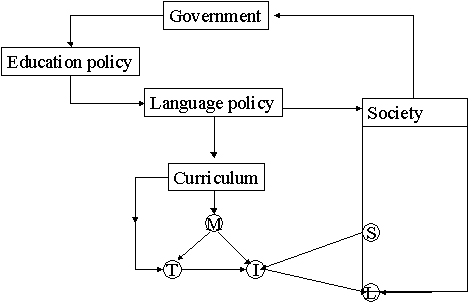
Figure 7.1: Integration of different levels of curriculum development (From
Jacobovit 1970: xii, quoted in Pathak 1999: 201)
What Jacobovit says is summarised here: On the first hand, the government, who determine the national policy, and in consequence, determine the language policy, should address the social demand, sociolinguistic environment and student’s psychological make-up (S). Curriculum, which is the direct offshoot of government policy, will be implemented if an appropriate methodology (M) is adopted by teachers (T) for their instruction (I). Teachers and all other parties must take feedback from what learners (L) do and say in reaction to all that happen.
This final part of this concluding chapter suggests certain measures for all those who work at different levels of curriculum development.
Recommendations for the policy makers:
The policy maker should address the actual needs of the students. These may be realised as follows:
1. The main stream students are always expected to go through tertiary and higher education. So, their ELT needs are to be spelt out in terms of general academic purpose.
2. Many students do not complete their secondary education let alone proceed through tertiary and higher education. A large number of students who leave school early — before or just after completing SSC or HSC— find little in the present curriculum that meets their ultimate English Language needs. After leaving school these students take a technical (in most cases non-institutional) hand experience and start working in home or abroad. Specially those who go abroad need English and they could do well if they were exposed to some varieties of English, as they need to work with people coming from different countries.
3. Needs analysis should be done in an ethnographic manner. A needs analysis of this kind will include not only students’ English language needs but also the existing ELT condition, infra-structure of institutions, longstanding ELT tradition of the country, teachers’ and learners’ attitudes towards English and the attitudes of some other parties as well. In favour of its language policy, the government should first develop the infrastructure of the institutions and convince the people working at different levels of the curriculum development. Because for the proper implementation of what is done in the planning level, people who are working in implementation levels need to think in the line of planners and policy makers. Development programmes like training, workshop and seminar, publishing journals and bulletins can put teachers, textbook writers and even the students within the line.
Recommendations for the NCTB:
At present the NCTB prepares and publishes curriculum documents as guidelines for teachers, students and textbook writers, and produce textbooks of primary, secondary and higher secondary levels. It also approves tittles of different private publishers as supplementary books for different classes. When new textbooks are introduced, it sometimes carries out teachers training programmes in support of these books.
For the proper implementation of the curriculum, the NCTB can take the following steps:
1. Textbooks and supplementary materials:
The NCTB itself can produce textbooks or different writers and publishers can produce them. In later case the NCTB will monitor the work. Even some foreign tittles can be approved. It can arrange workshop, seminar and training programmes for textbook writers to make them interpret its curriculum. Some of these programmes can be broadcast and telecast on mass media.
The monitoring cell of the NCTB should look in what is happening in the name of publishing notebooks. It should not approve the guidebooks which misguide students and teachers. The writers and publishers must have some pre-qualifications, before they get approval for writing books and notebooks. These may be a degree in applied linguistics or some training from a recognised institution. In turn, the training institutes should have sufficient resources before they get approval for enrolling trainees.
While examining the books, the NCTB should look in whether they have met the findings of needs analysis level. For textbook contents to be interesting and effective, the following things are suggestive:
a. Textbook content should be authentic.
b. It should include original and retold work of creative writers.
c. Lessons should be lively.
d. Language should be presented as discourse. Opportunities should be provided for oral interaction. There should be sufficient scope of practising listening skills.
e. As students are expected to use English in different spheres of life and in different circumstances, they must come across with different cultures and varieties while using the books. Textbooks should accommodate this. Again culture, tradition and faith of the people should be honoured, so that in the name of addressing a wider reach, textbook writers do not attempt brushing up the cultural heritage of the nation.
f. The textbooks should include variety of topics and themes.
g. Different varieties of English should be presented. These should include all the four skills. Important regional standards should also be included. To make the students guess and understand personal and other variations there should be texts from different grounds.
h. Notebooks and guidebooks should be examined whether they are misguiding our teacher and student communities.
i. The activities of rapidly flourishing coaching centres and private schools should be monitored. There can be a government body to look in this.
j. Before approving any books, the content and approach of the book should be carefully examined.
k. Communicative grammar books should written in English.
l. Workbooks should be written or provided for additional exercises.
m. Teacher’s book, which has been promised in the national curriculum (report 1995 Vol. II), should be published and distributed so that the teachers can get immediate help. And each lesson of this book should be vivid enough to give teachers a clear idea about how to teach the lesson. In the teacher’s book each lesson of the student’s books should be structured clearly and in chronological order. However, to carry out all acts effectively, teachers must be trained in how to use these books.
2. Teacher training:
In support of the new textbooks and syllabus, the NCTB arranges Teacher Training Programmes in cascade manner (Curriculum report 1995). But this programme has proved insufficient to put all the teachers under development. For the curriculum to be interpreted by the teachers, all English teachers should come under such programmes. A centrally controlled teacher development programme can be organised under which all the teachers of English will be enrolled.
3. Using mass media:
The NCTB may get it quite difficult to reach all the teachers with their training programme even in cascade manner. In that case, using mass media can be found convenient. On radio and television, some model classes, discussion programmes of experts with students and teachers can be broadcast and telecast.
Mass media can help a lot in making the new approach popular as well. Programmes on ELT including exemplar classes and discussion on how to develop teachers’ ability and skills of teaching and on how to train the students for communicative language class can be telecast on BTV. Newspapers can also play an effective role. Additionally, the NCTB and the respective education boards can publish ELT journals where the experts, and teachers of different institutes will write. All educational institutes will subscribe for them.
Recommendations for education boards:
Just arranging public examinations and giving the students certificates should not be the sole responsibility of education boards. In many cases, curriculum guidelines and syllabus specification do not reach the teachers and students, who, in fact, are the targeted beneficiaries of these. The education boards should investigate different schools and look in whether they have interpreted the curriculum and whether the teachers are teaching the students in the same way as planners intended it. Of coarse, teachers must not depend on the education boards in carrying out each juggling act in their class. They must have a relatively free hand in designing their class lessons. For this to happen, they must be acquainted with the approach and methodology.
Recommendations for teachers:
Teachers are in direct contact with the students. They are responsible for the integration of each work and activity in the class. With the changed view of language teaching the teachers should change their role in the classroom. They are no more the ruler of the class. They have to act as learning partners of the students, and manage the class very tactfully so that leaning takes place.
For teaching in a communicative language classroom successfully, a teacher should ensure the following things:
1. On the first hand, he/she must interpret what is intended in planning levels of the curriculum and be able to use communicative language materials and books effectively.
2. He/she addresses what the students bring to the class— their existing linguistic and communicative competence.
3. He/she should engage the students in the leaning process and activate them. The students should not be treated as empty receptacle of what teacher says. Rather they will be the most active participants in the classroom.
4. While teaching, objectives of each lesson must be clear to the teacher. He/she should know what he/she is teaching to whom and why and in which circumstances they will be using it.
5. Teacher is expected to come to the class with a pre-arranged plan and check before whether all the activities will prompt learning among the students.
6. While teaching, teacher should evaluate how far learning is taking place. After the completion of each lesson, he/she must measure the students’ achievement and make necessary changes with the findings of each class in the plan of the classes to come.
7. No one can learn a language if he/she does not use it. So, the teacher should create environment where students will use English. In the class, he/she should use English. Bengali can be used as a checking device only.
8. Just adopting a communicative syllabus and textbooks not certainly ensure effective teaching. If the teachers fail to use this in a proper way, everything will dismiss. So, a teacher development programme should be arranged at each school and madrasah, which will continue for a certain period. Some development programmes can be taken at upzilla/thana level and experts from a higher authority can monitor these programmes. Self-development scheme can also help teachers to develop their teaching skills.
Recommendations for testers and examiners:
For evaluating students’ progress, continuous assessment should be given due importance. In examinations:
1. Questions should not be set from any notebooks or guidebooks available in the market. Rather, they should be new. Students will answer them using their knowledge of English.
2. Question format should go on changes each year so as to encourage students to read to learn instead of memorising the textbook-content, presently, which they are tended to do.
This has been many times heard from the elderly people that the ELT condition was better in their days. Some said students in those days were more proficient than now. A bilingual country environment and the state of English as an official language might have been beneficent for the condition they cited. But some insights can be taken from here.
Bangladesh is not an exception from those who have gone through a long-standing tradition of grammar-translation method of language teaching. Hence, just showing the back to GTM, which is deep-rooted in ELT culture of the nation, frustrated many of the teachers as they could do little with coping with the changes that had been made in the planning levels of the curriculum. As if they were all on a sudden presented with a communicative syllabus. A need to prepare the teacher community to cope with the changes is strongly felt. The training programme, which was conducted in cascade system with the introduction of the new syllabus, proved to be insufficient, because many of the teachers were not taken under this programme. Many teachers misinterpreted communicative methodology, many found it inappropriate for our situations. As a result, they kept aside the new syllabus and textbooks of NCTB and took a guidebook of local publishers and went on teaching grammar rules and in some instances, translation. Even translation, which might have been an effective and creative work towards learning of English, has proved fruitless, as teachers, and possibly many of those who are working at the planning levels, including writing textbooks, interpreted communicative method as an anti-translation method. In fact, translation could be used creatively in language classroom. While translating in a language classroom, learners will not be looking for target language equivalent of each word of the first language, rather they will be doing something in the target language as if they were using the language. Some good examples of this kind can be found in Alan Duff (1987).
Finally, a rational curriculum should plan to meet not only the learners’ needs. It must consider the hurdles that the learners come with. Many of the students coming from economically disadvantaged families may feel handicapped on account of what Bernstein (1970) called ‘restricted code’. Problems special to children coming from a different social background — different region, different social stratum — should be addressed. Because a child’s linguistic development, in many parts, depends on the social setting in which it grows up. Although Bernstein used the term ‘restricted code’ for native language learners, it equally applies for second or foreign language acquisition. Many of teachers cited evidences of this. So, to bring these children to the level of mainstream students, special effort will be needed. (cf. Pathak 1999. p-196)
For Madrasahs and Madrasah Education Board
Ideas and implications conferred above are suggestive for all the seven general and the madrasah education boards. But madrasah education board is yet to adopt the communicative curriculum developed by the National Curriculum and Textbook Board (NCTB).
APPENDIX A
SYLLABUS AND DISTRIBUTION OF MARKS
(Prescribed by the NCTB for the secondary and higher secondary education boards.)
English - Class 9 -10
1. Introduction
This syllabus aims to provide clear and comprehensive guide for teachers, students and all those who are concerned with the teaching and learning of English for classes 9-10. In itself, however, a syllabus cannot ensure that communicative language teaching and learning takes place in the classroom. It can only provide a set of criteria, which, if properly implemented, would give the best possible change for that to happen.
2. The structures previously introduced in the Junior Secondary syllabus should be revised. These should include the following:
|
a) |
Use of have to Function: for obligation/necessity. |
Example: To maintain your health, you have to do certain things |
|
b) |
Use of (in order) to Function: expressing purpose |
Example: To do well, Tareq worked very hard. |
|
c) |
1st conditional: if + present tense + will. With the function of specifying future conditions and consequences. |
Example: If you learn to type, you will have a useful skill. |
|
d) |
2nd conditional: If + past tense + would/could/might. With the function of speculating about imaginary improbable future conditions. |
Example: 1. If I had a lot of money, I would/could/might buy a lot of books. 2. What would you do if you had a lot of money. |
|
e) |
The passive mode Function: to describe actions done to something (particularly when not wishing to specify the agent). |
Example: 1. Tareq's air ticket was bought for him. 2. The Wears Towers were built by a famous Bangladeshi architect. |
|
f) |
Use of 'it' With the function of 'empty' subject. |
Example: It is true that Tareq went to New York. |
|
g) |
Use of must/mustn't Function: expressing obligation. |
Example: Students must always work hard. They mustn't be lazy. |
|
h) |
Present Continuous With the function of talking about future events. |
Example: Tareq is returning to Bangladesh from New York next week. |
The following items should be introduced:
|
1 |
Use of present perfect with after/when, with the function of predicting a cause & effect sequence of events in the future. |
Example: 1. After Tareq has landed in New York, he will meet his friends. 2. When you have passed the SSC, you will be happy. |
|
2 |
Use of the past perfect tense + with + before/after. |
Example: 1. Tareq's father had worked in Jamalpur for ten years before he was transferred to Sonapur. 2. When I met him, he has worked in Sonapur for three years. |
|
3 |
Use of -ing clause + by /without With the function of defining cause & effect relations. |
Example: 1. You cannot learn a foreign language without practising it regularly. 2. By smoking cigarettes, you can spoil your health. |
|
4 |
Use of -ing/-ed within a clause. With the function of qualifying the subject. |
Example: 1. Sunlight falling on the pond can heat the brine. 2. Heat absorbed from the sunlight is trapped in the bottom layer. |
|
5 |
Use of can could + see/hear/understand. With the function of describing ability. |
Example: 1. Tareq couldn't see any rickshaws in New York. 2. Tareq's friends could understand American English very easily. |
|
6 |
Further uses of may/might/should & ought to. With the function of expressing possibility or obligation. |
Example: 1. You might like to learn French. 2. If you do, you ought to buy a good dictionary. |
|
7 |
Use of though/although + clause. With the function of talking about contrasting, but related circumstances. |
Example: 1. Although the sea is calm, it might become rough. 2. Even though the sea was calm, nobody wanted to swim in it. |
|
8 |
Use of question tags: can/can't they? do they/don't they? With the function of checking or confirming. |
Example: 1. Tareq can't fly a plane, can he? 2. You do want to eat spaghetti, don't you? |
|
9 |
Use of be + adj. +phrase. With the function of describing capabilities and characteristics. |
Example: 1. Shanti is good at swimming. 2. Abdul is afraid of spiders. |
|
10 |
Use of be + adj. + to + verb. With the function of describing feelings in relation to circumstances. |
Example: 1. Tareq was happy to see his friend in New York. 2. He was surprised to see such high buildings there. |
|
11 |
Use of NP + verb + NP + infinitive. With the function of expressing desires/making polite requests. |
Example: 1. The headmaster wanted the students to visit different offices. 2. He was surprised to see such high building there. |
|
12 |
Use of NP + verb + NP + adj./adv. With function of describing manner. |
Example: 1. Tareq ate his breakfast quickly. 2. Teacher should make their lessons interesting. |
|
13 |
Use of verb + object + -ing. With the function of describing present events. |
Example: 1. Tareq saw Samira talking to the other students. 2. The students saw the train coming. |
|
14 |
Use of when/after/while + future clause. With the function of describing a future event in the future. |
Example: 1. When Tareq arrives in New York, he will see his friends. 2. While Traeq is in New York, he will eat many different kinds of food. |
|
15 |
Use of verb with how to. With the function of expressing manner. |
Example: Tareq's friends showed him how to eat spaghetti because he didn't know how to eat it. |
|
16 |
Use of the phrases: the place where/ the time when. With the function of indicating either place or time. |
Example: 1. The place where the students lived was called Malahati. 2. The time when the students returned to their hostel was past midnight. |
3. Topics/Themes
- The purpose of learning English is to acquire language skills, not to learn about any particular topic or study literature.
- Unlike most of the other subjects on the curriculum, English is skills-based subject, not a content-based subject. The topics and themes, therefore, are not introduced for their own sake, but rather, as vehicles for practising the four skills of listening, speaking, reading and writing.
- Communicative language learning requires that language be practised for a recognised purpose within realistic situations and contests. Topics and themes should be introduced, therefore, with the purpose of re-creating such situations and contexts as genuinely as possible within the classroom.
4. Vocabulary
- Word meaning should be defined in relation to use within specific contexts. Students' attention should, therefore, be focused more on actual meaning within particular contexts, rather than on potential meaning (s) as provided in dictionaries.
- Word meaning should be given in English. Translation should be the exception, rather than the rule and only resorted to as a checking device, ensuring that meaning has been correctly understood.
5. Poetry
Poems should be dealt with mainly for enjoyment, understanding and practice of rhythm and stress. This is also an area where memorising can be both useful and valid. It should be borne in mind, however, that since poems don't involve communication in the sense of responsive interchange, their employment in the language classroom should be limited.
6. Dialogues & Drama
Dialogues and Drama provided in natural informal speech are mainly for pair practice. Again, a certain amount of memorising might be useful and valid here, especially as acting out these dialogues should be encouraged. This is also one of the most natural and effective ways of practising spoken language within meaningful contexts.
7. Examination
Section 1 Seen Comprehension (having 20% of the total marks: 40 out of 200)
There will be a seen comprehension passage followed by a choice of questions. Where there is choice of comprehension passages, there should be mixture of literary/fictional and non-literary/fictional types. Comprehension questions types should include the following:
(a) Objective: (i) multiple Choice, (ii) true/false, (iii) filling in gaps with clues, (iv) information transfer, (v) making sentences from substitution table (s), (vi) matching phrases, words/pictures, etc.
(b) More free: (vii) open-ended, (viii) filling in gaps without clause, (ix) re-writing in a different form and (x) summarising.
All the questions should test the students' ability to understand the passage as a whole, rather than their ability to copy sections from it . Although the seen comprehension passage will be taken from a set textbook, it will not encourage memorisation because (i) the passage will be reproduced on the question paper, and (ii) the questions will not come from the textbook, but rather, will be new.
Section 2 Unseen Comprehension (having 20% of the total marks: 40 out it 200)
There will be an unseen comprehension passage followed by a choice of questions. The question types will be as for the seen comprehension. The comprehension passage will be a different type that used in Section 1 (i.e. Paper I) where more than one unseen comprehension is given, the passages should also be of contrasting types.
Section 3 Vocabulary & Grammar (having 20% of the total marks: 20+20 out of 200)
There will be questions on vocabulary (Paper-I) and grammatical items (Paper-II) contextualised in the form of cloze passages with clues (50%), and cloze passages without clues (50%). There will not be any questions on explicit grammatical knowledge. Neither will explicit grammatical terms be used in the paper. Rather, questions will test the use of grammatical within specific meaningful contexts.
Section 4 Writing (having 40% of the total marks: 40+40 out of 200
There will be a number of writing tasks. There will be divided into two types:
(a) guided (paper-I) and (b) more free (Paper-II), The following types of exercise should be given:
(a) For guided free writing: (i) producing sentences from substitution tables, (ii) reordering sentences, and (ii) answering questions in a paragraph.
(b) For more free writing : (iv) answering questions about themselves, (v) continuing a passage, (vi) writing from a model (provided in the paper), (vii) writing creatively from their own experience and/of imagination.
Students will not be required to memorise composition from any textbook.
Distribution of papers and marks
Paper I: Total Marks 100
(a) Seen comprehension 40 marks
Objective questions 20
More free/open questions 20
(b) Vocabulary 20 marks
*Cloze test with clues 10
Cloze test without clues 10
(c) Guided writing 40 marks
Paper II: Total Marks = 100
(a) Unseen comprehension: 40 marks
Objective questions 20
More free/open questions 20
(b) Grammar 20 marks
*Cloze test with clues 10
Cloze test without clues 10
(c) Semi-guided to free writing 40 marks
Textbook
English for Today book 7 (for class IX and X)
Published by: National Curriculum & Textbook Board.
Supplementary materials
1. English Grammar in Use- R. Murphy
2. Oxford Practice Grammar Use- J. Eastwood.
APPENDIX B
QUESTION PAPERS
Question paper 1:
There are seven education boards for operating in general education sub-system. Students of these boards sit for their first public examination SSC organised by the boards. All the five general education boards follow the same exam format provided by the NCTB. Schools and colleges affiliated under these boards are subject to follow the similar exam format in all terminal and annual examinations. Appendix B furnishes question papers of SSC 2001 Dhaka of Dhaka Board, Dakhil Question Paper of Madrasah Education Board and question Papers of two Schools and a Madrasah.
DHAKA BOARD- 2001
ENGLISH (Compulsory)- First Paper
[According to the Syllabus of 2001]
PART A
Read the passage carefully and answer the questions following it:-
Since 1896 the Olympic games have been held regularly in different countries every four years except during the years of the First and Second World Wars. But a link is still kept with the first Olympic town in Greece. This is how it is done. There is an Olympic flame in each stadium where the games take place. This flame is kept burning during the entire period of the games. At the opening ceremony the flame is lit from a torch kindled in the temple of Zeus in Olympia. It is then carried by teams of relay runners who travel by land and by sea. All the time the flame is kept burning. When the last runner enters the stadium, he circles the running tracks and then bounds up the steps to light the Olympic flame. When he does this he is greeted by a roar of applause. The Olympic games which take place every four years cause great excitement all over the world. Millions of people in many countries watch the games on television.
1. Write Whether the following statements are true or false. If false, give the correct answer:- 1×5 = 5
(a) Since 1896 the Olympic games have been held regularly.
(b) No link is kept with the first Olympic town in Greece.
(c) The Olympic flame is not kept burning during the entire period of the games.
(d) Thousands of people in many countries watch the games on television.
(e) The Olympic games take place every three alternative years.
2. Choose the best answer from the alternatives:- 1×5 = 5
(a) The modern Olympic games could not be held—
(i) once (ii) twice (iii) thrice (iv) four times
(b) At present the Olympic games are held in—
(i) Olympia (ii) different countries of the world
(iii) Greece (iv) Sydney
(c) The Olympic games were not held during—
(i) Crusade War (ii) Liberation War of Bangladesh
(iii) First and Second World Wars (iv) Vietnam War
(d) The temple of Zeus is in—
(i) India (ii) Rome (iii) Athens (iv) Olympia
(e) Applause means —
(i) hand clapping (ii) shout (iii) laughter (iv) hue and cry
3. Give Short answers to these questions :— 2×5 = 10
(a) Where were the first games held ?
(b) When were not the Olympic games held ?
(c) Where is the Olympic flame kept burning ?
(d) How is the Olympic flame carried on ?
(e) What does the last runner do when he enters the Olympic Stadium ?
4. Choose a word from the box and put it in the blank next to its meaning:
1×10 =10
|
hold |
Except |
Link |
Entire |
cause |
|
roar |
Watch |
Excitement |
Million |
greet |
(a) ————— = Whole.
(b) ————— = make happen.
(c) ————— = address cordially.
(d) ————— = loud and deep sound.
(e) ————— = one hundred thousand.
(f) ————— = celebrate.
(g) ————— = connection.
(h) ————— = observe.
(i) ————— = pleasant feelings.
(j) ————— = without.
5. Fill in the blanks with suitable words from the text: — 1×10=10
Olympic games have been held ——— in different countries. But a link is ———— kept with the first Olympic town. This is how it is done. There is an Olympic flame in ———— stadium. ———— then the games are arranged in different countries in the world. At the opening ceremony the flame is ———— from a torch. It is ———— carried by a team of relay runners. The last runner ———— the stadium circles the running tracks and hounds up the steps to ——— the Olympic flame. The Olympic games ———— take place every four years cause great excitement all over the world. The games ———— watched by millions of people on television.
PART B
6. Select an appropriate word from the list and insert into each blank:- 1×10=10
|
charge |
Behind |
Pleasure |
cushioned |
sharp |
|
active |
Coming |
Grown-up |
slightest |
satisfy |
Tigers do not kill animals for ———. They kill animals to ———— their appetite. They ——— the victims from the side or ———. As they have ——— paws, their victims do not have the ——— warning of the tiger's ———. Sher Jung's senses were very ——— for the slightest sound. Tigers are ——— by night. A ——— tiger consumes 20 to 30 kilograms of meat at a single meal.
7. Fill in the blanks with words/phrases: — 1×10=10
As the astronauts completed their ———, they took ——— for their journey. They checked their equipments ——— and found everything working ———. After ——— another rocket they came out of the lunar — and started back their ——— to earth. On the way back to earth they faced no ——— . Millions of people all over the world ——— their adventure on television and were ————.
PART C
8. Read the following sentences on 'Shakespeare'. Rearrange them according to sequence:- 10
(a) Shakespeare composed both tragedies and comedies.
(b) By 1598 he was ranked the greatest dramatist.
(c) Shakespeare was one of the greatest poets and dramatists of the world.
(d) He possessed property both in Stratford and in London.
(e) He was interested in the theatre and very soon became an actor.
(f) He retired sometime before 1613 and died in 1616.
(g) He was born on 23rd April 1564 at Stratford on Avon.
(h) By 1592 he established himself as a leading dramatist of the age.
(i) Hamlet, Othello, Macbeth and the Tempest are some of his great plays.
(j) He was associated with the theatre companies for which he wrote plays.
9. Write a paragraph on Tea-stall using key-works :- 10
Location, furniture, customers, management, discussion.
10. Suppose you live in a hostel. Your mother wants to know how you pass your time in the hostel. Now write a letter to your mother telling her about your hostel life.
10
11. Suppose you have passed the S.S.C examination this year. Now you need a testimonial from your Headmaster / Headmistress for admission in a college. Write an application to your Headmaster / Headmistress for a testimonial. 10
Question Paper 2:
DHAKA BOARD- 2001
ENGLISH (Compulsory)- Second Paper
[According to the Syllabus Of 2001]
PART A
Read the passage carefully and answer the questions following it: —
When we speak of a basic human need we mean something need. Without it we would starve to death: even if we have plenty of food, but of the wrong kind, our bodies will suffer from a lack of right food. This is known as malnutrition.
In primitive societies, need for food are the same as in the more advanced societies like our own. We all need food and could manage to live a healthy life on limited type of food. Primitive people eat only the foods which can be grown near their homes whereas we eat foods which are often grown many thousands of miles away our homes. Primitive people are satisfied with less variety than we are. Therefore, we can say that although their needs are like our own their wants are different. Just think of the different types of meat we eat: beef mutton, chicken, goose and rabbit. We could manage on a diet of one kind of meat, but how monotonous it would become.
Yet we cannot live on meat alone, and need other foods like bread and fruit to provide us with the other essential nutrients which, we need to our bodies healthy.
1. Write whether the following statements are true of false, give the correct answer :- 1×5 = 5
(a) Food is one of the basic needs of man.
(b) The food of modern people differs from the primitive people.
(c) In modern age there is much variety in food.
(d) We can avoid malnutrition by taking any kind of food.
(e) Man can be in good health by eating various items.
2. Choose the best answer from the alternatives given after each question :- 1×5 = 5
(a) "In primitive countries" means—
(i) in underdeveloped countries (ii) in ancient countries
(iii) in strange countries (iv) in poor countries
(b) "Malnutrition means—
(i) having no food at all
(ii) not having enough of any kind of food
(iii) not having the kinds of food necessary for health
(iv) having enough food
(c) With regard to food, what do people in advanced societies have in common with primitive people?
(i) They have the same need for food (ii) They like the same kind of food
(iii) They eat the same kind of food (iv) They grow the same kind of food
(d) With regard to food, civilized people are different from primitive people because—
(i) They eat more food
(ii) They eat a greater variety food
(iii) They only the right food
(iv) They eat only foods grown in other countries
(e) Primitive people do not take— items of food.
(i) less (ii) least (iii) many (iv) much.
3. From your study of the passage choose the suitable phrases from column B to match parts of sentences in column A :— 2×5 =10
|
Column A |
Column B |
|
(a) Basic need is essential (b) For want of food man may (c) The same kind of food becomes (d) We need various kinds of (e) Primitive people's need for food were |
(a) monotonous (b) food. (c) did. (d) not different from the advanced people. (e) to life |
4. Complete the following passage using suitable words. Use only one word for each space:— 2×5 =10
Basic need ——— something necessary to life without ——— we cannot do. One of them ——— food without which we would ———. In spite of —— plenty of food we will suffer from malnutrition ——— we cannot choose the kind of food. In primitive countries man's food needs are similar ——— the more advanced societies ——— of us ——— need for food and can lead a healthy life on limited types of food.
5. Write answers to the following questions. Do not quote sentences from the passage: —
2×5 =10
(a) Why is food a basic human need?
(b) What is malnutrition?
(c) How can we avoid malnutrition?
(d) Why do primitive people eat only the foods that can be grown near their homes?
(e) What do we need to keep our bodies healthy?
PART B
6. Fill in the blanks using the appropriate word from the list below to complete the following passage. You have to use a word more than once: — 1×10 =10
|
Stand |
enter |
Sit |
Attention |
ask |
The teacher —— the classroom. After his —— the students ———. The teacher told them to —— down and they —— down. Then he —— the students to be ——. Some of them heard —— and some did not pay ——.
7. Read the passage and complete the following table by referring to the text. You must complete each space: — 1×10 =10
Alexander was the son of Philip. King of Macedonia. Alexander ascended the throne in 335 B.C. after the death of his father only at the age of twenty. Within two years he collected an army of 30,000 foot soldiers and 5,000 horsemen. After conquering Asia Minor, Syria and Egypt in 334 B. C. he set out for the conquest of Persian empire. Between 334 and 330 B.C. Alexander was busy in the Persian War. However, the decisive battle of Persia was fought in 331 B.C. The king of Persia was defeated and killed. Alexander captured the capital of Persia. By 328 B.C. Alexander was able to conquer all the territories of the Persian Empire and modern Afghanistan.
In 327 B.C. he crossed the Hindukush and reached India. Of the Indian kings the two most important were King Ambhi of Taxila and king Puros of Jhelum. King Anbhi greeted Alexander, but Puros fought bravely. Though he was defeated he was given back his kingdom for his heroic spirit.
Alexander then marched eastwards conquering the kings and republic all about the way. But his officers and soldiers were anxious to return home. So in 325 B. C. he began to return home. On the way he died at Babylon only at the age of 33 in 323 B.C.
|
Date |
Events |
|
356 B.C. |
|
|
|
Alexander ascended the throne. |
|
334 B.C. |
|
|
333 B.C. |
|
|
334—330 B.C. |
|
|
331 B.C. |
|
|
328 B.C. |
|
|
327 B.C. |
|
|
|
Alexander began to return home |
|
|
Died |
8. Write a paragraph about ' A Railway Station'. Mention specially the site, the place and the area of the station. In this connection make a clear description. 10
Or. Write a paragraph about 'A good teacher'. Mention specially his daily activities, his pleasures, his aims and other aspects with the students.
Or, Write a paragraph about 'An Accident'. Describe clearly about the cause of the accident and the scene that is created by the accident.
9. Your S.S.C final examination is very near at hand. For this you have prepared yourself for the examination. Write a letter to your friend about your preparation for the examination. 10
Or, Suppose the summer heat is severe this year. So it is impossible to work in the classroom at noon. Write an application to your Headmaster praying for holding school in the morning.
Or, The income of your guardian is very poor. He is quite unable to bear your educational expenses. Write an application to your Headmaster for financial help from poor fund of the school.
10. Write as essay in about 250 words on any one of the following topics:— 20
(a) A village fair: Introduction- Site and occasion—Commodities—Special attractions — Conclusion.
(b) Student life: Introduction — Importance — Duties of students — Work after school hours — Conclusion.
(c) Your favourite game: ………
(d) Your aim in life : ………………
(e) Discipline: …………….
Question Paper 3
ACED SCHOOL
3rd Semester 2002
Class: Seven English 1st Paper
Time: 2: 30 min Full Marks: 80
Part – A (Seen comprehension)
Read the passage carefully and answer the questions that follow:
In 1974, I was six years old. I can remember a very important event that happened then. My mother said to me, Samira you’re going to start school tomorrow. I was very happy and excited, “I’m going to be a student”, I thought. I couldn’t think of any thing else and at night I couldn’t sleep. I was thinking about the other girls and boys because I wanted to go to school very much.
The next morning my father said, “come on, Samira we are going to walk to your new school. We’re going to meet the Headmaster. He’s a friend of mine.”
So that was my first day at school. My father took me there. The primary school is quite a long way from our village. My father walked, but I ran all the way. After about half an hour we arrived at the school. There were many people there, but I didn’t know any one. I was afraid of all the new faces, because they didn’t look friendly. “I’m not going to enjoy this,” I thought.
1. Write whether the following statement are true or false, If false, give the correct answer. 5´ 0.5=2.5
a. In 1974 Samira was seven years old.
b. Samira can not remember a very important event.
c. She couldn’t sleep at night.
d. The Headmaster was her father’s friend.
e. Every body looked friendly towards Samira.
2. Choose the best answer from the alternatives given after each question. 5´ 0.5=2.5
a. Samira was ------ years old in 1974.
i) seven ii) eight iii) six
b. Samira ------- think of anything else.
i) couldn’t ii) could iii) don’t
c. She can remember a very important ---------.
i) story ii) fables iii) event.
d. The Headmaster was her father’s --------.
i) brother ii) uncle iii) friend
e. After about ------ we arrived at the school.
i) Half an hour ii) two hours iii) three hours
3. Answer the following questions. 5´ 2=10
a. What was the very important event in Samira’s life?
b. Why couldn’t she sleep?
c. What did she think about?
d. Why was she afraid?
e. Why did Samira run to her school?
4. Choose a word from the box and put it in the blank next to its meaning. 10´ 0.5=5
a.
 |
Intelligent = -------
b. Set out = -------
c. A period of seven days = -------
d. Almost = -------
e. Plenty = -------
f. Ancient = -------
g. Essential = -------
h. Benefit = -------
i. Attend to = -------
j. Collect = -------
5. Fill in the blanks with suitable words from the text. 10´ 0.5=5
I was ------ happy and ------. I ------ going to be a ------. I thought. I couldn’t think of anything ------ and ----- I couldn’t ----. I was thinking about the ------ the ----- and about the other ------ and boys because I wanted to go to school very much.
Part – B (Vocabulary)
6. Fill in each blank with a word from the words given below: 5
strange, diary, transport, tired, journey.
In January 1991 Lucy flew Australia to Bangladesh, Samira and Laila met her at the airport in Dhaka. “Did you have a good ------? They asked. “Oh, yes,” replied Lucy, “But now I’m very ---
Samira and Laila took Lucy to the house of one of Laila’s relatives. It was near the airport. Suddenly Lucy saw some thing -----. “What’s that?” asked Lucy. “It’s a rickshaw,” explained Samira. “Don’t you have them in Australia?” “No” replied Lucy, “I haven’t seen that kind of ---- before. I'll write about it in my --- this evening”.
7. Fill in the gaps with one word only. 10´ 1=10
This is a story about a ---- for. Mr Fox was not ----- because he could think ---- well. He thought about his ----- because he ----- it in a ------. Then Mr Fox felt ------ and ------. “Now I don’t look like a fox”. he thought So Mr. Fox made a ----- to trick all the other foxes. When they all came to hear him. Mr Fox felt very important to other foxes. Then he told all the foxes to ------ their tails.
Part – C (Semi – guided to free writing)
8. The following sentences are in wrong order. Write them in correct order. 10
“What do you think, Mina?” she asked her daughter. “What did it teach us?” Mrs. Amin asked. “Yes, we did,” her students replied. “ I think we must always tell the truth and never trick people,” she said. “Did you like the story about the clever fox? “asked Mrs Amin. Mina put up her hand.
9. Write a paragraph on any one of the followings. 10
i) Making science popular
Or
ii) Travelling as a part of education.
10. You have been promoted to class vii. You will have to buy some books. For this purpose you need some money. Now write a letter to your father for sending you some money. 10
Suppose that there is no canteen in your school. The students have to stay from 9 am to 4 P.M. So, they need tiffin. Now write an application to your Headmaster for setting up a canteen in your school. 10
Question Paper 4:
ACED SCHOOL
3rd Semester’ 02
Class: Seven English 2nd Paper
Time 2:30 min Full Marks : 80
Part – A (Unseen comprehension)
Read the passage carefully and answer the questions that follow:
Androcles was a slave. He had fled from his master’s house. One day he saw a lion in the forest. He was frightened at the sight of the lion and he began to run. Going some distance, he turned round. The lion did not follow him. It stood where it was. It looked at him and also at its paw.
Androcles was surprised. he turned back and slowly went to the lion. The lion showed no sign of attacking him. It rather put out a bleeding paw towards him.
Androcles was a very kind – hearted man. He felt pity for the lion. So, without fear, Androcles examined the bleeding paw. He found a large thorn and pulled it out. Thus the lion was relieved of its pain.
The grateful lion led Androcles to his own cave. Every day the lion brought him food, So Androcles was quite safe in the lion’s cave for some time. However, Sometime after both Androcles and the lion were caught and taken to Rome.
1. If the sentence is true, write it as such, If false, give the correct answer. 5´ 1=5
a. The lion did not move.
b. Androcles ran away from his master’s house.
c. In the lion’s cave Androcles managed his own food.
d. Androcles was secured in the cave.
e. Androcles stayed many days in the cave.
2. Choose the best answer from the alternatives. 5´ 1=5
a. The opposite gender of lion is ------
i) lions ii) lioness iii) lioness
b. To see the lion he was ------
i) afraid ii) delighted iii) happy
c. The present tense of fled is ------
i) fly ii) flow iii) flee
d. Androcles showed ------ to the lion.
i) annoyance ii) cruelty iii) kindness
e. Androcless was not a ------ man.
i) rich ii) free iii) miser
3. Join a phrase from column A to another from column B to make correct statement according to the above passage. 5´ 1=5
|
a |
The lion showed |
a |
attack Androcles |
|
b |
A relationship grew between |
b |
Gracious |
|
c |
The lion did not |
c |
Androcles and the lion |
|
d |
Blood was coming out from |
d |
Gratitude to Androcles |
|
e |
Androcles was |
e |
the lion’s paw |
4. Complete the following passage using suitable words. 10´ 1=10
------- a lion in the forest, Androcles was frightened and began -------, ------- running some distance, he looked ----- and ------ that the lion did not ------ its place. This was a matter of ------- for him. When he went near the lion it did not ------ him. Rather the lion showed him ------ bleeding paw.
5. Write answers to the following questions. Do not quote sentences from the passage. 5´ 2=10
a. Who was Androcles?
b. Why did he flee to forest?
c. What did he do seeing the lion?
d. Why did he run back?
e. What did the lion show Androcles?
Part – B (Grammar)
6. Fill in the blanks with a correct form of the verbs given below. 5´ 1=5
try, set, have, see, drink
The sun was ------ gloriously, Socrates sat silently in the midst of his companions. He ------ a cup of poison in his hand. He would leave this world by ----- this poison. His companions were worried to ---- it. They ---- their best to prevent him from drinking it.
7. Write down the suitable words in the blanks. 5´ 1=5
We ------ in Bengali. It ----- our mother tongue. Many heroes ----- lives for our mother tongue. We ------ them and pay respect to their souls. In west Bengal, Bengali ------ also spoken.
Part – C (Guided writing)
8. Write a paragraph on ‘a village doctor’ or ‘your mother’. 10
9. Suppose you have a pen friend named Lucy. She wanted to know about your village. Now write a letter to your friend about your village. 10
or
Write an application to the Chairman of your Union Council for sinking of a few tube wells in your village.
10. Write an essay on any of the following essays on the basis of the given hints. 20
a) Physical exercise
Hints: i) Introduction ii) Different kinds of physical exercise iii) Importance of physical exercise iv) Effects of neglecting physical exercise v) Conclusion.
b) Your aim in life.
Hints: i) Introduction ii) What you want to be iii) Your plan iv) Social work v) Conclusion
c) Your favorite game.
Hints: i) Introduction ii) The ground iii) How the game is played iv) Rules of the game v) Merits vi) Demerits vii) Conclusion
Question paper 5:
Bogra Cantt. Public School & College, Bogra
1st Term Examination
Class- VIII
English First paper
Time: 2.3 hours Full marks-100
(N.B.- The figures in the margin indicate the full marks)
Part- A (Seen comprehension-40)
Read the passage carefully and answer the questions following it.
Mr. Grasshopper didn’t like to work during lovely hot summer days. “It’s really not necessary”, he told Mr. Ant. “Why do you work so hard when there’s a plenty of food to eat?” Mr. Grasshopper asked him. “There’s plenty of food now” agreed Mr. Ant. “But what about the future?”
“ Oh, the future!" exclaimed Mr. Grasshopper. “Why do you care about the future. Mr. Ant? It really doesn’t exit! Only the present exists! Mr. Grasshopper laughed. Then he started to sing a song. Mr. Grasshopper sang very well and Mr. Ant stood and listened to him.
“ Would you like to sing my song with me?” Mr. Grasshopper asked “Oh, thank you,” replied Mr. Ant politely. “But I’m afraid I don’t know it. What’s it called?” “Well, really it’s a poem,” exclaimed Mr. Grasshopper. “It’s called ‘Leisure’ and it’s my favorite because I’m very found of leisure” Mr. Ant laughed loudly.
“But I do work sometimes, you know, Mr. Ant” continued Mr. Grasshopper more seriously. “ Guess who wrote the music! Would you like me to tell you?” Yes, I would,” replied Mr. Ant. “Was it written by someone famous?” “Yes, that’s” laughed Mr. Grasshopper. “It was written by me! And now I’ll sing it to you again!”
1. True or false. If the sentence is true, write it as such. If false, give the correct information 1x5=5
(a) Mr. Grasshopper does not work when there is enough food.
(b) Mr. Grasshopper always thinks of his future.
(c) Mr. Ant did not sing with Mr. Grasshopper.
(d) Mr. Grasshopper does not like to do anything.
(e) Mr. Ant is a good music writer.
2. Choose the best answer from the alternatives. 1x 5=5
(a) Mr. Grasshopper wants to spend time----------
(i) in meditation (ii) in singing (iii) in gossiping (iv) without doing anything.
(b) The song sang by Mr. Grasshopper was-----------
(i) a modern song (ii) a piece of poetry (iii) a classical song (iv) a song about a
farmer.
(c) Mr. Grasshopper sang the song--------------
(i) once (ii) twice (iii) thrice (iv) many times.
(d) There is plenty of food---------
(i) in Summer (ii) in winter (iii) in rainy season (iv) round the year.
(e) Mr. Grasshopper is--------------
(i) active (ii) hard-working (iii) lazy (iv) greedy.
3. Choose a word from the box and put it in the blank next to its meaning. 1x 5=5
|
Necessary, exist, comic, guess, leisure, politely, explain, favourite, listen to, afraid |
|
(a)---------------------------------- remain |
(f)------------------------------ spare time |
|
(b)----------------------------------analyse |
(g)--------------------------- hear attentively |
|
(c)----------------------------------conjecture |
(h)----------------------------- essential |
|
(d)----------------------------------beloved |
(i)------------------------------ fearful |
|
(e)----------------------------------gently |
(j)------------------------------funny. |
4. Give short answers to these questions. 2x 5=10
(a) What kind of things does Mr. Grasshopper like to do?
(b) What kind of person is Mr. Ant?
(c) What is the name of the poem?
(d) What did Mr. Ant like Mr. Grasshopper to tell?
(e) Whose song would Mr. Grasshopper sing?
5. Fill in the blanks with suitable words from the text. 1x10=10
Mr. Grasshopper did not like (a) ------- when it (b) ------- lovely hot summer days. He thought it (c) -------- not necessary to (d) ------- during the time when there was (e) ------food to eat. He (f) -------not care about the future, but (g)-------- present. Then he started (h)--------. Mr. Ant heard him attentively. Mr. Grasshopper wanted to spend his time without (i)--------- anything. He (j) -------- leisure very much.
6. Make five meaningful sentences from the substitution table. 1x5=05
|
Mr. Grasshopper was |
|
Polite |
|
he did not like to work |
|
Mr. Grasshopper sang |
|
Found of his leisure |
|
he did not think of his future |
|
Mr. Grasshopper was |
so |
Conscious of his time |
that |
he did not waste time singing with Mr. Grasshopper |
Mr. Ant was |
|
Sweetly |
|
Mr. Ant listened to his song |
|
Mr. Ant was |
|
Callous |
|
he did not forget to thank Mr. Grasshopper |
Part-B (Vocabulary-20)
7. Fill in each blank of the passage with a word in the box below: 1x10=10
|
made, lovely, better, dry, along, often, be, garden, soil, other |
Luna and Rina walked (a)------- with Rina’s mother. Water hyacinths can be (b) ----- into fertiliser, “She said “You just collect them and (c) -------- them in the sun. We (d) -------do it. Then it can (e) -------- made into very good fertiliser. Of course, if the water hyacinths are mixed with (f) ------ things, like old leaves, it’s even (g) ------- , “Here we are”, said Mrs. Rehana Salam “Come and look at the vegetables in my (h) ------ Luna.” “They look (i) ------- and large, said Luna. “Yes” said Rina’s mother. “It’s because the (j) -------- had been mixed with that.”
8. Fill in each blank of the passage with suitable words. 1x10=10
One day Mr. Grasshopper went to Mr. ant’s (a) --------- Mr. Ant gave him breakfast. Mr. Grasshopper ate the (b) -------- and thanked (c) -------. Then he said to Mr. Ant that his (d) -------- and children were weak because they did not have any (e) ------- to eat. Mr. Grasshopper also said that he was very lazy and thoughtless. He did not (f) ------- and think for the (g) -------. Mr. Ant felt very (h) -------- to hear the story of Mr. Grasshopper. He wanted to (i) -------- him but he was not rich (j) --------.
Part-C (Guided writing-40)
9. The following sentences in the passage are in wrong order. Write them in correct order 10
One morning the young couple were walking into a garden. Long long ago there was a great musician in Greece. He could produce appealing notes on his lyre. They were happy and gay. She was as beautiful as the dewy morning. Eurydice was the name of his wife. The husband and the wife had great love and affection for each other. His name was Orpheues. They always live and move together. They were enjoying sights and sounds.
1. Write an application to your Principal for opening canteen according to the following guidelines.
- Why it is required?
- Where to be opened?
- What are there items to be kept?
- Who is to run the canteen?
2. Write a letter to friend about the annual picnic you have enjoyed a few days ago. 10
Date of picnic, place, cooking food, activities of students, description of the place visited by you.
3. Write a paragraph a Blacksmith. 10
- Who is a blacksmith?
- His qualification?
- Jobs done by him?
- Financial condition?
Question Paper 6:
Bogra Cantt. Public School & College, Bogra
First Term Examination-2003
Class- VIII
Subject: English Second paper
Time: 2.3 hours Full marks-100
(N.B.- The figures in the margin indicate the full marks)
PART-A (Unseen Comprehension-40)
Read the following passage carefully and answer the questions that follow.
About 150 years ago a musician sat quietly at a concert in Vienna while his new symphony was played for the first time. At the end he had to face the audience to know that they were clapping wildly. He was totally deaf. The musician was Beethoven, one of the greatest composers who ever lived.
Beethoven wrote about 300 pieces of music. Some of his most beautiful pieces he wrote after he became deaf.
It is hard for anyone to be deaf. But probably it is worse for a composer than for anyone else. Think of not being able to hear the music you have written!
Even as child Beethoven did not have a happy life. His father, who was a singer with court band in Bonn, Germany, drank a great deal, and was lazy besides. When the boy was only four, his father decided to makes a musician of him. Hour after hour Beethoven had to practice on the violin and the clavier. Whenever he did not work hard, his father was cruel.
It is a wonder that the boy did not hate music. He learned so fast that he was able to make a concert tour when he was only 1. When he was 17, the great Mozart praised him.
A few years later Beethoven went to Vienna to study with Haydn. Soon he was writing a great deal of music himself.
1. Write, whether the following statements are true or false. If false, give the correct statements:
(a) Beethoven was the greatest composer who ever lived.
(b) He wrote most of his masterpieces after he became deaf.
(c) He did not have a happy childhood.
(d) His father was ambitious for him.
(e) He studied for a few years with Haydn in Vienna.
2. Choose the best answer from the alternatives given after each questions:
1x5=5
(a) Beethoven knew the audience appreciated his new symphony because
(i) he sat among them in the concert hall
(ii) he heard their applause
(iii) he saw them clapping
(iv) he saw them laughing.
(b) Beethoven’s father wanted him to be
(i) a singer (ii) a musician (iii) a music teacher (iv) a writer
(c) Beethoven went to Vienna
(i) to learn from a great musician there (ii) to compose music there
(ii) to attend concerts there (iv) to learn medicine
(d) What kind of life did he lead after he became deaf?
(i) He led a joyous life (ii) He led a life of fun and gaiety (iii) He led a carefree (iv) He led a life of problems and illness.
(e) He was born in
(i) New York (ii) Paris (iii) Germany (iv) London.
3. Join a phrase from column ‘A’ to another column ‘B’ to make correct statement: 1x5=5
|
Column-A |
Column-B |
|
(a) Beethoven’s father was unwilling (b) The childhood was (c) Beethoven could not hear (d) His father was a (e) He practised on violin |
(a) what he composed (b) drunkard (c) Miserable (d) For hours together (e) to work |
4. Match the words in column A with the words nearest in meanings from column B. Write down the words from column B beside the words with letters column A. 0.5x10=05
|
Column -A |
Column -B |
|
Audience |
- hard of hearing |
|
Deaf |
- love |
|
Probably |
- spectators |
|
Able |
- cultivate |
|
Wonder |
- abominate |
|
Symphony |
- admire |
|
Practice |
- listeners |
|
Hate |
- dull of hearing |
|
Praise |
- harmony |
|
Deaf |
- perhaps |
|
|
- capable |
|
|
- surprise |
5. Complete the following passage using suitable words. 1x10=10
Beethoven is (a)---------------of the greatest composers that (b)------------ever lived. Some of his most beautiful pieces of his music were (c)-------------by him after he (d)-----------become deaf. He (e)----------not spend his childhood happily.(f)---------his father (g)----------sang. His father was not only a drunkard (h)---------lazy. His father (i)-----------of making him a musician (j)---------he was four.
6. Write the answers of the following questions: 5x2=10
a) How was Beethoven’s father?
b) What did his father want to make him?
c) How did his father treat him when he did not work hard?
d) When did Beethoven compose some of his beautiful pieces?
e) Why did he not have a happy life in his childhood?
PART – B (Vocabulary-10)
6. Fill in the blanks using the appropriate words from the list below. Use the write form of the word if needed: 1x5=05
|
Filthy, waste, smoke, live, filled, following, polluted, pure, obviously, disaster, atmosphere. |
The world around us is becoming more and more (a) ---------- day by day. The cities are (b) ----------- with fume and (c) ---------- from motor vehicles, mills and factories. The seas are polluted by industrial (d) ------------, chemicals and other poisons. The Mediterranean is nearly (e)-------------.
8. Complete the following passage using suitable words/verbs. Use only one word for each gap: 0.5x10=5
The (a)--------(b) --------- in the East and (c)--------- in the West. Birds begin to (d) --------with the sun (e) -------- and go back to their nests at the sun (f) ---------. In winter people busk in the (g) ---------. Many things are (h) --------in the sun. The sun having (i) ---------, people (j) -------- to their work.
PART-C (Grammar Test)
7. Re-write the following sentences using the correct form of verb in bracket:
1x5=05
a) The bell (to ring) five minutes ago.
b) The sun (to shine) when we went out.
c) Physics (to be) my favourite subject.
d) I (to have) a sweet dream last night.
e) I (study) in the University since 1995.
10. Re-write the following sentences into passive form : 1x5=05
(a) I know you and your father.
(b) We have a cow.
(c) The boys are playing cricket.
(d) He asked me many questions.
(e) We often see pictures.
11 Write a paragraph about ‘A Book Fair’. In your paragraph answer the following questions : 1x10=10
a) When and where are book fairs usually held?
b) How many books were displayed in the book fair?
c) When does the fair become crowdy?
d) Who buy books mainly?
e) How does a book help a man?
12. Imagine that your father is a government service holder. Recently he has been transferred from Rajshahi to Bogra. Your family is going to be shifted there very soon. So, as an official formality you need a transfer certificate in connection with admission into another school. Now, write an application to your Head mistress for a transfer certificate. (Supposing that your name Masud/ Masuda and you are a student of Rajshahi Government Laboratory School, Rajshahi) 1x10=10
Or, Suppose your First Terminal Examination is over. A long summer vacation is before you. During the vacation the student of your class have arranged a picnic at Mahastan Garh. Now write a letter to your friend inviting him to attend the picnic you are going enjoy. (Think that you are Suman / Sumana and your friend is Barun / Barna Who lives at Pabna) 1x10=10
13. Follow the hints and write an essay on any one of the following topics:
1x20=20
(a) The Postman :
(i) Introduction (ii) His Uniform (iii) His jobs (iv) Why people like him (v) Conclusion.
(b) Newspaper :
(i) Introduction (ii) Kinds of newspaper (iii) Growth and development of newspaper (iv) Benefits of newspaper reading.
Question paper 7:
DAKHIL EXAMINATION, 2001
ENGLISH
Time –3 hours
Full marks –100
[N.B—The figure in the margin Indicate full marks.
1. The answer in variably be in a word or sentence (any ten):- 2x10=20
(i) Who was Hazrat Shahjalal Yamuni (R.)?
(ii) Who received Hazrat Shahjalal (R.) in Delhi?
(iii) What was the motto of Socrates?
(iv) How was Shylock?
(v) Who presented a ring to Bassanio?
(vi) Whom Ralph first met in the ship?
(vii) What is Hasan?
(viii) What will a man toss to God’s breast?
(ix) Who was the writer of “Abu Ben Adhem”?
(x) Who was Casubianca?
(xi) What did her maiden say?
(xii) Where did Mary call the cattle home from?
(xiii) What kind of parts of speech is “He”?
(xiv) What kind of gender is “Baby”?
(xv) How many kinds of Narration are there?
2. (a) Answer any one of the following:- 10x1=10
(i) What teachings of Islam do we get from the eventful career of Hazrat Shah Jalal?
(ii) Who was Socrates? Give an account of his early life?
(iii) How did Jack make a fire?
(b) Attempt any one of the following:-
(i) What happened in the battle of Chouki?
(ii) How were Portia and Nerisea disguised?
(iii) How is Hasan village?
(c) Explain with reference to the context (any one): -
(i) He conquered the world not with his sword but with his brain.
(ii) If I can catch on the hip, I will feed fat the ancient grudge I bear him.
(iii) I like this roving life no much that my companions called me Bailph Rover.
3. (a) Answer any one of the following :- 10x1=10
(i) Give the summary of the poem ‘Casabianca’.
(ii) Briefly narrate the tragic end of Mary as described in the poem.
(iii) Give the substance of the poem ‘The Children’s Song’.
(b) Attempt any one of the following: -
(i) What are the things God poured on man?
(ii) What did Abu Adhem see one night?
(iii) What do the children pledge to their motherland?
(c) Explain with reference to the context any one of the following: -
(i) Lit the world’s riches, which dispersed lio,
Contract into a span.
(ii) That father, faint in death below,
His voice no longer heard.
(iii) Like summer tempest come her tears
Sweet my child, I live for thee.
4. Answer any three of the following groups: - 5x3=15
Group A
Change the voice of any five of the following:
(i) He has cut his finger.
(ii) He pleases us.
(iii) Do not open the door.
(iv) What does he want?
(v) He made me drive his car.
(vi) She seeks my help.
(vii) They think him to be a post.
(viii) He is beating the thief.
Group B
Insert articles in any five of the following:
(i) Dr. Karan is………….. L.M.F.
(ii) Nazrul was ………….Byron of Bangladesh.
(iii) The teacher pulled him by…………car.
(iv) Rice sells ten taka……………seer.
(v) This is……………pen which I lost yesterday.
(vi) He is…………….honours graduate.
(vii) Let us enjoy…………..one act drama.
(viii) She made……………mistake.
Group C
Use eight form of verbs in the brackets and re-write any five of the following sentences:
(i) He (to lie) there for an hour.
(ii) Many years (to pass) since I met you.
(iii) I heard her (to sing) in the Assembly Hall.
(iv) I am having my house (to repair).
(v) Have you ever (to be) to Cox’s Bazar?
(vi) He (to give) a lecture to night.
(vii) (To run) after the thief and catch him.
(viii) The patient died after the doctor (to come).
Group D
Fill in the blanks with appropriate prepositions (any five):
(i) He abides………..Wari…………Dhaka.
(ii) The man was accused………….murder.
(iii) Call………….a doctor.
(iv) I always depend…………..your help.
(v) He died…………..fever.
(vi) He failed………….his attempt.
(vii) The child gazed…………..the moon.
(viii) The cow lives…………..grass.
Group E
Make sentences with any five of the following point of words to show the difference in meaning:
(i) Adopt, Adapt; (ii) Back, Beck; (iii) Calendar, Calender; (iv) Edge, Age; (v) Flower, Flour; (vi) Weak, Week; (vii) Right, Rite; (viii) Taste, Test;
Group F
Change the form of narration in any five of the following:
(i) He said to us, “Have you done your duties?”
(ii) The people said, “Long live our leader,”
(iii) They said, “How fine he speaks English!”
(iv) He said, “Thank you, Mr. Henry.”
(v) I told him not to run in the sun,
(vi) The teacher said, “Allah is everywhere.”
(vii) Kamal said to Hamid that he was mistaken,
(viii) I said to him, “What a brave man you are!”
5. Write an application to the Principle of your Madrasha praying for financial assistance from the poor fund. 5
Or,
Write a letter of condolence to your friend who has lost his father.
6. Write an easy on any one of the following: - 12
(a) Punctuality;
(b) The Winter in Bangladesh;
(c) Good Manners;
(d) Floods;
(e) Female Education.
7. Translate onto English (any one): - 8
Question Paper 8:
TAHFIZUL QURANIL KARIM SENIOR MADRASAH
DARUL IHSAN TRUST
2nd Semester Examination-2002
Class-VI, Sub: English
Time- 3 hours. Full Marks-100 Date:26 /10/ 2002

1. Choose a word from the box and put it in the blanks next to its meaning. 10
Wrath, Impudence, Irksome, Postition, Snorting, apprentice, well-to-do,
context, bust, thaw.
a) ------------- = rude behaviour
b) ------------ = rich
c) ------------ = great anger
d) ----------- = satisfied
e) ----------- = head and shoulders of a person cut in store.
f) ----------- = melt
g) ---------- = annoying
h) ---------- = Forcing of air violently out through the rose.
i) ----------- = learner of any skill who has agreed to work for few years in return for being taught.
j) ---------- = one who drives a stagecoach.
2. Make sentences with the following words of phrases. (any five) 10
well-to-do, escape, unlucky turn of my arm, frozen up, sticky mass, weapon,
thaw, pleasant.
3. Answer the following questions (any three) 24
a) How did the cook escape punishment?
b) How did the Baron get back to earth?
c) What difficulty did the Baron's watch meet in the lane? How did they get over
it?
d) What do you know about Shakespeare's early life?
e) What amazing thing happened in the iron?
f) Who was Currado ? What kind of man he was?
4. Fill in the gaps. 10
One day two bears ------- a bee to take the honey away. I -------my silver hatchet to -------- the bee. But hatchet ----- up to the moon. I ------ up the moon with the help of a Turkey bean. When I started to climb down, I found the bean ------- up. So I ------- a rope with the -------- straw. I ------ one end of the rope with one of the horns of the moon. And thus I ------- to earth.
5. Write three situations of Present Perfect tense. Give examples of each. 6
6. Write five sentence showing any work you could not do in the past but now you can. Example- I couldn't ride bicycle but now I can. 5
7. Meet the following situations. 10
a) You saw a new pen in your friend's pocket. How would you ask your friend to see the pen?
b) You are late by 10 minutes and the teacher is in. How would you ask the teacher to enter the classroom?
c) You have the ability to cook a Thai dish. How would you express it in English?
d) Your pen has run out. You need another per. How could you request your friend to lend a pen?
e) You are not feeling very well. How would you say your brother to give you some medicine?
f) There is a party on wends day. Use obligation in the following situation. (invite my friends)
g) Smoking is dangerous for health. But your friend smokes regularly. Prohibit him not to smoke.
h) Raffin is weak in English. Advice him how could improve his English.
i) He given medicine to patients who are ill. Who do you think is he? (use deduction)
j) She works in the theatre. She acts in plays she -------- an actress.
8. Fill in the gaps using the correct form of the words in the bracket. 10
a) He is always (disturb) in the clan.
b) I have (know) him for five years.
c) They (be) going to open a bank account.
d) Tigers always (hunt) at night.
e) He usually (come) at night.
f) Each box (have) three holes in it.
h) He (not/believe) in ghost.
i) They (come) just now.
j) I have (have) my hair cut.
9. Write a paragraph on any one of the following topics. 15
a) Your hobby. b) About yourself.
APPENDIX C
QUESTIONNAIRES
ELT Survey Form-1
This form has been developed for use in the Department of Linguistics, Aligarh Muslim University, India. This is related to the English Language Learning and Teaching at secondary level in Bangladesh. Its aim is to investigate different issues of English Language curriculum development. The researcher gives you full assurance that the information provided in this questionnaire will be confidential, and will be used for the sole purpose of research. We hope that you will co-operate us providing accurate information.
[Students will fill up this form with the help of the researcher.]
Students’ questionnaire
Name __________________________________________________________________
Address ________________________________________________________________
Age __________________________ Sex ____________________Class___________________________
School /Madrasah ______________________________________________________________________
Urban/Rural______________________ Date _________________________________
1. Why do you need English? You can tick more than one option.
|
To pass exam |
|
|
To understand teacher’s lecture |
|
|
To use English with others |
|
|
To read English books and newspapers |
|
|
To get good jobs |
|
|
To use internet |
|
|
To watch TV programs |
|
|
To write letters |
|
2. Which of following needs does the present syllabus meet? You can tick more than one box.
|
Pass exam |
|
|
Understand teacher’s lecture |
|
|
Use English with others |
|
|
Read English books and newspapers |
|
|
Get good jobs |
|
|
Use internet |
|
|
Watch TV programs |
|
|
Write letters |
|
3. How important, do you think, is English in your practical life?
c highly c fairly c a little c not at all
4. Which of the following English skills, do you think, is more important for you than the others?
c Listening c Speaking c Reading c Writing
5. Which language(s) do you mostly use in English classes?
c English c Bengali c English and Bengali
6. Which language(s) does your teacher mostly use in English classes?
c English c Bengali c English and Bengali
7. How often classroom discussion is conducted in English in English classes?
c Always c Sometimes c Rarely c Never
8. Do you exercise the following four skills in your English classes?
Listening c Yes c No
Speaking c Yes c No
Reading c Yes c No
Writing c Yes c No
9. How often do you participate in group or pair work/discussion in the English class?
c always c very often c sometimes c rarely c never
10. How do you learn English more? Give a rating from 6 to 1 with 6 the highest.
|
Listening to the radio and TV news |
|
|
Speaking in English with teachers and friends |
|
|
Reading textbooks |
|
|
Reading newspapers and magazines |
|
|
Writing letters |
|
|
Writing notes for the exams |
|
11. How do you learn best?
|
|
No |
A little |
Good |
Best |
|
Alone |
|
|
|
|
|
in pairs |
|
|
|
|
|
in small group |
|
|
|
|
|
in class |
|
|
|
|
|
Outside class |
|
|
|
|
12. (a) Which book do you use as the main textbook of English?
Book __________________________________________________________
Author _______________________ Publisher _________________________
(b) Do you feel any difficulty using the book? c Yes c No
(c) What is your comment about this book?
i) This book is very easy. c Yes c No
ii) This book is rather difficult. c Yes c No
iii) This is a good book. c Yes c No
iv) This is a bad book. c Yes c No
v) I do not know how to use this book. c Yes c No
vi) My teacher does not teach us how to use this book. c Yes c No
vii) Some parts of the book are left unread? c Yes c No
13. Do you read any grammar book? c Yes c No
If yes, which book?
Book____________________________________________________________
Author _______________________ Publisher __________________________
14. Do you read any rapid reader or supplementary book in addition to the main text?
c Yes c No
If yes, which book?
i) Book__________________________________________________________
Author _____________________ Publisher ___________________________
15. Do you use any dictionary/dictionaries? c Yes c No
If yes, which dictionary/dictionaries?
i) ______________________________________________________________
ii) ______________________________________________________________
16. Do you think you can cope with your teacher if he/she teaches in English?
c Yes c No
If yes, how do you evaluate your proficiency?
c Very good c good c Average c Weak
17. Evaluate your different skills in English. Tick appropriate boxes.
|
|
Very good |
Good |
Medium |
Weak |
Very weak |
|
Listening |
|
|
|
|
|
|
Speaking |
|
|
|
|
|
|
Reading |
|
|
|
|
|
|
Writing |
|
|
|
|
|
18. Which of the following things do you do?
Use English in family environment |
|
|
Listen to TV news, see English TV programmes |
|
|
Speak in English in the English class |
|
|
Read English newspapers |
|
|
Read English books |
|
|
Write letters in English |
|
ELT Survey Form-2
This form has been developed for use in the Department of Linguistics, Aligarh Muslim University, India. This is related to the English Language Learning and Teaching at secondary level in Bangladesh. Its aim is to investigate different issues of English Language curriculum development. The researchers give you full assurance that the information provided in this questionnaire will be confidential, and will be used for the sole purpose of research. We hope that you will co-operate us providing accurate information.
Teacher’s questionnaire
Name _________________________________________________________________________________
Address _______________________________________________________________________________
Age ________________________________ Sex ______________________________________________
Educational qualification ________________________________________________________________
Experience _______________________________________years ________________________________
School/ Madrasah ______________________________________________________________________
Urban/Rural_____________________________ Date_________________________________________
1. How many subjects do you teach? Which subjects?
__________ 1) ……………… 2) ………………… 3) ……………….
2. Have you received any pre-service or in-service training on ELT? c Yes c No
If yes, complete the following table.
|
|
Programme(s) |
Organised by |
Duration |
Your comment about the programme(s) |
|
1 |
|
|
|
|
|
2 |
|
|
|
3. How is your English? Evaluate your different skills in English. Tick in appropriate boxes:
|
|
Very good |
Good |
Medium |
Weak |
Very weak |
|
Listening |
|
|
|
|
|
|
Speaking |
|
|
|
|
|
|
Reading |
|
|
|
|
|
|
Writing |
|
|
|
|
|
4. How is your teaching? Evaluate your English teaching skill?
c Very good c good c Average c Weak
5. Are you familiar with the following terms?
Communicative Language Teaching (CTL) c Yes c No
Direct Method c Yes c No
Grammar Translation Method (GTM) c Yes c No
Product and process oriented syllabuses c Yes c No
6. Do you do the following things? Tick in appropriate box/boxes.
|
Listen to the radio and TV news in English. |
|
|
Speak in English with your colleagues or students or others. |
|
|
Read English books for pleasure. |
|
|
Read English newspapers and magazines. |
|
7. What is your opinion about the communicative language teaching (CLT) methodology? Tick one.
c It is a better than traditional grammar translation method (GTM).
c There is nothing new in this approach.
c It is rather worse than GTM.
c It is difficult to apply this methodology in our country.
8. Have you read the curriculum guidelines/ English syllabus of NCTB?
c Yes c No
What is your opinion about it?
c It is a very good one.
c It is OK
c It fails to meet the needs of our students.
c It is very difficult for us to follow.
c We/I do not understand it.
9. Do you make any lesson plan for your class? c Yes c No
10. Do you design/plan any communicative tasks/activities for your class?
c Yes c No
11. How often do you arrange your students use English for communication?
c always c sometimes c rarely c never
12. Which language do you use for classroom instructions? Tick one.
c English c Bengali c English and Bengali
If your answer is English and Bengali, give a rating.
|
English |
% |
|
Bengali |
% |
13. While teaching what do you give more emphasis on? Give a rating from 8 to 1 with 8 the highest.
|
Grammar rules |
|
|
Listening |
|
|
Speaking |
|
|
Reading |
|
|
Writing |
|
|
Explaining the textbook |
|
|
Actual use of English |
|
|
Translation |
|
14. Do you make your students exercise the following four skills in your English class:
Listening c Yes c No
Speaking c Yes c No
Reading c Yes c No
Writing c Yes c No
15. How many of your students involve in-group and pair-work in your class?
c all students c most students c some students
c a few students c No students
16. Are they able to follow your class if conducted in English? c Yes c No
17. Do they raise questions in English? c Yes c No
18. Are they able to comprehend a piece of text written in English? c Yes c No
19. Do your students write creatively? c Yes c No
20. How many of your students do the following things?
|
|
All |
many |
some |
a few |
none |
|
Use English in family environment |
|
|
|
|
|
|
Listen to TV news, see English TV programmes |
|
|
|
|
|
|
Speak in English with teachers and other students in the English class |
|
|
|
|
|
|
Read English newspapers |
|
|
|
|
|
|
Read English books |
|
|
|
|
|
|
Write letters in English |
|
|
|
|
|
21. What, in your opinion, are the present and/or future needs of English of your students? You can tick more than one box.
i. Pass examinations. c
ii. Understand teacher’s lectures. c
iii. Converse with other students. c
iv. Appear in competitive examinations c
v. Read English newspapers and books. c
vi. Communicate with foreigners. c
vii. Face job interviews. c
viii. Use Internet. c
22. Which of the following needs do you address in your English class? Tick appropriate boxes.
i. Pass examinations. c
ii. Understand teacher’s lectures. c
iii. Converse with other students. c
iv. Appear in competitive examinations c
v. Read English newspapers and books. c
vi. Communicate with foreigners. c
vii. Face job interviews. c
viii. Use Internet. c
23. Why do, you think, the students fail to acquire expected level of proficiency in English? (You can tick more than one box.)
c Because there is little/no scope of using English in real life situations.
c Because the new textbooks are not suitable for this purpose.
c Because the new methodology is not appropriate for our students.
c Because the new syllabus does not meet needs of our students.
c Because our teachers cannot carry out teachings effectively.
c Because the students come with very low level of proficiency in English.
c Because the students are more akin to preparing for their exams rather than learning.
c Others. Write your comment here. .....................................................................................................
24. What are the main problems of English Language Teaching in your institution? (You can tick more than one box.)
c A large number of students in the class.
c Time provided for English class is not sufficient.
c Textbooks are not suitable for the students.
c Teachers are not well trained in teaching English.
c Teachers are weak in English.
25. Which book do you use as the main textbook? If not, which book do you teach?
Book ______________________________________________________________
Author ________________________ Publisher ____________________________
26. Do you feel any difficulty using/teaching this book? c Yes c No
27. What is your comment about this book?
viii) This book is very easy. c Yes c No
ix) This book is difficult. c Yes c No
x) This is a good book. c Yes c No
xi) This is a bad book. c Yes c No
xii) I do know how to use this book. c Yes c No
xiii) I do not know how to teach this book. c Yes c No
28. Which of the following English skills, do you think, is more important for your students than the others?
c Listening c Speaking c Reading c Writing
29. How important, do you think, is English as the medium of communication in our practical life?
|
a) highly. |
|
|
b) fairly. |
|
|
c) a little |
|
|
d) not at all |
|
BIBLIOGRAPHY
Aced School. 2002. Syllabus 2002 Aced School. Savar, Dhaka.
Aggarwal, J.C. 1983. Landmarks in the History of Modern Indian Education. Vikas, Delhi.
Agnihotri, R. K. and A. L. Khanna eds. 1995. English Language Teaching in India. Sage Publications, New Delhi.
Alam, F., Zaman, N. and T. Ahmed. eds. 2001. Revisioning English in Bangladesh. The University Press Limited, Dhaka.
Allen, J. P. B. 1984. ‘General purpose language teaching: a variable focus approach’ in C. J. Brumfit. ed. 1984. General English Syllabus Design. Pergamon, Oxford.
Anderson, A. and T. Lynch. 1988. Listening. Oxford University Press, Oxford.
Bangladesh Madrasah Education Board 2000. Curriculum and Syllabus (class 9 and 10). Curriculum Wing, BMEB. Dhaka.
1990. Curriculum and Syllabus (class 5 to 8) BMEB, Dhaka.
Berwick, Richard. ‘Needs assessment in language programming: from theory to practice’ in Johnson, R. Keith ed. 1989. The Second Language Curriculum. Cambridge University Press, Cambridge. pp. 48–62
Bell, R. 1983. An Introduction to Applied Linguistics. Batsfold, London.
Bloomfield, Leonard. 1933. Language Holt, Rinehart and Winston, Inc. New York:
1942. Outline Guide for the Practical Study of Foreign Languages. Linguistic Society of America, Baltimore.
Breen, M. 1984. ‘Processes syllabuses for the language classroom’ in C. Brumfit ed. General English Syllabus Design. Oxford: Pergamon Press.
Breen, M. 1987. Learner contributions to task design. In Candlin, C. and D. Murphy. 1987. in Language Learning Tasks. Englewood Cliffs, NJ: Perntice-Hall
Breen, M., and C. Candlin. 1980. The essentials of a communicative curriculum in language teaching in Applied Linguistics, 1(2), 89-112.
Bright, J. A. & McGregor, G. P. 1976. Teaching English as a Second Language. Longman, London.
British Council, the. August 1986. English Teaching Profile: Bangladesh. The British Council, Dhaka.
Brown, G., and G. Yule. 1983. Teaching the Spoken Language. Cambridge: Cambridge University Press.
Brown. Roger W. 1958 Words and Things. New York: The Free Press of Glencoe,
Brumfit, C. 1984. Communicative Methodology in Language Teaching. Cambridge: Cambridge University Press.
Brumfit. ed. 1984. General English Syllabus Design. Pergamon, Oxford
Bygate, M. 1987. Speaking. Oxford University press, Oxford.
Campbell, R. and R. Wales. 1970. ‘The study of language acquisition’. In Lyons, J. ed. New horizons in linguistics. Penguin.
Canale, M. and Swain, M. 1980. ‘Theoretical aspects of communicative approaches to second language teaching and testing’ in Applied Linguistics 1/1:1–47.
Candlin, C. 1984. ‘Syllabus design as a critical process’. In Brumfit. ed. 1984. General English Syllabus Design. Pergamon, Oxford
1987. ‘Toward task-based learning’ in Candlin, C., and D. Murphy eds. 1987. Language Learning Tasks. Englewood Clifts NJ: Prentice-Hall.
Candlin, C., and D. Nunan. 1987 Revised Syllabus Specifications for the Omani School English Language Curriculum. Muscat: Ministry of Education and Youth.
Carrell, P., J. Devine, and D. Eskey eds. 1988 Interactive Approaches to second Language Reading. Cambridge University Press, Cambridge.
Carrol, John B., And Stanley M. Sapon. 1959 Modern Language Aptitude Test. Psychological Corp., New York.
Center For Applied Linguistics. 1962 Study of the Role of Second Languages in Asia, Africa, and Latin America. Frank A. Rice ed. Washington, D. C
Chaudron, C. 1988. Second Language Classrooms: Research on Teaching and Learning. Cambridge University Press, Cambridge.
Chomsky, N. 1957. Syntactic Structures. Mounton, The Hague.
1965. Aspects of the theory of syntax. MIT press. Boston.
Choudhury, S. I. 2001. ‘Rethinking the Two Englishes’ in Alam, F., Zaman, N. and T. Ahmed. eds. 2001. pp. 15–26.
Choudhury, S. I. 2003. ‘The state and people’ in Anam, Mahfuz. ed. The Daily Star special supplement on ‘Amar Ekushey’, 21 February 2003). Dhaka.
Clark, J. 1987 Curriculum Renewal in School Foreign Language Learning. Oxford University Press, Oxford.
Clark, H. and E. Clark. 1977. Psychology and Language: An introduction to psycholinguistics. New York.
Cooper, Robert L. 1968. ‘An elaborated language testing model’ in Language Leaning. Special Issue No. 3 on problems in foreign language testing.
Crystal, D. 1987. The Cambridge Encyclopedia of Language. Cambridge University Press, Cambridge.
Crystal, D. 1995. The Cambridge Encyclopedia of English Language. Cambridge University Press, Cambridge.
Dakin, J., Tiffen, B. & Widdonson, H. G. eds. 1968. Language in Education: The Problem in Africa and Indo-Pakistan Sub-continent, Oxford University Press, Oxford.
Das Gupta, J. 1970. Language Conflict and National Development, Oxford University, Mubai.
Dill Anwar S. 1966. 'The Position and Teaching of English in Pakistan' in Dill Anwar S. ed. 1966. Pakistani Linguistics Series (Shahidullah Presentation Volume), Linguistic Research Group of Pakistan, Lahore.
Doff, A. 1992. Teach English. Cambridge University Press, Cambridge.
Doughty, C., and T. Pica. 1986. ‘Information gap’ tasks: Do they facilitate second language acquisition? in TESOL Quarterly, 20 (2), 305-25.
Dubin, F., and E. Olshtain. 1986. Course design: Developing Programs and Materials for Language Learning: Cambridge University Press, Cambridge.
Duff, Alan. 1987. Translation. Cambridge University Press, Cambridge.
Dulay, H. C. and M. K. Burt. ‘Should we teach students syntax?’ Language learning 23, 245–57.
Dunkel, Harold. 1948 Second Language Learning: Ginn and Company, Boston.
Dutta S. K. 2001. ‘English Language and Literature in Bangladesh’ in Alam, F., Zaman, N. and T. Ahmed. eds. 2001. Pp. 123 –140.
van Els, T. et al. 1987. Applied Linguistics and the Learning teaching of foreign Languages. Translated by van Oirsouw, R. R: Edward Arnold, London.
van Els, T. et al. 1977. ‘The Threshold Level’ as a specification of language learning activities, Interlanguage Language Studies Bulletin 2, 3, 1977, 78 –90
van Ek, J. A. 1977. The Threshold Level for Modern Languages Learning in Schools. Longman, London.
van Ek, J. A. 1975. The Threshold Level English. Pergamon, Oxford.
Evans, R. 1986. Learning English Through Content Areas: The Topic Approach to ESL.: Ministry of education, Melbourne.
Fries, C., C. 1952. The Structure of English: An Introduction to the Construction of English Sentences. Harcourt, Brace & World, Inc New York.
Gage, William C. 1960 Contrastive Studies in Linguistics: A Bibliographical Checklist. Washington, D. C.: Center for Applied Linguistics,
Gleason, H. A., Jr. 1960. An Introduction to Descriptive Linguistics. (Rev. edition) Holt, Rinehart and Winston. Inc., New York.
Government of Bangladesh. 1974. Report of the Commission of National Education. Ministry of Education, Dhaka.
Government of Bangladesh. 1988. Report of the Commission of National Education. Ministry of Education, Dhaka.
Government of Pakistan. 1956. Report of the Commission of National Education. Ministry of Education, Islamabad.
Government of U.K. 1999. The National Curriculum for England: English. Viewed on HMSO’s web site at www.hmso.govt.uk/guides.htm
Government of U.K. 1999. The National Curriculum for England: Modern Foreign Languages. Viewed on HMSO’s web site at www.hmso.govt.uk/guides.htm
Habermas, J. 1970. ‘Towards a theory of communicative competence’. In Dreitzel, H. (ed.) Recent Sociology, No. 2 Collier-Macmillan.
Hall, Edward T. 1959 The Silent Language. Doubleday & Company, Inc., Garden City. N. Y.
Hall, Robert A., Jr. 1959. Linguistics and Your Language. Doubleday & Company, Inc., Garden City. N. Y.
Halliday, M. A. K. 1970. ‘Language structure and language function’ in Leyons, John. ed. New Horizon in Linguistics. Penguin.
Halliday, M. A. K. et al. 1964. The Linguistic Sciences and Language Teaching. London ELBS.
Hanif, A. K. M. Md. 2000. Latest Communicative English Grammar (for class 6). Dhaka.
Harmer, Jeremy. 1992. The Practice of English Language Teaching. Longman.
1998. How to Teach English. Longman.
Hill, Archibald A. 1958. Introduction to Linguistic Structures. Harcourt, Brace & World, Inc., New York.
Hamp-Lyons, L., B Heasley. 1987. Study Writing. Cambridge University Press, Cambridge.
Hockett, Charles F. A 1958. Course in Modern Linguistics. The Macmillan Company, New York.
Holliday, Adrian. 1984. ‘Research into classroom cultuer as necessary input to syllabus design’. In J. Swales and H. Mustafa. eds. ESP in The Arab World, 25–51. Language Services Unit, University of Aston, Birmingham.
1994. Appropriate Methodology and Social Context. Cambridge University Press, Cambridge.
Hoque, M. S., 1997. English Language Teaching and Learning in Bangladesh, Bangladesh Open University, Gazipur.
Howatt A., I., R. 1984. A History of English Language Teaching, Oxford University, Oxford.
Hymes, Dell. 1972. ‘Modes of interaction of language and social life’ in Gyumperz and Hymes eds. Directions in Sociolinguistics. Holt and Rinehart.
Jakobovits, L.A. 1970. Foreign Language Learning: A Psycholinguistic Analysis. Newburry House, Rowley Mass.
Jane, Willis. 1992. Teaching English through English. Longman, London.
John, K. 1982. Communicative Syllabus Design and Methodology. Pergamon
John & L. Soars. 1997. HEADWAY (Pre-intermediate) student’s book
Johnson, R. Keith ‘A decision-making framework for the coherent language curriculum’ in Johnson, R. Keith ed. 1989. The Second Language Curriculum. Cambridge University Press, Cambridge. pp. 1–23
Kachru, Braj, B. 1992. ‘World Englishes and Applied Linguistics’ in Koul, Omkar N. ed. 1992. pp. 1–32
Koul, Omkar N. ed. 1992. English in India: Theoretical and Applied Issues. Creative, New Delhi.
Koul, Omkar N. 1992. ‘A Note on Teaching English as a Second Language’ Koul, Omkar N. ed. 1992. pp. 242 –247.
Khan, Iqdidar H. 1998. Linguistics and Teaching of Languages. Aligarh Muslim University, Aligarh.
Khan, Kalimdad. 1983. A Book of English Grammar, Translation and Composition (for class 9 and 10). Diganta, Dhaka.
Khan, Md. Rizwan. 1999. Policy and Provision for ESL in India’s Higher Education: An empirical study of ‘needs’ and ‘means’: an analysis at Aligarh Muslim University. Natraj, Karnal.
Krashen, S., and T. Terrell. 1983. The Natural Approach. Pergamon Press, Oxford.
Krashen, S. 1989. Language Acquisition and Language Education, Prentice Hall International.
Krinshaswamy, N. and Sriraman, T. 1984. English Teaching in India. T. R. Publications, Madras.
1984. ‘English Teaching in India’ in Agnihotri, R. K. and A. L. Khanna eds. 1995.
Kohler, Wolfgang. 1929. Gestalt Psychology. Liveright Publishing Corporation, New York.
Lado, Robert. 1986. Language Teaching: A Scientific Approach. Tata McGrow-Hill Co. Ltd. N.Y.
Leech, G. and J. Svartvik. 1994. A Communicative Grammar of English. Longman, Harlow.
Littlewood, W. 1981 Communicative Language Teaching-An Introduction. Cambridge University Press, Cambridge.
Long, M. H. 1985. ‘A role for instruction in second language acquisition’ in Hyltenstam, K. and M. Pienemann. eds. 1985. Modelling and Assessing Second Language Acquisition. Multilingual Matters, Clevendon.
Mahboob, S. S. 2001. English For B. Ed. (written according to the new syllabus of National University). Dhaka.
Maley, A., S. Moulding. 1981. Learning to Listen. Cambridge University Press, Cambridge.
Marton, W. 1988. Methods in English Language Teaching: Frameworks and Options. Prentice Hall
McArthur, T. 1984. The Written Word: A Course in Controlled composition. Oxford University Press, Oxford.
McArthur, T. ed. 1996. The Oxford Companion to the English Language (abridged edition), Oxford University Press, Oxford.
McDonough, S. 1981. Psychology in Foreign Language Teaching. Allen and Unwin, London.
Munby, John. 1995. Communicative Syllabus Design: A sociolinguistic model for defining purpose–specific language programmes. Cambridge University Press, Cambridge.
Murphy, R. 1998. English Grammar in Use. Cambridge University Press.
National University ______ Curriculum and Syllabus (B. Ed. all groups) Samad Publications and Research, Dhaka.
NCTB 1995. Report of the National Curriculum and Syllabus. NCTB, Dhaka.
1995. English Syllabuses for Classes 6 to 12 in Report of the National Curriculum and Syllabus. NCTB, Dhaka.
2001. English For Today: For Class Five. NCTB, Dhaka.
2000. English For Today: For Class Six (Revised and modified edition). NCTB, Dhaka.
2000. English For Today: For Class Seven (Revised and modified edition). NCTB, Dhaka.
2000. English For Today: For Class Eight (Revised and modified edition). NCTB, Dhaka.
2001. English For Today: For Classes 9–10. NCTB, Dhaka.
2001. English For Today: For Classes 11–12. NCTB, Dhaka.
2001. English For Today: For Class 9 –10 NCTB, Dhaka.
Nunan, D. 1985 Language Teaching Course Design: Trends and Issues. National Curriculum Resource Centre, Adelaide.
1987. The Teacher as Curriculum Developer. National Curriculum Resource Centre, Adelaide.
1988. Syllabus Design. Oxford University Press, Oxford..
1989. ‘Hidden agendas: the role of the learner in programme implementation’ in Johnson, R. Keith (ed.) 1989. The Second Language Curriculum. Cambridge University Press, Cambridge. pp.176–186.
1989a. Designing Task for the Communicative Classroom. Cambridge University, Cambridge.
Pathak, R. S. 1999. Teaching English in India. Creative, New Delhi.
Pattison, P. 1987. Developing Communication Skills. Cambridge University Press, Cambridge.
Pearson, P. D., and D. D. Johnson. 1972. Teaching Reading comprehension. Holt, Rinehart and Winston, New York.
Porter, D., and J Roberts. 1981. 'Authentic listening activities' in English Language Teaching Journal. 36 (1), 37-47.
Prabhu, N. 1987. Second Language Pedagogy: A Perspective. Oxford University Press, Oxford.
Rahman, Khondkar Ataur. 1986. Current English Usage: A textbook of English Grammar, Translation and Composition (For classes 9 and 10). Boi Prokashani, Dhaka.
Rajan, Sunder. R. ed. 1993. The Lie of the Land: English Literary Studies in India. Oxford University Press, New Delhi.
Richards, J., and T. S. Rodgers. 1986. Approaches and Methods in Language Teaching. Cambridge University Press, Cambridge.
Richards, J., J. Platt, and H. Weber. 1985. A Dictionary of Applied Linguistics. Longman, London.
Rivers, W. ed. 1987. Interactive Language Teaching. Cambridge University Press, Cambridge.
Rivers, Wilga. M. 1968. Teaching Foreign Language Skills. University of Chicago Press, Chicago.
Rivers, W. and M. Temperley. 1978. A Practical guide to the Teaching of English as a Second or Foreign Language. Oxford University Press, New York.
Rodgers, T. S. ‘Syllabus Design, curriculum development and policy determination’ in Johnson, R. Keith (ed.) 1989. The Second Language Curriculum. Cambridge University Press, Cambridge. pp. 24–34.
Selim, A. and Mahboob, T. S. 2001. ‘ELT and English Language Teachers of Bangladesh: Aprofile’ in Alam, F., Zaman, N. and T. Ahmed. eds. 2001. pp. 141 –52.
Selinker, L. 1972. ‘Interlanguage’ in International Review of Applied Linguistics 10, pp. 201–231.
Shah, P. P. 1992. ‘Teaching English at the Secondary Level: Some Observation’ in Koul, Omkar N. ed. 1992. pp. 138 –154.
Shavelson, R., and P. Stern. 1981. 'Research on teacher's pedagogical thoughts, judgements, decisions and behaviour' in Review of Educational Research, 51 (4), 455-98.
Slobin, D. 1973. ‘Cognitive prerequisites for the development grammar’ in Ferguson, C. and D. Slobin. Studies in child language development. New York
Smith, F. 1978. Reading. Cambridge University Press, Cambridge.
Stanovich, K. 1980. 'Towards an interactive-compensatory model of individual differences in the development of reading fluency' in Reading Research Quarterly, 16, 32-71.
Stenhouse, L.1975. An Introduction to Curriculum Research and Development. Heinemann, London.
Stern, H. H. 1984. ‘Introduction, review and discussion’ in Brumfit. ed. 1984. General English Syllabus Design. Pergamon, Oxford
Stevens, P. 1987. 'Interaction outside the classroom: using the community' in Rivers. Tylor, R 1949. Basic Principles of Curriculum and Instruction. Harcourt Brace, New York.
Tahfizul Quranil Karim Senior Madrasah. 2001, 2002, 2003. English Curriculum. TQKSM, Savar, Dhaka.
Titone, R. 1968. Teaching Foreign Languages: a historical sketch. Georgetown University Press, Washington D.C.
Tyler, R. 1949. Basic Principles of curriculum and Instruction. Harcourt Brace, New York.
Ur, Penny. 1996. Grammar Practice Activities: A Practical Guide for Teachers. Cambridge University Press, Cambridge.
de Villiers, J. and P. de Villiers. 1978. Language acquisition. Cambridge, Mass.
Wallace, Michael J. 1991. Training Foreign Language Teachers. Cambridge University Press.
White, R. 1988. The ELT Curriculum. Basil Blackwell
Widdowson, H. 1971. ‘The teaching of rhetoric to the students of science and technology’ in Science and Technology in a Second Language. Centre for Information on Language Teaching and Research.
1975. ‘EST in theory and practice’ in English for academic study. British Council English Teaching Information Centre.
1978. Teaching Language as Communication. Oxford University Press, Oxford.
1984. ‘Educational and pedagogic factors in syllabus design’ in Brumfit. ed. 1984. General English Syllabus Design. Pergamon, Oxford
1987. Aspects of syllabus design. in M. Tickoo ed. Language Syllabuses: State of the Art. Singapore: RELC.
1979. Explorations in Applied Linguistics 2. Oxford University Press, Oxford.
Wilkins, D. 1976. Notional Syllabuses. Oxford University Press, Oxford.
Wilkins, D. A. 1974. Linguistics in Language Teaching. Edward Arnold, London.
Williams, Eddie. 1996. Reading in Language Classroom Modern Language Publications, London, (First published in 1984 by Macmillan Publishers Ltd.)
Wright, T. 1987. Roles of Teachers and Learners. Oxford University Press, Oxford.
Yalden, J. 1983. The Communicative Syllabus: Evolution, Deign and Implementation. Pergamon, Oxford
1984. ‘Syllabus design in general education’ in Brumfit. ed. 1984. General English Syllabus Design. Pergamon, Oxford
1991. Principles of Course Design for Language Teaching. Cambridge University Press, Cambridge.
Yule, G. 1997 (Low price edition). The Study of Language. Cambridge University Press, Cambridge.
Zamel, V. 1982. Writing: the process of discovering meaning. TESOL Quarterly, 16 (2), 495 –9.
DETAILED LIST OF CONTENTS
|
Chapters |
Page no. |
|
|
Preface |
v |
|
|
List of symbols and abbreviations |
vii |
|
|
List of tables |
viii |
|
|
List of figures |
ix |
|
|
Contents |
x |
|
|
Chapter - 1 Introduction |
1 |
|
|
1.1 1.2 1.2.1 1.2.2 1.2.3 1.2.4 1.3 1.4 1.5 1.5.1 1.5.1.1 1.6 |
World EnglishELT in Bangladesh: A historical sketchPre-colonial period Colonial period Post colonial period The present stateEnglish the in curriculum of BangladeshELT policy in BangladeshThe existing curriculumThe national curriculum Place of English in the national curriculum The scope of study |
1 1 2 2 5 6 7 7 8 9 10 10 |
|
Chapter - 2 Social stratification and proficiency in English in Bangladesh |
14 |
|
|
2.1 2.2 2.2.1 2.2.2 2.2.3 2.3 2.3.1 2.3.1.1 2.3.1.2 2.3.2 2.3.2.1 2.3.2.2 2.4 2.5 2.5.1 2.5.2 2.5.3 2.6 |
Social variables in Bangladesh Social strata and students’ proficiency levels Urban versus rural Rich versus poorMale versus female Different types of schools and different levels of proficiencyInformation by and from the learners and the teachers Students' proficiency levels as viewed by students Students' proficiency levels as viewed by teachers Extent of students' use of English Extent of students' use of English as viewed by students Extent of students' use of English as viewed by teachers Different types of teaching materials Teachers' proficiency levels Teachers' proficiency levels as viewed by teachers Extent of teachers’ use of English Teacher training Conclusion |
14 15 15 15 16 17 18 18 20 21 21 26 28 29 30 32 33 34 |
|
Chapter - 3 Language teaching theories and their implication: A review of the English curriculum in Bangladesh |
35 |
|
|
3.1 3.2 3.3 3.3.1 3.3.2 3.3.3 3.3.4 3.3.4.1 3.3.4.1.1 3.3.4.1.2 3.3.4.2 3.3.4.3 3.3.4.4 3.3.5 3.3.5.1 3.3.5.1.1 3.3.5.1.2 3.3.5.1.3 3.3.5.1.4 3.3.5.1.5 3.4 3.4.1 3.4.2 3.4.3 3.4.4 3.4.4.1 3.5 3.5.1 3.5.1.1 3.5.1.2 3.5.1.2.1 3.5.1.2.2 3.5.1.2.3 3.5.1.2.4 3.5.1.2.5 3.5.1.3 3.5.1.3.1 3.5.1.3.2 3.5.1.3.3 3.5.1.3.4 3.5.1.3.5 3.5.1.3.6 3.5.1.3.7 3.5.1.4 3.5.1.5 3.5.1.6 3.5.2 3.6 |
Curriculum and its definitionRelations of curriculum, syllabus and methodology Stages in curriculum development Needs analysis Policy making Setting objectives Syllabus specification Product oriented syllabus Structural/grammatical syllabus Notional - functional syllabus Process oriented syllabus Communicative syllabus An eclectic approach: A collaborative balanced syllabus Syllabus layout Selection and grading in communicative syllabus Selection and grading of structures Selection and grading of language functions Ordering structures within functions Selection and grading of topics Designing and grading tasks Different approaches Behaviourist approach Mentalistic approach Cognitive approach Communicative approaches Proficiency in a second or foreign language The NCTB curriculum of English (secondary levels) Syllabus checklist Objectives set out Class-wise competencies in terms of four skills Speaking skill Listening skill Reading skill Writing skill Integration of the four skills Syllabus contents Structures and functions Topics/themes Vocabulary Handwriting Poetry Dialogues and drama Values Textbooks and teaching aids Teaching methodology Other components of the curriculum Syllabus of Madrasah Education Board Conclusion |
35 36 37 38 39 39 40 40 40 42 42 43 44 45 46 46 46 46 47 47 48 50 52 54 55 55 58 60 60 61 61 62 63 64 65 66 66 68 68 69 69 69 70 70 71 71 71 73 |
|
Chapter - 4 Language teaching theories and their implication: A review of English teaching materials used in Bangladesh |
74 |
|
|
4.1 4.2 4.3 4.3.1 4.3.2 4.4 4.4.1 4.4.2 4.4.3 4.5 |
Introduction The case of textbooks of ELT/L in Bangladesh ELT/L materials of Bangladesh Materials used in general education sub-system Materials used in madrasah education sub-system Setting yardsticks to evaluate a communicative textbook Review of English For Today series Case of supplementary books Review of textbooks of Madrasah Education Board Conclusion |
74 74 77 77 77 78 78 94 97 99 |
|
Chapter - 5 Language teaching theories and their implication: A review of ELT classroom strategies adopted in Bangladesh |
100 |
|
|
5.1 5.2 5.2.1 5.2.2 5.2.3 5.2.4 5.2.5 5.2.6 5.3 5.3.1 5.3.2 5.3.3 5.3.4 5.3.5 5.3.6 5.4
5.4.1 5.4.1.1 5.4.1.2 5.4.1.3 5.4.2 5.4.3 5.4.4 5.4.5 5.4.5.1 5.4.5.2 5.4.6 5.5 |
Introduction Different methods The grammar translation method (GTM) Direct method The audio-lingual method Further development Communicative method Communicative methodology Designing an appropriate methodology for Bangladesh situation Presenting new language Presenting functions Controlled practice of language Practising language functions Language games as practice activities Free production stage Linguistic assessment of methodology adopted in schools and madrasahs The physical facilities and the infra-structure of the institutions The infra-structure Materials and aids used in language class Materials used in schools and madrasahs of Bangladesh Students' perception of EL needs Teachers' attitudes towards English Teacher training and teacher development scheme What happens in the classroom Students' response Teachers' response The role of tutors Conclusion |
100 100 101 101 104 107 108 108 110 111 115 116 119 121 122 124
125 125 126 127 128 129 131 133 133 137 142 143 |
|
Chapter - 6 A review of testing scheme and evaluation policy of English Language Teaching (ELT) in Bangladesh |
144 |
|
|
6.1 6.1.1 6.1.1.1 6.1.1.2 6.1.1.2.1 6.1.1.2.2 6.1.2 6.1.3 6.1.3.1 6.1.3.2 6.1.4 6.1.5 6.1.6 6.2 6.2.1 6.2.2 6.2.2.1 6.2.3 6.2.4 6.2.5 6.3 6.4 6.5 6.5.1 6.5.2 6.5.2.1 6.5.2.1.1 6.5.3.1.2 6.6 6.6.1 6.6.2 6.7
6.8 |
Introduction Traditional examination and modern views of testing The purpose of testing The format of testing Continuous assessment Terminal or annual examination Types of tests What to test Testing language elements and language skills Testing communicative competence Characteristics of a good test Test layout Techniques to be adopted in communicative competence test Evaluation in the NCTB curriculum Continuous assessment Internal examination Test objectives S.S.C. examination Textbook contents and examinations Layout of question paper for S.S.C. and internal examination Assessment and evaluation policy of general education boards Assessment and evaluation policy of madrasah education board Evaluation in schools Monthly assessment Internal examination Format of examination Question format of ACED school Question format of Bogra Cantonment Public School Evaluation in madrasahs Monthly test Internal examination Public examination vis-a- vis the learning outcomes as spelt out in the national curriculum Conclusion |
144 144 144 144 145 145 145 146 146 147 147 148 148 151 151 151 152 152 152 152 153 154 155 155 155 155 155 160 160 160 160 162
164 |
|
Chapter - 7 Summary and Conclusions |
165 |
|
|
7.1 7.2 7.4 |
7.1- Summary 7.2- Conclusions 7.4- Pedagogical suggestions |
165 167 169 |
|
|
Appendix a : Syllabus and distribution of marks |
177 |
|
|
Appendix b : Question papers |
184 |
|
|
Appendix c : Questionnaires |
221 |
|
|
Bibliography |
331 |